
News List
Why alternative fuels are gaining attention beyond electric mobility

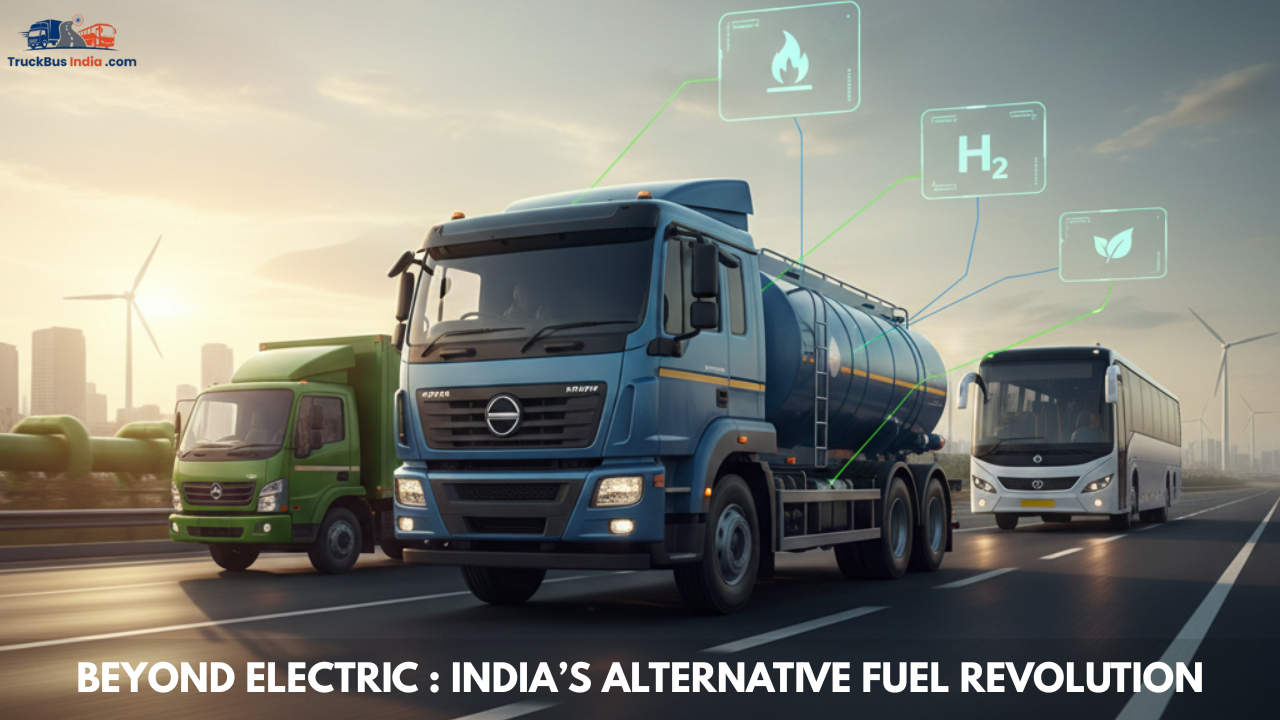
Electric mobility has captured much of the spotlight in India’s transport transition, but it is not the only route toward lower emissions. For many fleet operators, especially in medium and heavy commercial segments, electric vehicles still face challenges related to range, payload, and charging infrastructure. As a result, alternative fuels in India are gaining renewed attention as practical and scalable options.
Technologies such as LNG and CNG trucks, bio-CNG, and early-stage hydrogen solutions are increasingly viewed as complementary pathways rather than competitors to electric mobility.
CNG and LNG emerge as near-term solutions
Compressed natural gas and liquefied natural gas have become prominent alternatives in commercial transport. CNG trucks are already widely used in intra-city and short-haul operations, benefiting from relatively mature refuelling infrastructure and lower emissions compared to diesel.
LNG trucks, meanwhile, are attracting interest for long-haul applications due to their higher energy density and extended driving range. Several fleet operators are piloting LNG vehicles on major freight corridors, seeing benefits in fuel cost stability and reduced particulate emissions. These green fuel vehicles offer a transitional solution while zero emission technologies continue to evolve.
Bio-CNG supports circular fuel adoption
Bio-CNG transport is emerging as another promising option, particularly for fleets operating in regions with access to agricultural or organic waste. Produced from compressed biogas, bio-CNG delivers similar performance to conventional CNG while supporting waste-to-energy initiatives.
For fleet operators, bio-CNG offers the dual benefit of lower carbon intensity and reduced dependence on imported fuels. Government support for biogas plants and city gas distribution networks is helping improve fuel availability, strengthening the case for clean fuel adoption.
Hydrogen mobility enters early-stage trials
Hydrogen mobility in India is still in its infancy, but interest is growing, especially for heavy-duty and long-distance transport. Hydrogen fuel cell vehicles offer the advantage of quick refuelling and long range, making them attractive for applications where battery electric vehicles face limitations.
Pilot projects supported by public sector enterprises and research institutions are currently testing hydrogen-powered trucks and buses. While infrastructure and cost challenges remain significant, hydrogen is increasingly seen as a long-term solution for low emission vehicles in hard-to-electrify segments.
Policy and sustainability pressures drive diversification
Regulatory pressure to reduce emissions and improve air quality is pushing fleets to diversify fuel choices. Corporate sustainability commitments and ESG reporting requirements are also influencing procurement decisions, especially for companies serving multinational clients.
Rather than betting on a single technology, many operators are adopting a portfolio approach, using different fuels based on route length, load requirements, and operating environments. This flexibility is helping balance environmental goals with operational realities.
Infrastructure and cost remain key considerations
Despite growing interest, alternative fuel adoption faces challenges. Refueling infrastructure for LNG, bio-CNG, and hydrogen remains uneven, particularly outside major urban centres. Vehicle costs and maintenance expertise also vary across fuel types, influencing adoption speed.
However, continued investment in fuel distribution networks and supportive policies are gradually improving feasibility. As volumes increase, economies of scale are expected to lower costs further.
The road ahead for alternative fuels
The growing focus on alternative fuels signals a broader shift in India’s transport strategy. Rather than relying solely on electric mobility, the sector is exploring multiple clean pathways to reduce emissions.
As technology matures and infrastructure expands, LNG, CNG, bio-CNG, and hydrogen are likely to play increasingly important roles alongside EVs. Together, these solutions will shape a more resilient and diversified future for low emission commercial transport in India.