
News List
Public transport electrification accelerates as cities scale up EV bus fleets

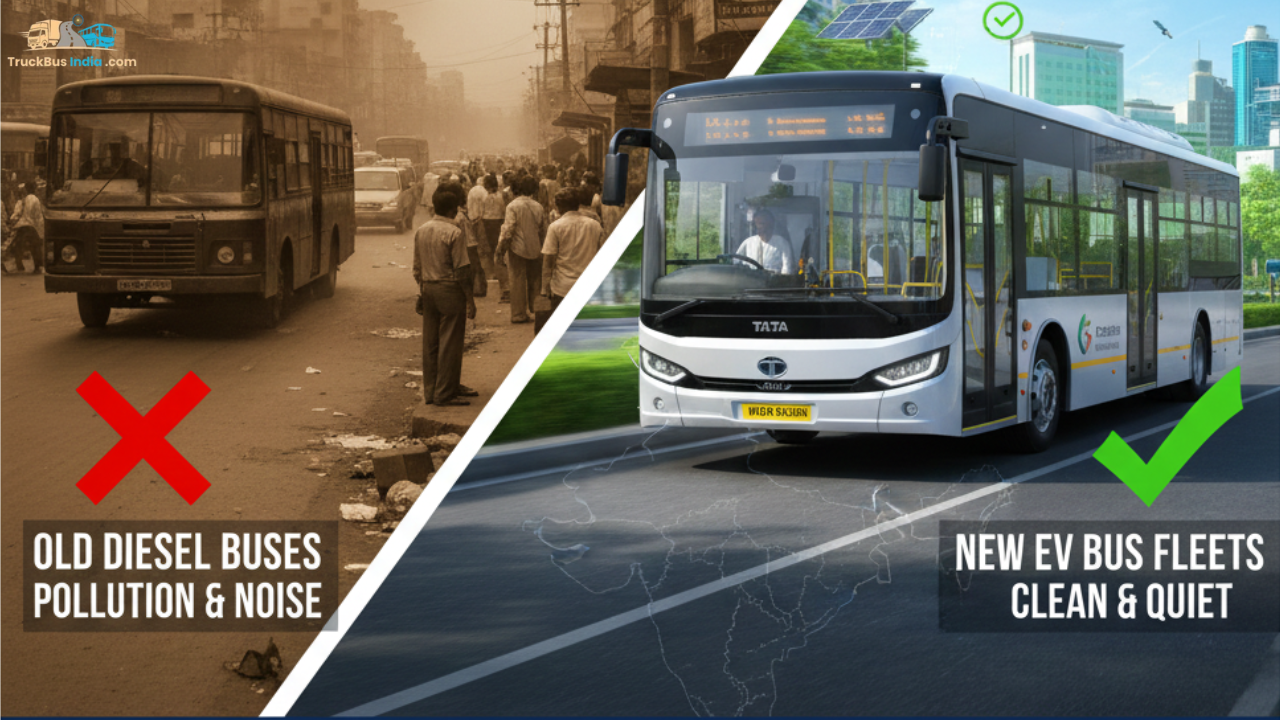
Public transport electrification in India has moved beyond pilot deployments and into large-scale implementation. Over the past few years, several cities have accelerated the rollout of electric bus fleets as part of broader efforts to cut urban pollution and modernise public transport systems. What began as limited trials on select routes is now evolving into sustained procurement and network expansion.
State transport undertakings (STUs) and city authorities are increasingly viewing EV buses as a long-term solution rather than a short-term experiment, particularly in densely populated urban centres facing severe air quality challenges.
Policy support drives momentum
A major driver behind this shift is policy backing from central and state governments. Programmes such as the Faster Adoption and Manufacturing of Electric Vehicles (FAME) scheme have provided financial incentives for the procurement of electric buses, reducing upfront costs for transport authorities.
In parallel, state-level EV policies are encouraging cities to prioritise zero emission public transport as part of climate action and clean city transport goals. These measures have helped lower adoption barriers and create predictable demand for manufacturers and operators alike.
Why EV buses make sense for urban mobility
Electric bus fleets are particularly well-suited to city operations. Fixed routes, predictable schedules, and centralised depots make charging infrastructure planning easier. Compared to diesel buses, EV buses cities report lower operating costs due to reduced fuel expenditure and simpler maintenance requirements.
From a commuter perspective, electric buses offer quieter rides and reduced tailpipe emissions, contributing to improved urban mobility solutions. For city administrators, these benefits align closely with public health objectives and sustainability targets.
New operating models reshape deployment
One notable trend in public transport electrification is the adoption of new contracting models. Many STUs are shifting to gross cost contracts, where private operators own and maintain the buses while the authority pays per kilometre of service delivered.
This approach reduces financial risk for transport agencies and accelerates fleet expansion. It has also attracted private investment into EV bus operations, helping cities scale faster without heavy capital expenditure. As a result, STUs electric buses are becoming more common across metro and Tier-2 cities.
Infrastructure and grid readiness remain key challenges
Despite rapid progress, challenges remain. Charging infrastructure planning is critical, particularly as fleet sizes grow. Cities must ensure adequate depot space, power availability, and grid upgrades to support overnight and opportunity charging.
Operational reliability during peak demand, battery lifecycle management, and route optimisation also require careful planning. However, improvements in battery technology and energy management systems are steadily addressing these concerns.
Impact on emissions and city transport goals
The environmental impact of scaling EV bus fleets is significant. Replacing diesel buses with electric alternatives directly reduces local air pollutants such as particulate matter and nitrogen oxides. While grid emissions remain a factor, the overall emissions profile improves as India’s electricity mix becomes cleaner.
For cities struggling with congestion and pollution, zero emission public transport is increasingly seen as a cornerstone of sustainable urban planning rather than a standalone transport initiative.
The road ahead for electric bus fleets in India
The pace of public transport electrification is expected to increase further over the next few years. As costs stabilize, infrastructure improves, and operational experience deepens, electric bus fleets in India are likely to expand into intercity and feeder routes.
What is clear is that EV buses are no longer peripheral to urban transport planning. They are becoming central to how cities envision cleaner, more efficient, and future-ready public transport systems.