
News List
Last-mile delivery pressure rises as ecommerce volumes hit new highs

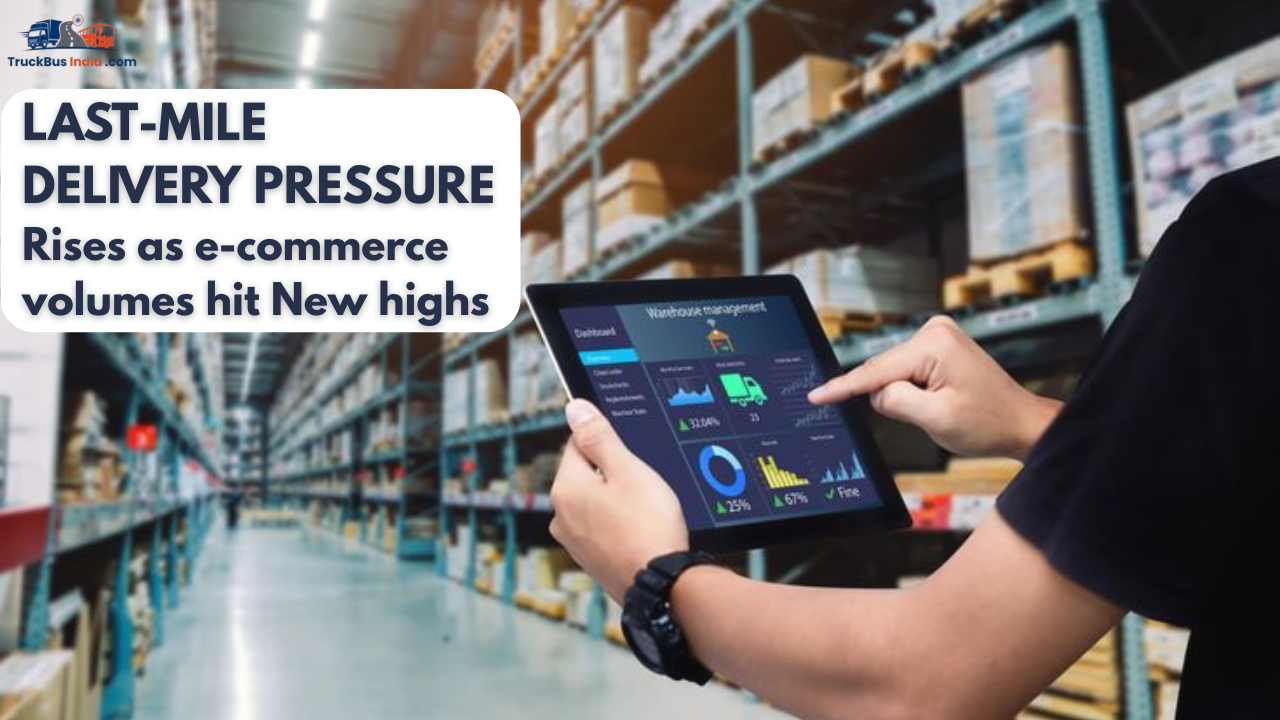
India’s ecommerce sector continues to expand rapidly, driven by rising internet penetration, smartphone usage, and consumer preference for doorstep delivery. As order volumes increase, last mile delivery in India has become one of the most complex and cost-intensive parts of the logistics chain.
Consumers now expect faster delivery windows, real-time tracking, and flexible returns. Meeting these expectations is placing significant strain on logistics networks, particularly in dense urban areas where infrastructure and traffic constraints are most pronounced.
Urban congestion complicates last-mile operations
Urban delivery challenges are intensifying as cities struggle with congestion, limited parking, and restricted access zones. Delivery vehicles often face delays due to traffic bottlenecks and time-based entry regulations, reducing drop density and increasing per-order costs.
For logistics providers, managing deliveries across crowded city centres and residential neighbourhoods requires careful route planning and real-time coordination. The pressure on urban mobility logistics is pushing companies to rethink traditional delivery models.
Rising costs impact ecommerce logistics growth
Last-mile delivery accounts for a significant share of total logistics costs. Fuel price volatility, rising labour expenses, and vehicle maintenance costs are squeezing margins for delivery operators. As ecommerce logistics growth accelerates, controlling these costs has become critical.
Many companies are investing in delivery fleet management systems to optimise routes, track vehicle performance, and improve asset utilisation. Technology adoption is no longer optional, as manual planning cannot keep pace with high-volume, time-sensitive deliveries.
Hyperlocal models gain prominence
To cope with rising demand, ecommerce players are increasingly adopting hyperlocal logistics models. Micro-fulfilment centres and dark stores located closer to consumers reduce travel distances and enable faster delivery times.
These decentralised networks help improve efficiency but also add complexity. Managing inventory across multiple locations and coordinating frequent, short-distance deliveries requires robust data systems and precise execution.
Workforce and capacity challenges persist
Scaling last-mile operations also depends heavily on manpower. Delivery personnel shortages, high attrition rates, and training requirements add operational risk. Seasonal spikes during sales events further strain capacity, making it difficult to maintain consistent service levels.
To address this, companies are experimenting with flexible staffing models, performance-based incentives, and technology-enabled onboarding. However, sustaining a reliable workforce remains one of the biggest hurdles in ecommerce supply chain execution.
Sustainability pressures influence delivery strategies
As delivery volumes rise, so do concerns around emissions and congestion. Cities and regulators are increasingly focusing on cleaner transport solutions, encouraging the use of electric two-wheelers, electric vans, and alternative delivery methods.
While electric vehicles help reduce local emissions, infrastructure limitations and higher upfront costs continue to slow widespread adoption. Nonetheless, sustainability is becoming a key factor in last-mile planning, particularly for large ecommerce platforms.
The road ahead for last-mile logistics
The pressure on last mile delivery in India is expected to intensify as ecommerce volumes continue to climb. Logistics providers will need to balance speed, cost, and reliability while navigating urban constraints and evolving consumer expectations.
Technology, network redesign, and workforce strategies will play a central role in addressing these challenges. As the ecommerce supply chain matures, companies that can build resilient and flexible last-mile operations will be better positioned to sustain growth in an increasingly competitive market.