
News List
How AI and automation are entering India’s logistics decision-making

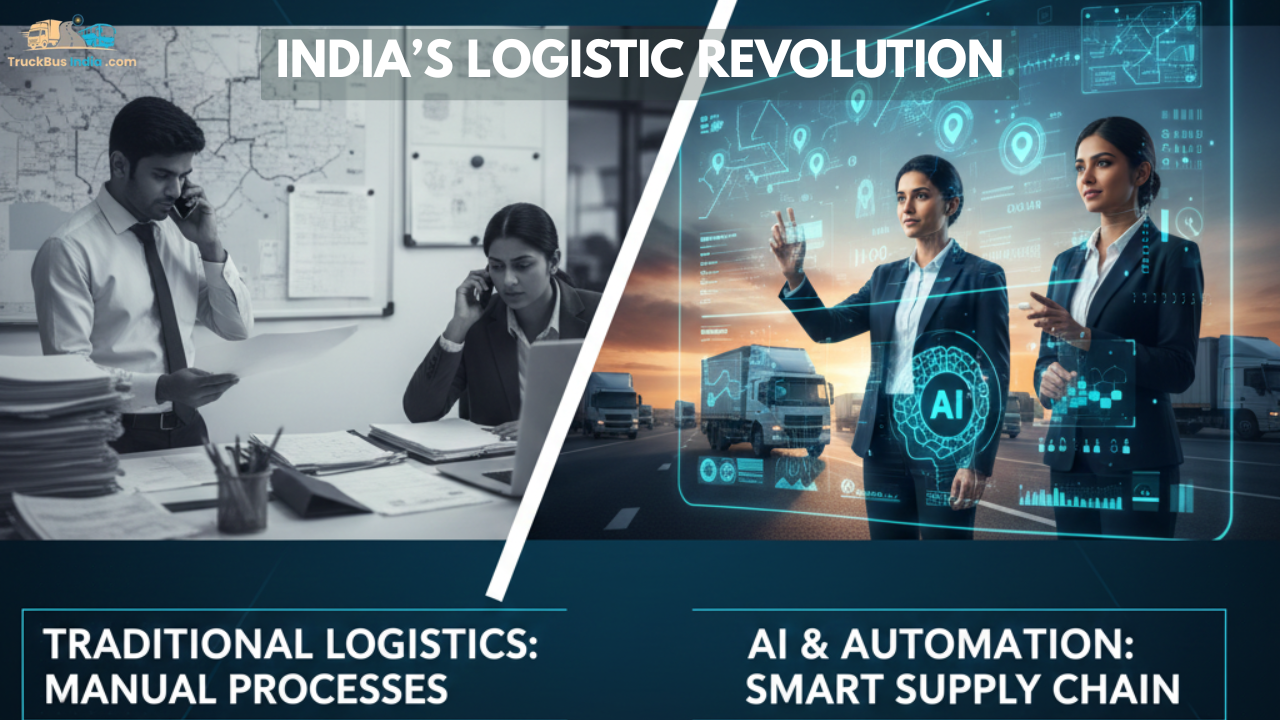
India’s logistics sector is navigating rising volumes, tighter delivery timelines, and increasing cost pressures. To manage this complexity, companies are turning to artificial intelligence and automation to support faster and more accurate decision-making. What began as basic digitalisation has evolved into the use of advanced tools that influence routing, fleet deployment, and demand forecasting.
AI in logistics India is no longer limited to experimental projects. It is increasingly embedded into daily operations across transportation, warehousing, and supply chain planning.
Where AI is being applied today
One of the most visible applications of logistics automation is in route optimization. AI-powered systems analyse traffic patterns, delivery windows, fuel costs, and historical performance to suggest efficient routes in real time. This reduces transit delays and improves vehicle utilisation.
Predictive logistics is another growing use case. By analysing shipment history and external variables such as weather or demand spikes, AI systems can anticipate delays and inventory shortages. This enables logistics teams to take corrective action before disruptions impact service levels.
Automation strengthens fleet management
AI fleet management tools are helping operators move beyond manual planning. Telematics data combined with machine learning models allows fleets to predict maintenance needs, monitor driver behaviour, and optimise fuel consumption.
Automation in transport also extends to scheduling and dispatch. Automated systems can assign loads, balance capacity, and adjust plans dynamically, reducing dependence on human intervention and minimising errors in large-scale operations.
Smart supply chains gain momentum
As logistics networks become more interconnected, AI is playing a central role in building a smart supply chain. Integrated platforms now connect warehouses, transport providers, and retailers, creating a single data flow across the supply chain.
AI-driven demand forecasting helps businesses align inventory with consumption patterns, reducing excess stock and improving working capital efficiency. For industries with seasonal or volatile demand, this capability is becoming essential.
Drivers behind AI adoption in logistics
Several factors are accelerating digital transformation in logistics. The growth of e-commerce, increased customer expectations for faster delivery, and pressure to reduce operational costs are pushing companies to adopt automation.
Additionally, cloud computing and software-as-a-service models have made AI tools more accessible to mid-sized and regional logistics players. What was once available only to large enterprises is now being deployed across a broader segment of the industry.
Challenges and limitations remain
Despite strong interest, adoption is not without challenges. Data quality remains a key issue, as fragmented systems and inconsistent inputs can limit AI effectiveness. Many organisations also face skill gaps, making it difficult to interpret insights and integrate AI outputs into existing workflows.
Cybersecurity and data privacy are emerging concerns as logistics systems become more interconnected. Addressing these risks is critical to sustaining long-term trust in automated decision-making.
The future of AI-driven logistics decisions
The role of AI and automation in logistics decision-making is expected to expand steadily. As algorithms mature and data availability improves, AI will increasingly support strategic decisions such as network design, fleet electrification planning, and capacity investment.
Rather than replacing human judgement, AI is acting as a decision-support layer, enabling logistics teams to respond faster and plan better. In an industry defined by scale and complexity, the integration of AI is becoming a key differentiator for efficiency and resilience.