
News List
Supreme Court Allows Ban on End‑of‑Life Vehicles — Check if Your Car Can Hit Delhi Roads Now

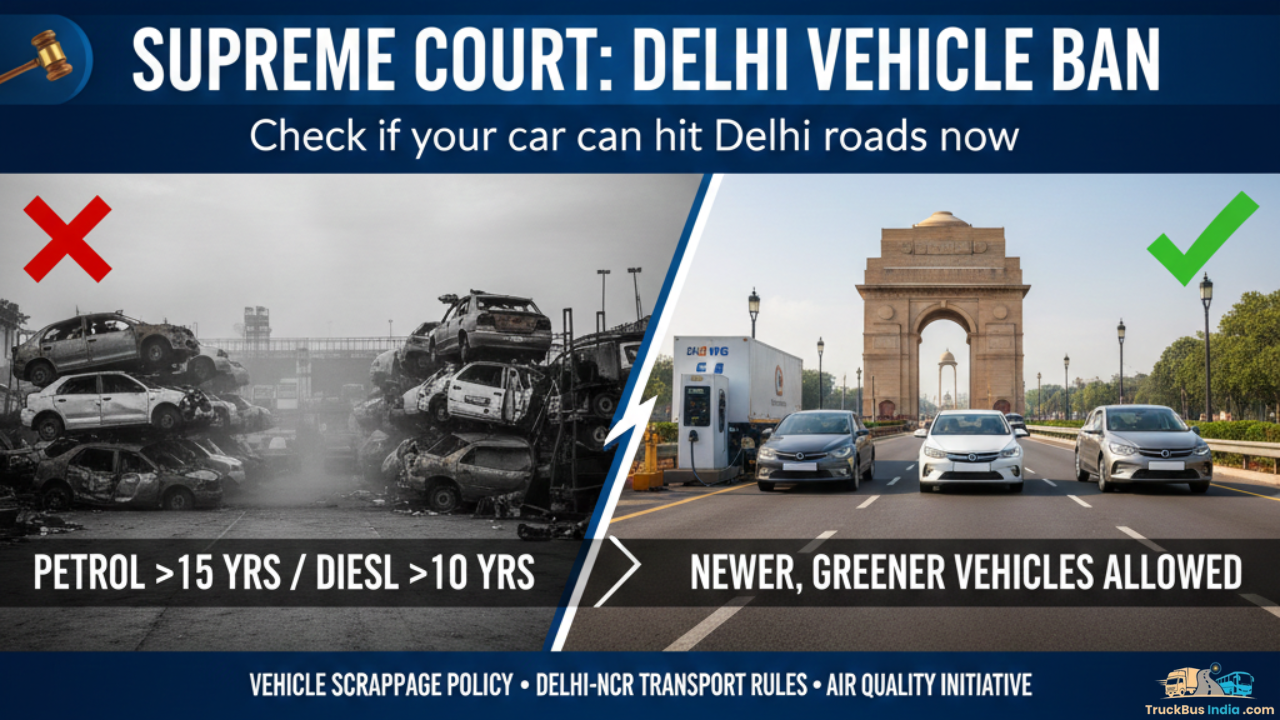
In a significant development for road users in the Delhi‑NCR region, the Supreme Court has clarified and strengthened the framework for restricting older, high‑polluting vehicles from plying on city roads. This move reinforces efforts to curb severe air pollution while creating clearer rules about end of life vehicles ban and determining Delhi car eligibility.
Understanding how this affects everyday commuters and vehicle owners is crucial, especially for those with older diesel and petrol cars. Here’s what the latest rulings and policies mean for you.
What Is the Ban on End‑of‑Life Vehicles in Delhi‑NCR?
The end‑of‑life vehicles (ELVs) policy applies to cars and commercial vehicles that no longer meet modern emission guidelines. In Delhi, the rule broadly classifies vehicles as end‑of‑life if they exceed specific age thresholds:
- Diesel vehicles older than 10 years
- Petrol vehicles older than 15 years
These age limits are tied to past court and tribunal orders dating back to the National Green Tribunal (NGT) and subsequent enforcement strategies. The goal is to phase out vehicles that typically emit higher levels of pollutants and worsen air quality.
Supreme Court’s Latest Ruling on Enforcement
Recently, the Supreme Court of India issued a significant modification to earlier enforcement directions relating to ELVs in the Delhi‑NCR region:
- Enforcement actions — such as impounding, scrapping, or restricting vehicles — are now focused on vehicles that fall below the Bharat Stage IV (BS‑IV) emission standard.
- Vehicles compliant with BS‑IV and BS‑VI norms are generally exempt from coercive action even if they are old, provided they meet emission and fitness requirements.
- This helps balance pollution control with practical considerations for citizens who own relatively cleaner older vehicles.
In short, the Supreme Court’s modification ensures that age alone is not the sole criterion — emission compliance matters. This is a departure from a strictly age‑based interpretation and aligns enforcement with modern environmental standards.
Fuel Ban on End‑of‑Life Vehicles
In addition to the Supreme Court’s stance, authorities under the Commission for Air Quality Management (CAQM) had previously directed fuel stations to deny refuelling to ELVs — vehicles older than 10 years for diesel and 15 years for petrol — regardless of where the vehicles are registered. Fuel pumps were instructed to log all denied fuel transactions and display warnings about the ban.
This fuel denial strategy aimed to make it practically difficult for ELVs to continue operating in Delhi‑NCR. However, legal challenges and judicial reviews have led to some temporary suspension or reconsideration of strict fuel denial enforcement, especially where vehicles meet BS‑IV/BS‑VI emission standards.
What This Means for Vehicle Owners
1. Check Your Vehicle’s Emission Standard
If your car meets BS‑IV or BS‑VI norms, you are less likely to face immediate action under the latest order — despite its age — provided the vehicle’s fitness and pollution controls are up to date.
2. Age Limits Are Not Absolute Now
The Supreme Court’s clarification means that authorities can no longer take blanket action against all older diesel or petrol cars solely based on age. Enforcement will target vehicles that are both old and below BS‑IV.
3. Vehicle Fitness and Compliance Still Matter
Even BS‑IV and BS‑VI vehicles must maintain valid Pollution Under Control (PUC) certificates and meet roadworthiness criteria to remain eligible for use in the capital region. This aligns with broader national norms that focus on fitness rather than just age.
4. Scrapping and Re‑Registration Options
Owners of non‑compliant vehicles can pursue alternatives like transferring registration to another state, scrapping their vehicle responsibly under the Registered Vehicle Scrapping Facility (RVSF) Rules, or selling it where permissible. Some guidelines govern penalties, towing processes, and no‑objection certificates for such actions.
Why the Ban Matters
The ban on end‑of‑life vehicles is part of a larger strategy to tackle Delhi’s air pollution crisis, which consistently ranks among the worst globally during winter months. Older vehicles typically emit higher particulate matter and nitrogen oxides (NOx), contributing significantly to deteriorating air quality. By targeting the most polluting vehicles, authorities aim to protect public health and reduce respiratory illnesses associated with smog and toxic air.
Final Takeaway
If you’re planning to drive in Delhi‑NCR, it’s essential to:
- Verify your vehicle’s emission standard (BS‑IV/VI).
- Keep your PUC and fitness certificate up to date.
- Stay informed about local enforcement actions that could affect your car’s eligibility.
With the Supreme Court’s latest ruling refocusing enforcement on emission compliance rather than age alone, many owners of older but cleaner vehicles now have clearer guidelines on legal use in the capital region.