
News List
IMD Issues Fog Alert in 16 States; Cold Wave Warning in Uttarakhand, MP — How It Affects Vehicle Movement on Roads

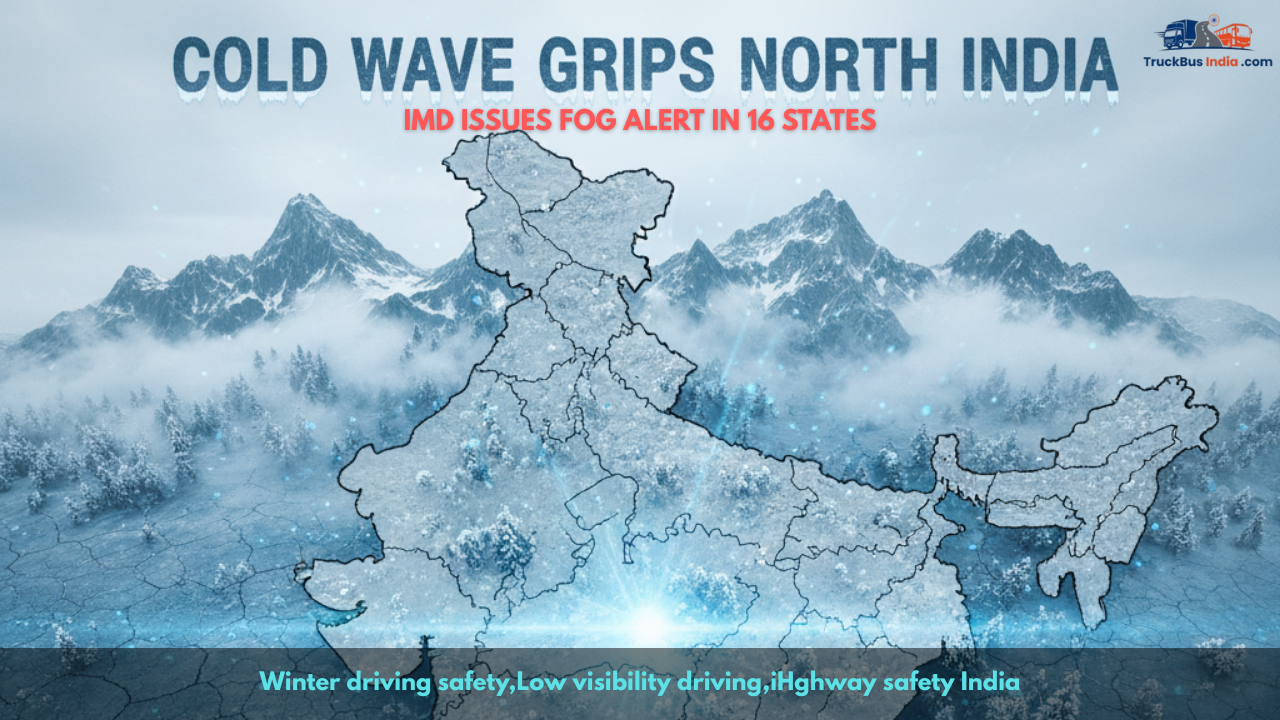
As winter deepens across much of India, the India Meteorological Department (IMD) has issued widespread fog and cold wave alerts, covering numerous states including Uttarakhand, Madhya Pradesh, Uttar Pradesh, Punjab, Haryana, and Delhi‑NCR. These weather conditions are significantly impacting vehicle movement on roads, posing safety challenges and travel disruptions for commuters and freight operators alike.
What the IMD Forecasts: Fog and Cold Wave Alerts
Dense to very dense fog is forecast to persist over large swaths of northern and central India, especially during early morning and night hours. States including Punjab, Uttar Pradesh, Delhi‑NCR, Haryana, Bihar, Jharkhand, Madhya Pradesh, and parts of the Northeast are expected to face poor visibility conditions for several more days. Temperatures are also below normal, reinforcing cold wave warnings in isolated pockets of Uttarakhand and MP.
The IMD’s official advisory notes that such weather can disrupt road, rail, and air travel, with slow driving conditions and heightened accident risk unless precautionary measures are taken.
How Fog Affects Road Transport
Low Visibility and Driving Challenges
Dense fog dramatically reduces visibility, sometimes to under 50–100 meters, forcing drivers to slow down significantly. Motorists on highways and expressways—including those in Uttar Pradesh—are already seeing temporary speed limit reductions for buses, trucks, and other vehicles to improve safety.
Reduced visibility increases the risk of multi‑vehicle collisions, especially during the early morning and late night. Drivers must use fog lights and maintain safe following distances to avoid sudden stops or unseen obstacles.
Traffic Delays and Disruptions
Dense fog isn’t just a hazard for cars and buses. Railway schedules are also being disrupted—with train departures and arrivals delayed or rescheduled due to poor visibility. In Ludhiana, for example, severe fog recently caused hours‑long delays for multiple passenger trains.
Road traffic also slows substantially under dense fog, which can lengthen travel times for daily commuters, long‑distance buses, and freight vehicles. Logistics services and commercial drivers should factor in extra travel time and stay updated on traffic advisories.
Cold Wave Adds to Road Safety Concerns
While fog poses a visibility hazard, cold wave conditions exacerbate the situation by chilling road users and potentially affecting vehicle performance. Extremely low temperatures can:
- Reduce tyre traction on road surfaces
- Affect battery performance, especially in older vehicles
- Increase the likelihood of health issues for drivers during long waits or breakdowns on highways
Although the IMD issues cold day to severe cold day warnings alongside fog alerts, it is the combination of cold and fog that poses the greatest challenge to safe driving in winter months.
Travel Safety Tips for Drivers
To stay safe while driving in fog and cold conditions, consider the following precautions:
Use Appropriate Lights and Signals
Always use low‑beam headlights and fog lamps in dense fog. High beams can reflect off fog particles and reduce visibility further.
Maintain Safe Speeds
Travel at slower, controlled speeds and avoid sudden lane changes or overtaking in low‑visibility zones.
Allow Extra Travel Time
Give yourself additional time to reach your destination. Expect slower traffic, especially on expressways and arterial routes affected by fog.
Stay Informed
Regularly check updated IMD forecasts and government travel advisories. Being aware of alerts like orange or red warnings can help you plan safer travel windows.
Check Vehicle Health
Ensure tyres, brakes, and lights are in optimal condition before setting out. Cold temperatures can strain vehicle systems, so a pre‑trip check can be especially helpful.
Impact on Commercial and Long‑Distance Transport
For logistics and freight operators, the fog alert period often means slower delivery times and potential rerouting to avoid the most affected corridors. Truck drivers and long‑haul carriers should coordinate with dispatch teams to adjust schedules and avoid peak fog hours when possible.
Authorities in several states, including Uttar Pradesh, are proactively implementing speed restrictions and issuing public travel guidelines to reduce road accidents and improve commuter safety.