
News List
CONCOR Rolls Out LNG Truck Fleet, Enabling Cleaner First & Last Mile Freight Movement

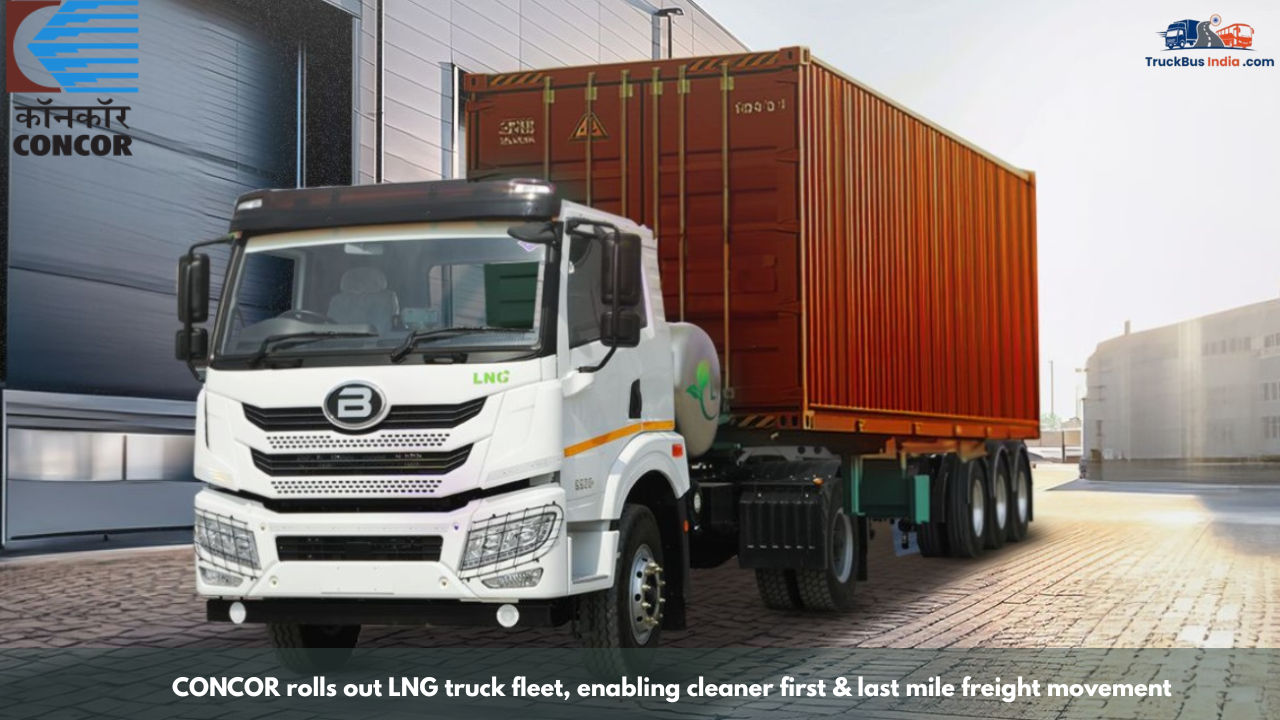
India’s logistics sector is undergoing a sustainability shift as large transport and freight companies adopt cleaner technologies to reduce emissions and improve operational efficiency. Leading the charge is the Container Corporation of India (CONCOR), which is significantly expanding its LNG truck fleet India in partnership with local manufacturers. This transition to liquefied natural gas (LNG) — a lower‑emission fuel alternative — underlines a broader commitment to green logistics India and supports cleaner freight movement across the country.
Why LNG Trucks Matter for Indian Freight
Heavy‑duty trucking remains one of the most carbon‑intensive segments of the transport sector. Diesel‑powered trucks contribute significantly to air pollution and greenhouse gas emissions. Natural gas, particularly in its liquefied form (LNG), offers tangible environmental benefits. LNG combustion can reduce carbon dioxide (CO₂) emissions by up to 40 % compared to traditional diesel engines, along with notable decreases in nitrogen oxides (NOx), sulfur oxides (SOx) and particulate matter, making it an attractive option for freight operators pursuing cleaner alternatives.
For a company like CONCOR — which operates a vast multimodal logistics infrastructure across India — integrating LNG trucks into its operations represents a strategic step towards decarbonising freight, especially in the first mile and last mile freight segments where heavy‑duty vehicles are most active.
Expanding the LNG Truck Fleet
CONCOR’s latest initiative involves procuring additional LNG‑powered trucks from Blue Energy Motors, a manufacturer specialising in alternative‑fuel commercial vehicles. In early 2025, the state‑owned logistics firm placed a second order for 50 LNG trucks, bringing its overall LNG fleet to over 175 vehicles. Deliveries for the new batch are scheduled to begin by March 2025.
This continued expansion builds on prior deployments and reflects growing confidence in LNG technology’s performance and environmental contributions. LNG trucks not only help reduce harmful emissions but also maintain competitive operational efficiency compared with conventional diesel trucks.
Enhancing First and Last Mile Freight
The movement of goods from origin points to major rail or port hubs (first mile) and from those hubs to final destinations (last mile) often relies on heavy trucking, which has traditionally been a high‑emission operation. By using LNG trucks in these critical segments, CONCOR is able to directly reduce the carbon footprint associated with these repetitive, high‑frequency freight legs.
Adoption of LNG for first and last mile operations also supports India’s broader environmental goals. As logistics continues to grow with expanding trade and e‑commerce demand, decarbonising road freight becomes increasingly important to meeting national and international climate commitments.
Supporting Infrastructure & Industry Trends
One of the challenges in scaling alternative fuel use in commercial transport is the supporting infrastructure — especially refuelling stations. Recognising this, CONCOR has taken steps to improve operational readiness by enabling LNG refuelling facilities at strategic terminals. For example, the commissioning of an LNG station at the MMLP Khatuwas terminal supports efficient operation of its LNG fleet and reduces downtime for refuelling.
Further infrastructure expansion — including additional LNG facilities — will be key as more freight operators consider similar transitions. The momentum behind alternative fuels extends beyond CONCOR, with several logistics players and manufacturers exploring LNG and other cleaner technologies to meet sustainability targets.
Benefits Beyond Emissions
Adopting LNG trucks delivers multiple advantages:
- Environmental impact: Up to 40 % reduction in CO₂ emissions compared with diesel counterparts, along with lower levels of NOx, SOx and particulate pollutants from exhaust.
- Operational reliability: LNG trucks designed for heavy‑duty logistics maintain performance and range comparable to diesel models, making them suitable for long operational routes.
- Policy alignment: This shift aligns with global and Indian regulatory pressures to reduce carbon emissions from transportation and supports environmental sustainability objectives.
The Road Ahead
With its expanding LNG truck fleet, CONCOR is setting an example for cleaner freight movement in India’s logistics sector. As infrastructure matures and alternative fuel vehicles become more accessible and cost‑effective, LNG trucks are expected to play a substantial role in reshaping how freight is moved — especially for first and last mile freight logistics. Continued investment and partnerships with manufacturers and fuel suppliers will be essential to scaling these efforts further, helping India transition to a greener logistics ecosystem.