
News List
Fuel price stability talk masks local diesel spikes for city trucking

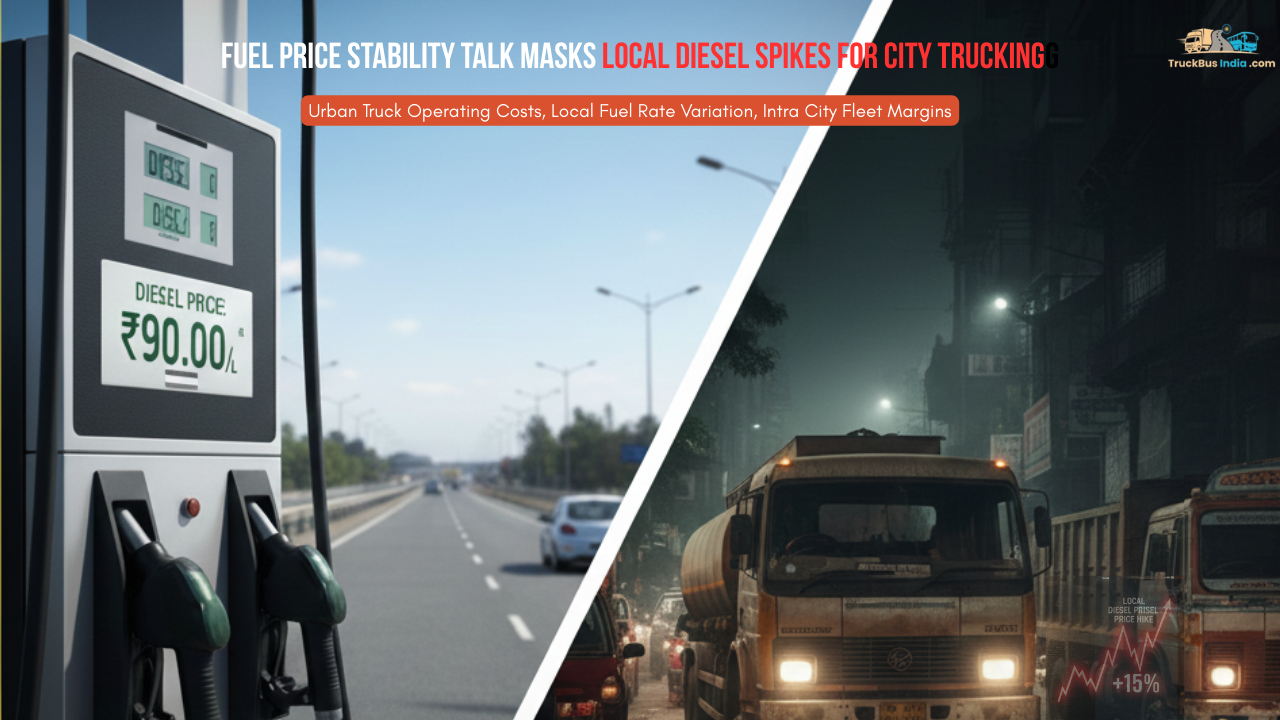
Public discussion around fuel prices has largely centred on “stability”, with no dramatic nationwide revisions grabbing headlines. For city-based truck operators, however, this narrative often feels disconnected from reality. At the local level, diesel prices can and do fluctuate across cities, zones and even outlets—creating cost pressure that disproportionately affects urban and intra-city trucking.
Unlike long-haul operators who can plan refuelling along cheaper corridors, city fleets operate within narrow geographies, making them more vulnerable to micro-level diesel price movements.
City-level diesel prices tell a different story
While national fuel pricing trends may appear flat over short periods, city diesel prices frequently vary due to state taxes, municipal levies and local dealer-level adjustments. For operators running daily routes within metros, even small per-litre changes quickly add up.
In large urban centres, diesel prices are often higher than nearby tier-2 towns. For fleets operating exclusively inside city limits, there is little flexibility to offset these differences through route planning or cross-border refuelling.
Impact on intra-city fleet margins
Urban trucking margins are already thin. Vehicles typically cover shorter distances, face longer idling times and operate under stricter delivery windows. When diesel prices spike locally, operators have limited room to pass costs on to clients.
Key pressure points include:
- Last-mile and distribution trucks running multiple short trips daily
- Construction and municipal fleets confined to city zones
- E-commerce and FMCG logistics with fixed per-trip contracts
Even a modest rise in diesel costs can reduce profitability when freight rates remain locked in for months.
Operating costs rise faster than freight rates
Urban fleet operators often work on annual or quarterly contracts where freight charges are slow to adjust. Fuel, on the other hand, is a daily variable. This mismatch means diesel price changes are absorbed immediately, while revenue adjustments lag behind.
Beyond fuel, higher diesel prices also indirectly increase:
- Maintenance costs due to stop-start driving
- Cooling system stress during traffic congestion
- Overall cost per kilometre in dense city conditions
Together, these factors amplify the impact of local diesel price variation.
Limited coping options for city operators
Unlike highway fleets that can alter refuelling points or shift driving schedules, city operators have fewer cost-control levers. Common strategies include:
- Tighter route optimisation to reduce empty runs
- Driver monitoring to control idling and aggressive driving
- Partial shift to CNG where infrastructure allows
However, CNG adoption remains uneven across cities, and not all urban applications are suitable for alternative fuels.
Why local diesel variation often goes unnoticed
Fuel price reporting typically focuses on national averages or headline city prices, masking ward-level or dealer-level differences. For policymakers and the public, this creates the impression of stability, while operators face day-to-day volatility.
For small fleet owners with limited negotiating power, even marginal diesel hikes directly hit cash flow—especially when payments from customers are delayed.
What city trucking needs going forward
As urban freight volumes grow, diesel pricing dynamics will play a bigger role in fleet sustainability. Industry stakeholders increasingly point to the need for:
- Greater transparency in city-level fuel pricing
- Faster freight rate indexation linked to fuel costs
- Support for alternative fuels in dense urban corridors
Until then, the gap between “stable fuel prices” and on-ground diesel costs will continue to strain city trucking economics—quietly but consistently eroding intra-city fleet margins.