
News List
AC cabins mandatory for N2, N3 trucks from Oct 2026 as Gadkari targets driver fatigue

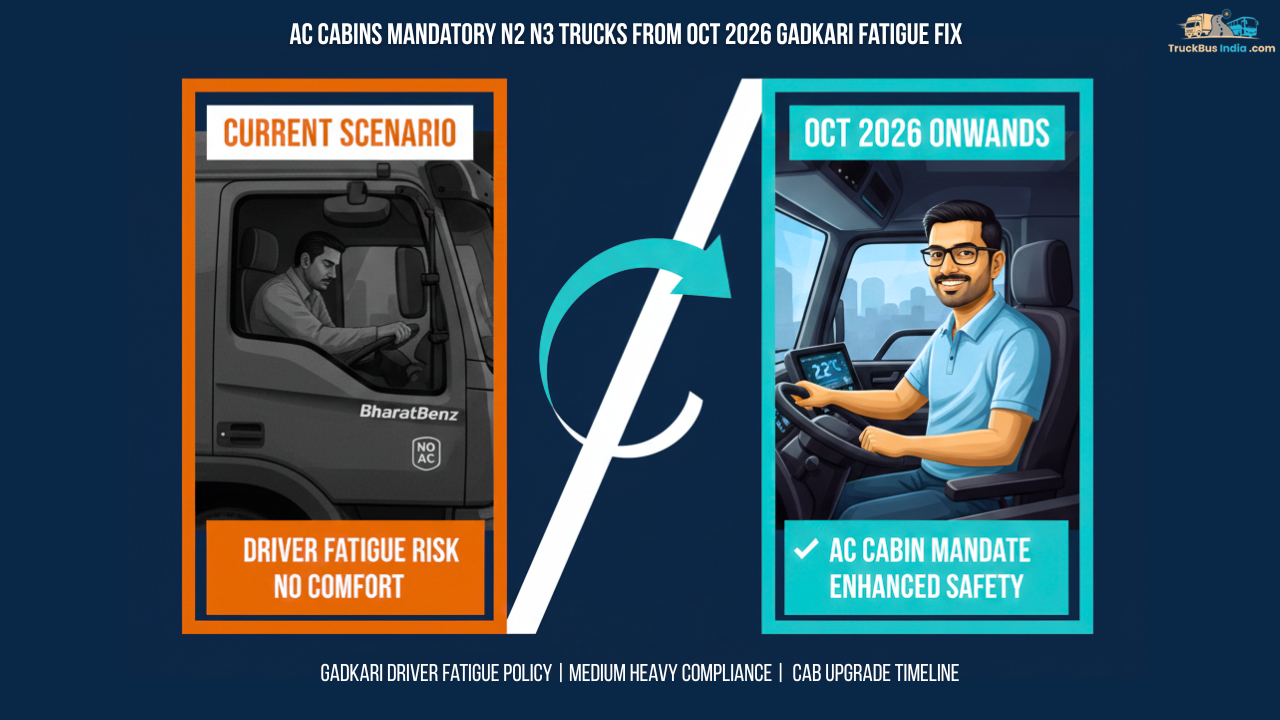
India’s medium and heavy truck segment is headed for a major comfort and safety upgrade. From October 2026, air-conditioned cabins will be mandatory for all N2 and N3 category trucks, a move championed by Union Road Transport and Highways Minister Nitin Gadkari to address driver fatigue, heat stress, and road safety. The policy gives manufacturers an 18-month transition period to re-engineer cabins and align production with the new requirement.
What the AC truck cabin mandate covers
The mandate applies to:
- N2 trucks (gross vehicle weight above 3.5 tonnes up to 12 tonnes)
- N3 trucks (gross vehicle weight above 12 tonnes)
These categories account for the bulk of India’s long-haul freight movement. Until now, air-conditioning in trucks was largely optional, limited to premium variants or export models. The new rule makes AC a standard safety feature, not a luxury add-on.
Why Gadkari’s driver fatigue policy matters
Driver fatigue is a persistent safety risk on Indian highways, especially during long summer months when cabin temperatures can soar well above ambient levels. Studies and industry feedback have repeatedly flagged heat stress, dehydration, and exhaustion as contributors to delayed reaction times and accidents.
By mandating AC cabins, the government aims to:
- Reduce physical strain on drivers
- Improve alertness on long hauls
- Make trucking a more attractive profession amid driver shortages
The move aligns with a broader push to upgrade truck cabins to near-bus comfort standards, recognising the human factor in freight safety.
18-month compliance window for OEMs
The 18-month transition period is critical for manufacturers. OEMs must:
- Redesign cabins to integrate factory-fitted AC systems
- Ensure compatibility with existing engine and electrical architectures
- Manage cost increases without hurting fleet affordability
Most large OEMs already offer AC in select models, but scaling it across the entire N2 and N3 range will require supply chain adjustments and platform standardisation.
Impact on medium and heavy truck pricing
Mandatory AC will inevitably add to vehicle costs, though industry estimates suggest the increase will be moderate when amortised over vehicle life. Fleet operators are expected to offset higher upfront prices through:
- Better driver retention
- Higher utilisation due to reduced fatigue
- Lower accident and downtime risks
Over time, AC cabins may also become a differentiator in resale value, especially for well-maintained long-haul trucks.
Cab upgrade timeline reshapes product strategies
The cab upgrade timeline is already influencing OEM product roadmaps. Manufacturers are accelerating:
- Modular cab designs that support AC as standard
- Improved insulation and airflow management
- Ergonomic upgrades including better seating and dashboard layouts
For some OEMs, the regulation provides an opportunity to refresh ageing platforms and reposition their trucks as comfort-first workhorses rather than bare-bones carriers.
N2 N3 safety norms align with global trends
Globally, air-conditioned truck cabins are standard in most developed markets. India’s move brings its N2 and N3 safety norms closer to international benchmarks, particularly as logistics players demand higher standards from transport partners.
The mandate also complements other safety initiatives, including:
- Advanced braking and stability requirements
- Better visibility and lighting norms
- Increased focus on driver well-being
What fleets and drivers should expect next
For fleets, the next 18 months will involve planning procurement cycles around the new standard. Early adopters may gain an edge in driver hiring and retention, while laggards risk running less attractive equipment.
Drivers, meanwhile, stand to benefit the most. A cooler, less stressful cabin environment can significantly improve day-to-day working conditions — a factor long overlooked in Indian trucking.
A structural shift, not a cosmetic change
The AC truck cabins mandatory 2026 rule is more than a comfort upgrade. It signals a structural shift in how policymakers view freight transport — placing driver health and safety at the centre of regulation.
As OEMs race to meet the deadline and fleets recalibrate buying decisions, the N2 and N3 segments are set for a quieter, cooler, and safer future on India’s highways.