
News List
EXCON to On-Road: How CE Innovation Is Raising Expectations from OEM Truck Partners

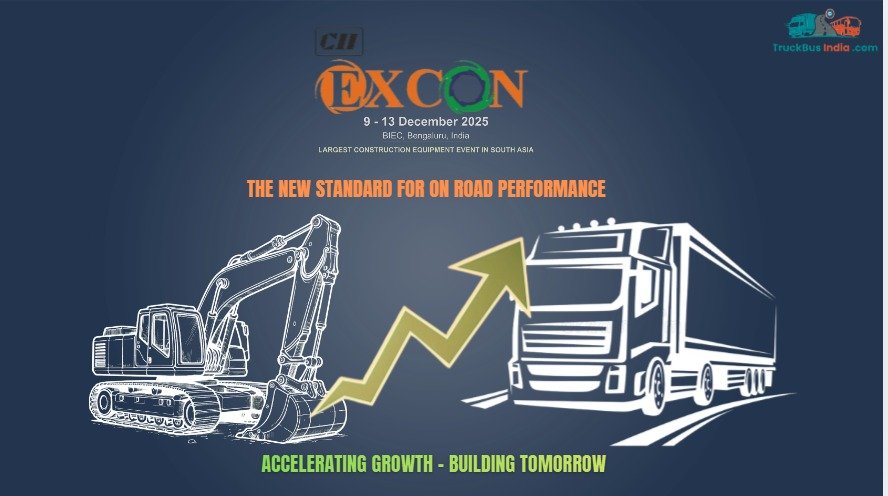
Every edition of EXCON brings a fresh wave of excitement to the construction and infrastructure ecosystem, and this year was no different. As India’s largest construction equipment (CE) exhibition, EXCON is a showcase of breakthrough technologies—from advanced telematics to energy-efficient machinery—that are shaping the next era of infrastructure development. However, while the spotlight often falls on CE manufacturers, a silent yet significant transformation is also unfolding among truck OEMs. The latest innovations unveiled at EXCON are redefining what contractors, fleet owners, and project developers expect from their on-road partners.
In many ways, the on-road trucking segment is now expected to match the pace at which CE innovation is evolving. This shift is driven by the growing integration of machinery and mobility, where construction equipment and trucks must work together with seamless precision. The EXCON innovation impact is clear: as CE becomes smarter, faster, and more efficient, truck OEMs must elevate their offerings to ensure operational synergy on and off the project site.
Smarter CE Machines Demand Smarter Trucks
One of the biggest takeaways from EXCON is the rise of intelligent, connected equipment. Today’s excavators, loaders, and graders come equipped with IoT-enabled sensors, predictive maintenance capabilities, and data-driven performance dashboards. When machinery on-site becomes data-rich and hyper-efficient, trucks that operate alongside them can no longer lag behind.
Fleet managers increasingly expect trucks with enhanced telematics, better fuel management systems, and real-time diagnostics to maintain fleet-wide uniformity. This is where CE and truck synergy become essential. The goal is no longer just reliable transportation of materials—but smarter, optimised logistics that speak the same digital language as modern CE equipment.
Increased Efficiency Means Higher Productivity Benchmarks
Another major shift highlighted at EXCON is the speed at which projects are now expected to move. With CE innovations reducing cycle times and enhancing output, trucks must keep up with this new pace. Downtime—whether due to mechanical issues, delayed maintenance, or fuel inefficiencies—is no longer acceptable.
As a result, truck OEM expectations are expanding across three key areas:
- Stronger powertrains to handle increased load cycles
- Improved durability for both on-road and off-road operations
- Better uptime support through quicker service accessibility and robust after-sales networks
Truck OEMs who fail to meet these growing demands risk disrupting the efficiency that construction equipment innovations strive to create.
Sustainability Goals Are Shaping the New Standards
Sustainability was another dominant theme at EXCON, with a clear push towards lower emissions, alternative fuels, and energy-efficient operations. As CE manufacturers adopt electric and hybrid systems, truck OEMs are under pressure to align with these environmental goals.
This means a stronger focus on:
- Cleaner engine technologies
- Improved aerodynamics
- Electric and alternative-fuel truck variants
- Lifecycle carbon-reduction performance
The alignment of sustainability strategies will soon move from being an advantage to being an industry expectation.
Collaboration Will Decide the Future
Perhaps the biggest evolution sparked by EXCON is the industry’s mindset. The CE sector is no longer operating in silos. To deliver next-level performance on the ground, collaboration between truck OEMs and CE manufacturers is becoming essential. Whether it’s shared data platforms, synchronised service solutions, or integrated telematics ecosystems, the road ahead is built on partnership.
As innovations continue to push boundaries, EXCON acts as the catalyst for a future where construction equipment and trucks operate not as separate segments but as two halves of a unified productivity engine.