
News List
What Fleet Owners Must Know About India’s Latest Electric Truck Deployments

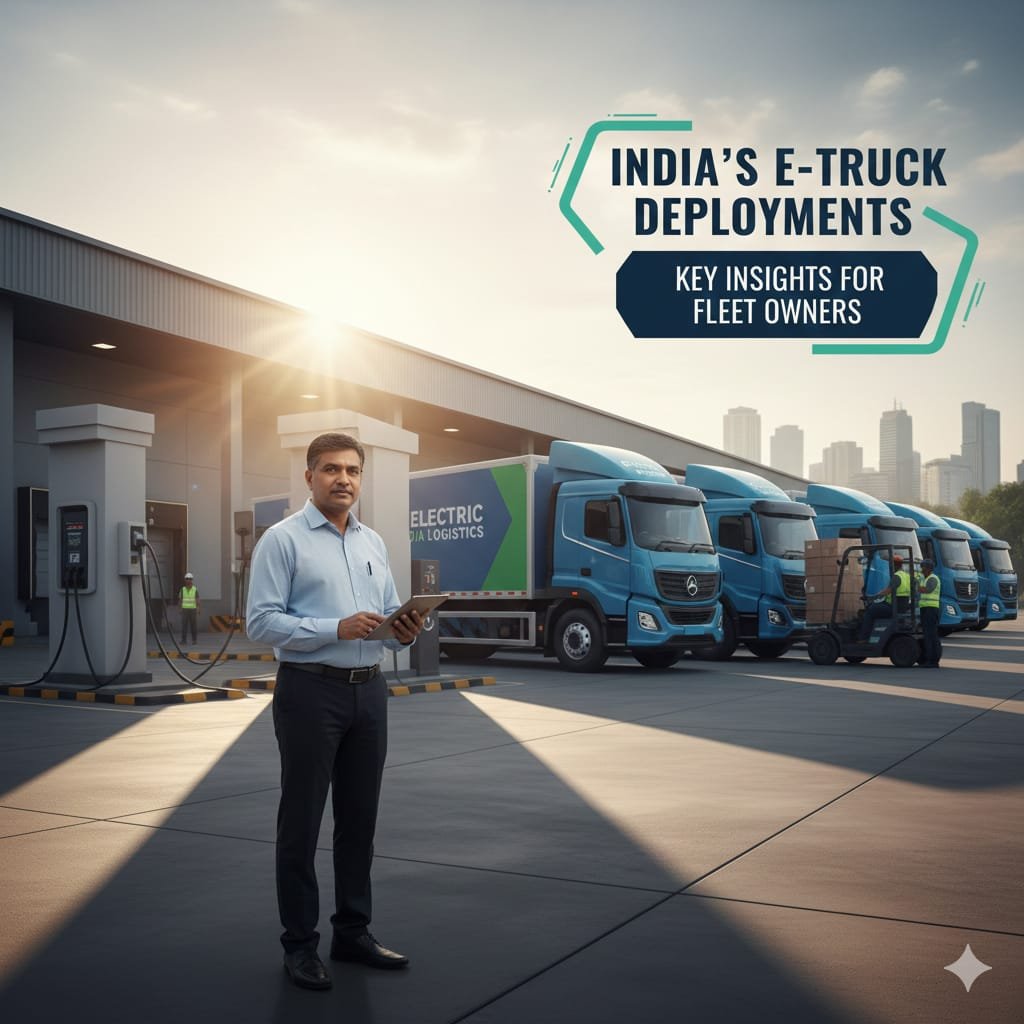
As India’s freight and logistics sector evolves, recent deployments of electric trucks are beginning to reshape the landscape. For fleet owners — big or small — these developments bring fresh opportunities and challenges. Understanding what’s changing now can help you make informed decisions about upgrading, buying or diversifying your fleet.
Growing Electric-Truck Deployments: What’s Happening
- The government’s recent PM E-DRIVE initiative is pushing electric-truck adoption aggressively. Under this scheme, buyers of electric trucks with gross vehicle weight from 3.5 tonnes up to 55 tonnes become eligible for incentives ranging from ₹2.7 lakh to as much as ₹9.6 lakh per vehicle.
- Firms like Billion Electric Mobility have secured over 250 long-term EV truck contracts across India — deploying medium- and heavy-duty electric trucks (12T to 55T) for clients in e-commerce, FMCG, cement, steel, pharmaceuticals, and general logistics.
- Heavy-duty electric trucks with advanced features are arriving. For instance, Blue Energy Motors recently launched a battery-swap e-truck, aiming to drastically reduce charging downtime. Their model intends to make EV adoption more viable for heavy logistics, mining, and industrial freight.
- Another milestone: at the port of Jawaharlal Nehru Port Authority (JNPA), battery-swappable heavy-duty e-trucks have been deployed — a first in India’s port and freight sector. The trucks can have their battery packs swapped quickly, which improves uptime and makes electrified heavy-duty logistics more practical.
What This Means for Fleet Owners
Lower operational costs over time
Electric trucks typically have fewer moving parts than conventional diesel trucks, leading to lower maintenance costs. Electricity tends to be cheaper and more stable than diesel, helping reduce fuel expenditure. Over long haul and frequent-run operations, this can significantly reduce total cost of ownership (TCO).
Attractive subsidies and incentives help ease the upfront cost burden
Thanks to PM E-DRIVE incentives, the higher upfront cost of electric trucks becomes more manageable. This makes them more viable — especially if you scrappage an older diesel truck and upgrade.
Better suitability for specific logistics use-cases
Electric trucks currently make most sense for sectors with predictable routes, frequent returns, or short-to-medium hauls — such as urban delivery, cement, FMCG, construction material transport, port logistics, and industrial movement. Deployments by companies like Billion E and port authorities show that e-trucks are gradually gaining traction in such sectors.
Reduced environmental footprint and regulatory alignment
E-trucks produce zero tailpipe emissions — helping reduce air pollution and align freight operations with sustainability goals. In sectors like cement, logistics hubs, and urban delivery, this could improve compliance with emission norms and garner goodwill among clients and regulators.
What Fleet Owners Need to Evaluate Carefully
- Upfront cost remains high: Even with incentives, electric trucks typically cost more than diesel equivalents due to expensive battery technology.
- Charging or battery-swap infrastructure is still growing: While battery-swapping models (as with Blue Energy Motors or the JNPA deployment) are promising, such infrastructure remains limited and concentrated in certain corridors or industrial clusters. For long-distance or remote routes, planning becomes critical.
- Route and duty-cycle matter: E-trucks are currently most efficient for predictable loads, shorter routes, city/regional freight, or return-heavy operations. For irregular long-haul, heavy loads or remote routes with limited charging support, diesel may still be more economical.
- Resale value & secondary market still uncertain: As e-trucking is nascent, resale values and long-term asset-liquidity remain to be tested — important factors if you plan to upgrade or divest later.
Strategic Considerations for Fleet Owners
If you manage or plan to build a fleet, consider a hybrid strategy: deploy electric trucks where they make sense (urban logistics, repeated short/medium runs, port/industrial logistics) — while retaining diesel trucks for long-haul or remote routes. Monitor infrastructure developments closely, especially battery-swap stations and charging hubs on your regular corridors. Take advantage of government incentives under PM E-DRIVE while they last. And approach e-trucks as a long-term investment: operational cost savings, reduced emissions, and compliance advantages could outweigh higher upfront costs over 3–5 years.
Electric-truck deployments in India are no longer experiments — they are starting to define real logistics operations across sectors. For fleet owners, this is a potentially transformative moment: early adoption could bring cost savings, operational efficiency, and a competitive edge. The key: choose the right use-cases, plan routes smartly, and stay updated on infrastructure and policy developments.