
News List
Are CNG And LNG Trucks Practical For Haulage

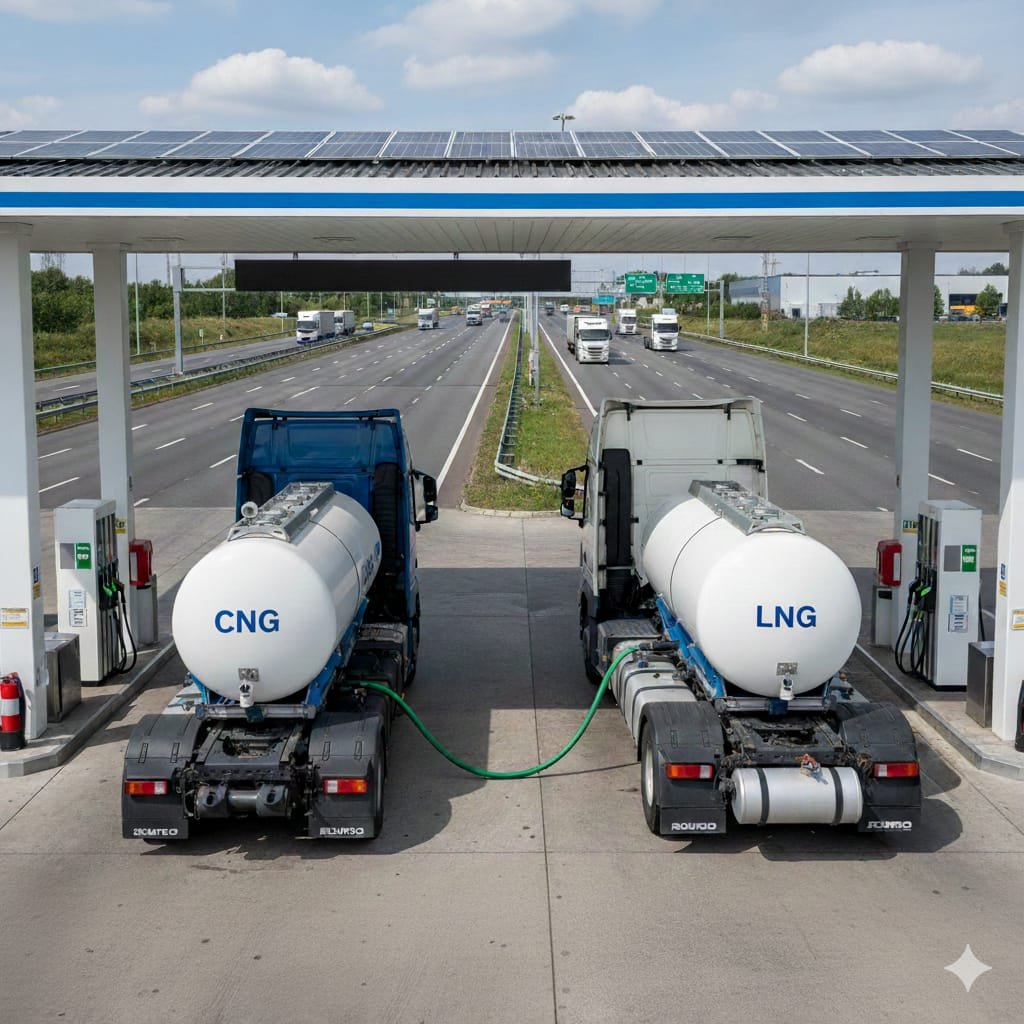
India’s commercial transport sector is undergoing a clear shift as operators look beyond diesel to cleaner, more cost-efficient alternatives. Among the options gaining traction, CNG (Compressed Natural Gas) and LNG (Liquefied Natural Gas) trucks are emerging as serious contenders for long-haul freight movement. While both fuels promise lower emissions and operating costs, the real question remains: Are they practical for long-distance logistics today?
Rising Fuel Prices Drive Interest in Natural Gas Trucks
Diesel has long dominated India’s haulage industry, but unpredictable pricing continues to squeeze fleet profitability. CNG and LNG offer a compelling advantage here — more stable fuel prices and significant savings on running costs. LNG, in particular, delivers higher energy density than CNG, making it suitable for long trips with fewer refuelling stops.
For fleet owners, this translates into reduced cost per kilometre, which remains the biggest deciding factor in truck operations.
Range and Performance Are Improving
Early CNG trucks were better suited to city-based logistics due to lower range, but today’s upgraded systems offer far more capability. LNG trucks can travel up to 1,000 km on a single tank, matching or even exceeding the range of traditional diesel tractors. CNG long-haul models now come with larger tanks and optimised engines that support intercity transport more reliably.
OEMs are also launching more powerful CNG and LNG variants, ensuring that gradients, payload capacity, and torque do not compromise performance.
Cleaner Fuel Helps Meet Future Compliance
India is heading towards stricter emission norms and sustainability targets. CNG and LNG trucks emit significantly fewer pollutants — from particulate matter to greenhouse gases. Large logistics companies are increasingly expected to show progress on decarbonisation, and natural gas trucks offer a viable transition pathway before complete electrification becomes mainstream.
For fleet owners working with major FMCG, e-commerce, or contract logistics partners, adopting cleaner fuel options can strengthen business opportunities.
Infrastructure Remains the Biggest Challenge
Despite the advantages, widespread adoption faces a practical concern: fuel availability.
- CNG stations are expanding steadily across highways but still lack uniform coverage.
- LNG corridors, though growing, are in early stages and currently concentrated along major freight routes.
However, government-backed plans to set up over 1,000 LNG stations in the next few years and stronger investment from OMCs and private players signal rapid improvement. Many fleet owners running fixed, predictable routes are already switching because their corridor coverage is assured.
Total Cost of Ownership Is Becoming Attractive
While natural gas trucks may have a higher upfront price, the long-term savings are substantial. Lower fuel costs, fewer oil changes, reduced engine wear, and BS-VI compliance readiness contribute to a favourable total cost of ownership (TCO). As diesel trucks become more complex and expensive to maintain under stricter emission norms, the economic case for CNG and LNG grows stronger.
So, Are They Practical Today?
For city-to-city, medium-haul, and predictable long-haul routes, CNG and LNG trucks are already proving practical, profitable, and cleaner. For operators depending on flexible routing or working in regions with limited fuelling infrastructure, diesel still offers convenience — at least for now.
But the industry direction is unmistakable:
Natural gas trucks are shifting from “alternative” to “mainstream,” and early adopters are already reaping the financial and environmental benefits.
If infrastructure expansion continues at the current pace, CNG and LNG could become the dominant long-haul choice much sooner than expected.