
News List
LNG Powered Trucks Gain Traction Among Long-Haul Operators in India

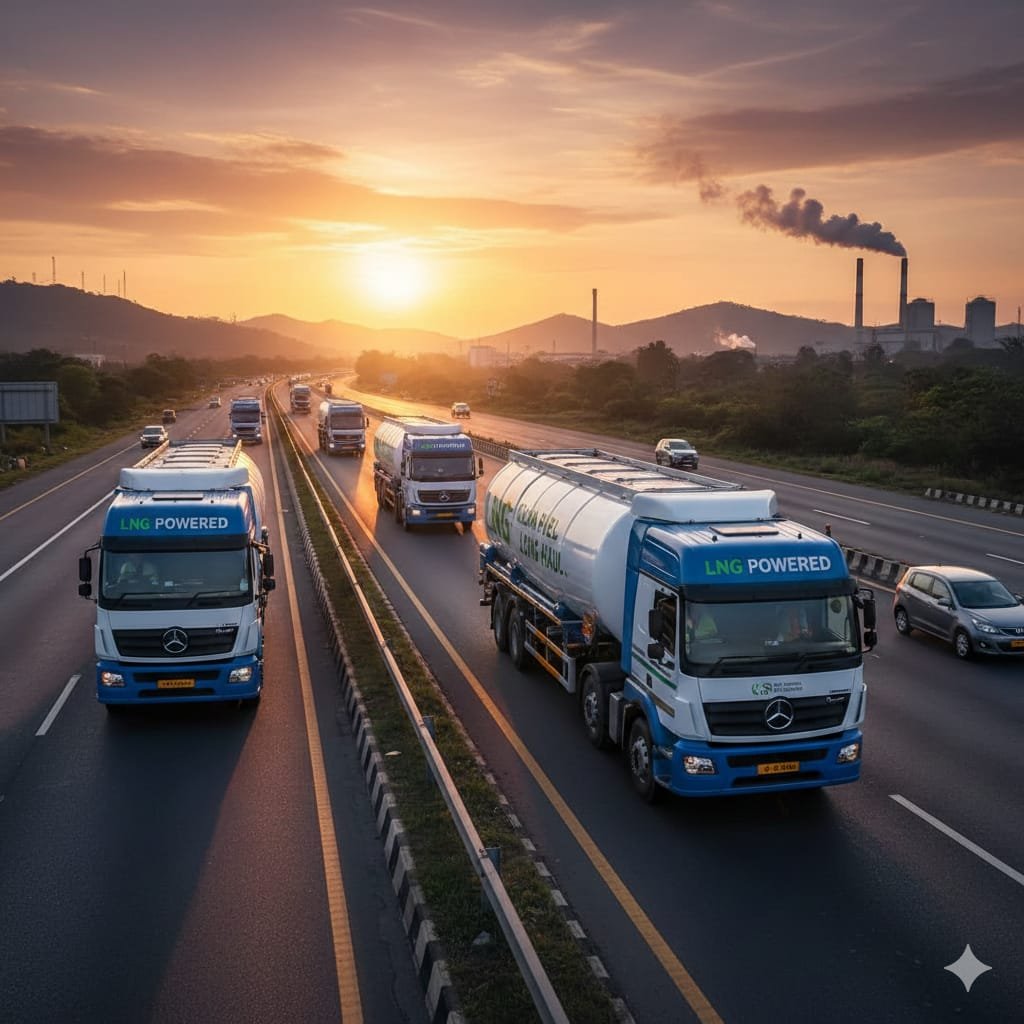
In recent months, liquefied natural gas (LNG)–powered heavy-duty trucks are increasingly becoming the preferred choice among long-haul fleet operators in India. With cleaner fuel, lower running costs, and expanding refuelling infrastructure, LNG trucks are quickly moving from niche experiments to mainstream heavy-haul fleets.
Cleaner Fuel, Lower Emissions
One of the biggest advantages of LNG over diesel lies in its environmental impact. LNG-powered trucks emit up to 30% less carbon dioxide compared to conventional diesel trucks, while also producing significantly fewer particulates and harmful emissions.
For fleet operators and clients increasingly under pressure to meet ESG (Environmental, Social & Governance) criteria, reducing carbon footprint is no longer optional — it’s a business imperative. As a result, many are pivoting toward LNG as a practical medium-term solution before zero-emission vehicles scale up across heavy freight.
Comparable Performance With Lower Operating Costs
Early adopters report that LNG trucks deliver virtually the same performance as diesel counterparts — with no compromise on payload or range.
At the same time, operators benefit from lower fuel costs and reduced maintenance expenses, which leads to improved total cost of ownership over time. This makes LNG especially attractive for long-haul transportation — where fuel and mileage play a critical role in profitability.
Momentum From Fleet Operators and Clean-Mobility Advocates
Companies such as Blue Energy Motors have been pioneers in deploying LNG-powered heavy trucks; their fleet has grown steadily in 2024–2025.
Similarly, GreenLine Mobility Solutions — a major player in corporate logistics — plans to add hundreds more LNG trucks to its fleet by early 2025.
On the OEM side, long-haul ready LNG offerings from Tata Motors have gained fresh momentum: the company recently tied up with THINK Gas to expand LNG refuelling infrastructure across key freight corridors.
Additionally, VE Commercial Vehicles (VECV) signed a major agreement with an LNG supplier to deploy 500 LNG-powered trucks — a clear indicator that traditional CV manufacturers are betting on LNG’s long-haul potential.
Growing Infrastructure — Fueling the Fuel
One of the main constraints on alternative-fuel trucks has been the lack of reliable refuelling infrastructure. That’s changing fast. Partnerships between OEMs and fuel-supply players are now focused on building LNG corridors and networks across industrial and freight-heavy regions.
With better access to refuelling — and fuel quality assurances — fleet operators are more willing to commit to LNG-powered long-haul trucks. This improved ecosystem is playing a big role in boosting confidence across logistics players.
What This Trend Means for the Future of Indian Freight
The increasing adoption of LNG-powered trucks suggests a likely shift in India’s heavy-haul freight ecosystem over the next few years. Key expectations:
- A gradual transition from diesel to LNG among long-haul fleets, especially those covering long distances and heavy payloads.
- More commercial-vehicle manufacturers offering dedicated LNG models tailored for Indian freight needs.
- Expansion of LNG refuelling infrastructure across major freight corridors — boosting reliability for long-haul logistics.
- Potential reduction in the logistics sector’s carbon emissions footprint, even before full electrification becomes viable.
For fleet operators, LNG presents a compelling middle path — lower emissions, lower operational costs, and reliability — while buying time for full-scale electric or zero-emission transport solutions.