
News List
How OEMs Are Shaping the Future of Transport With Smart Connected Vehicle Technology

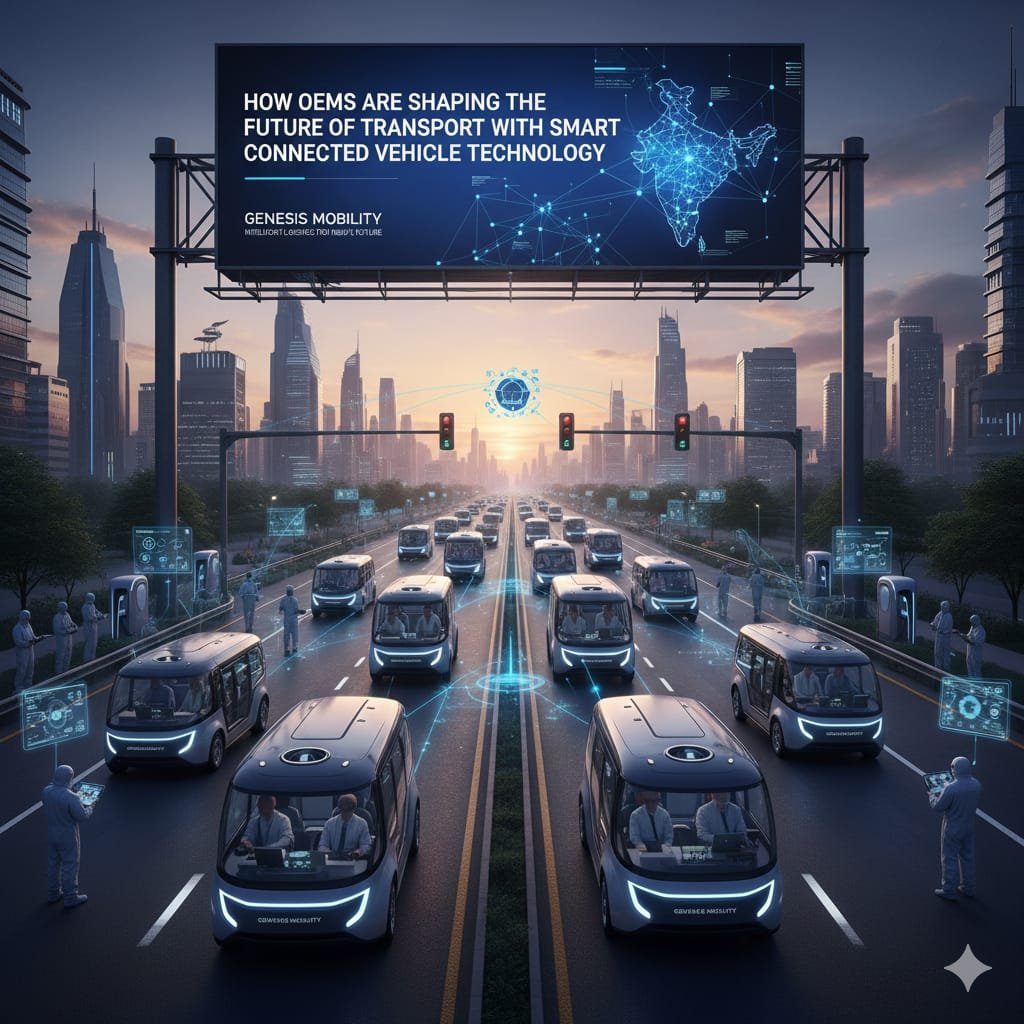
The shift: Vehicles are no longer just machines
The traditional view of a vehicle — a mechanical, standalone machine — is rapidly evolving. Leading manufacturers (OEMs) are now reimagining vehicles as software-defined, connected platforms, with embedded sensors, internet connectivity, and a constant data loop.
In essence, modern cars, trucks and commercial vehicles are turning into “edge devices” in a broader digital mobility ecosystem.
What “smart connected” means: Key capabilities
• Telematics, remote diagnostics & predictive maintenance
Connected vehicles come with built-in telematics systems that constantly monitor vehicle health, performance metrics and usage patterns. Rather than waiting for breakdowns or servicing schedules, OEM-installed connectivity allows early detection of potential issues, enabling proactive — or predictive — maintenance. This reduces downtime, prevents costly repairs, and enhances the vehicle’s reliability.
• Real-time data exchange and communications (V2X / V2I / V2V)
Smart connected vehicle technologies enable communication not only between vehicle and cloud — but among vehicles, infrastructure, and even traffic systems. Known broadly as V2X (vehicle-to-everything) connectivity, this allows sharing of traffic data, hazard alerts, and road-condition info in real time.
This extends the vehicle’s awareness, enabling better traffic management, collision avoidance systems, and more responsive mobility solutions. For public transport, freight fleets, or even private vehicles — the safety and efficiency implications are significant.
• Over-the-air updates & software-defined features
Instead of hardware upgrades or recall-based fixes, modern OEM-built vehicles can receive over-the-air (OTA) software updates — improving performance, security, and adding new features over time.
This software-defined vehicle (SDV) model enables manufacturers to shift away from one-time sales toward a lifecycle of ongoing service — unlocking subscription-based offerings such as advanced driver assistance (ADAS), premium infotainment, navigation services, remote diagnostics, and more.
• Personalized, intelligent in-vehicle experience
Connected vehicles are no longer “one-size-fits-all.” Through integration of AI, cloud connectivity and data analytics, vehicles can offer a more personalized and intelligent driving experience — adaptive climate, entertainment, navigation based on preferences, and dynamic safety features depending on context.
For drivers and fleet operators alike, this means more comfort, better control, and smarter usage of the vehicle.
Why OEM-Led Connectivity Matters
Because these systems are built-in at the manufacturing stage, they tend to be more robust, integrated, and future-ready compared to aftermarket retrofits. According to recent market data, OEM-installed connected vehicle technology accounts for nearly three-quarters of the market share, underscoring how central OEMs are to the future of connected mobility.
When OEMs design connectivity, safety, diagnostics, vehicle-to-infrastructure communication and update-capable software from day one, vehicles become long-term assets, rather than short-term tools. This reduces total cost of ownership, improves resale value, and provides scope for continuous improvement — a transformation especially relevant for fleet owners, logistics firms, and businesses relying on transport.
Moreover, OEM-led connectivity fosters a whole ecosystem: from telematics to fleet-management platforms, from remote-maintenance services to data-driven mobility solutions. This makes transport more efficient, scalable, safer, and aligned with emerging smart-city and smart-infrastructure goals.
What this means for the future of transport
- Safer roads and fewer accidents: With V2X communication, predictive safety alerts, collision avoidance and real-time hazard info — vehicles help prevent accidents before they occur.
- Efficient fleets and lower running costs: For commercial vehicles and logistics fleets, remote diagnostics, predictive maintenance and real-time tracking significantly boost uptime and reduce operational cost.
- Flexible, upgradeable mobility solutions: As features become software-defined and subscription-based, fleets can scale services (e.g. advanced driver assistance, smart routing, data analytics) without buying new vehicles — just via updates.
- Integration with smart-city infrastructure: With connectivity and data exchange between vehicles, infrastructure and traffic systems, transport will integrate with broader mobility networks — enabling smarter traffic management, dynamic routing, and public transport integration.
- New revenue models for OEMs and mobility players: As vehicles become platforms, OEMs and mobility service providers can monetize data, services, and connectivity — shifting the industry from hardware-driven to service-driven.
The challenges ahead
Of course, the shift brings challenges: connectivity infrastructure (network coverage, data privacy, cybersecurity), standardization of V2X protocols, and ensuring interoperability among vehicles and infrastructure remain hurdles. Data privacy and security become especially critical as vehicles exchange growing amounts of sensitive information.
Moreover, for markets like India — with diverse road conditions, mixed-performance infrastructure, and varied user behaviour — adoption will require leap-frogging old norms, ensuring affordable pricing, and building robust servicing and support ecosystems.
Conclusion
OEMs are not just building vehicles anymore — they are crafting mobility platforms. Through smart connected vehicle technology, they are reshaping how we travel, how logistics run, how transport integrates with cities and infrastructure. The future of transport lies not in metal and engines alone, but in software, data, connectivity and continuous evolution.
For fleet owners, transport companies, policy-makers and everyday users alike, this evolution promises safer roads, smarter mobility, efficient operations, and a more sustainable transport ecosystem — driven by OEMs leading the way.