
News List
Ashok Leyland Accelerates EV Push as Switch Mobility Turns Profitable, Plans Battery Plant and Global Expansion

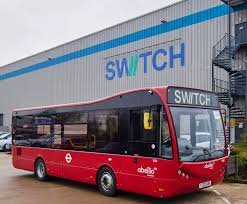
Ashok Leyland is sharpening its electric mobility strategy as its EV subsidiary, Switch Mobility, delivered a profitable performance in the first half of FY26—marking a key milestone for the Hinduja Group company amid a favourable GST regime and rising EV adoption in India.
Switch Mobility, which emerged from Ashok Leyland’s acquisition and rebranding of UK-based Optare Plc in November 2020, achieved a positive profit after tax supported by cost discipline, integrated manufacturing, and operational efficiencies created by sharing resources with its parent company. The profitability marks a significant turnaround for the brand as the Indian commercial EV market gains momentum.
Production Shift to the UAE for Cost Efficiency
Ashok Leyland is also restructuring Switch Mobility’s global operations. The company has begun transitioning production of its electric buses from Sherburn in the UK to Ras Al Khaimah in the UAE, aiming to reduce manufacturing costs and improve logistics. The shift, expected to cost under $3 million, will serve both Gulf Cooperation Council nations and European customers.
“We have not exited the UK or European markets. The relocation is purely to optimize cost and logistics,” said Shenu Agarwal, Managing Director and CEO of Ashok Leyland, during the company’s Q2 post-earnings briefing.
Plans for a Large-Scale Battery Manufacturing Facility
Reinforcing its long-term EV ambitions, Ashok Leyland is preparing to enter the EV battery manufacturing space with a two-phase investment totalling approximately ₹5,000 crore. While the company has not yet finalised the plant location, consultations with multiple state governments are underway. A decision is expected by late December or early January, according to Agarwal.
In the first phase, the facility will focus on battery pack assembly, followed by cell manufacturing in subsequent years as part of a broader EV centre of excellence.
R&D and Charging Infrastructure Initiatives
The company is also deepening its investment in battery technology and charging solutions. A pilot programme is being readied for battery swapping and fast-charging systems aimed at commercial EVs. Agarwal added that the company is evaluating 1 MW high-capacity fast chargers suitable for heavy-duty vehicles, emphasizing that geopolitical uncertainties—particularly those related to China—will not deter Ashok Leyland from its long-term EV strategy.
Alongside EV initiatives, Ashok Leyland is preparing to begin commercial production at its new greenfield plant in Lucknow within the next two months. The facility will manufacture CNG, electric, and diesel models, strengthening the company’s multi-fuel product offering.
Defence Business and FY26 Outlook
The company also expects robust performance from its defence vertical. Existing capacities have been fully booked for the next two years, with order pipelines ensuring strong utilisation. “Our challenge right now is execution, not order inflow,” Agarwal said, adding that confirmed and upcoming orders will keep operations engaged for at least 18 months.
With new launches—including CNG-diesel biofuel variants—planned later this fiscal, Ashok Leyland anticipates better-than-expected performance in FY26. The management said the GST 2.0 reforms have boosted consumption, while government capital expenditure in the second half of the year is likely to further support growth.