
News List
Mini Backhoe Loaders Guide for Smart Procurement

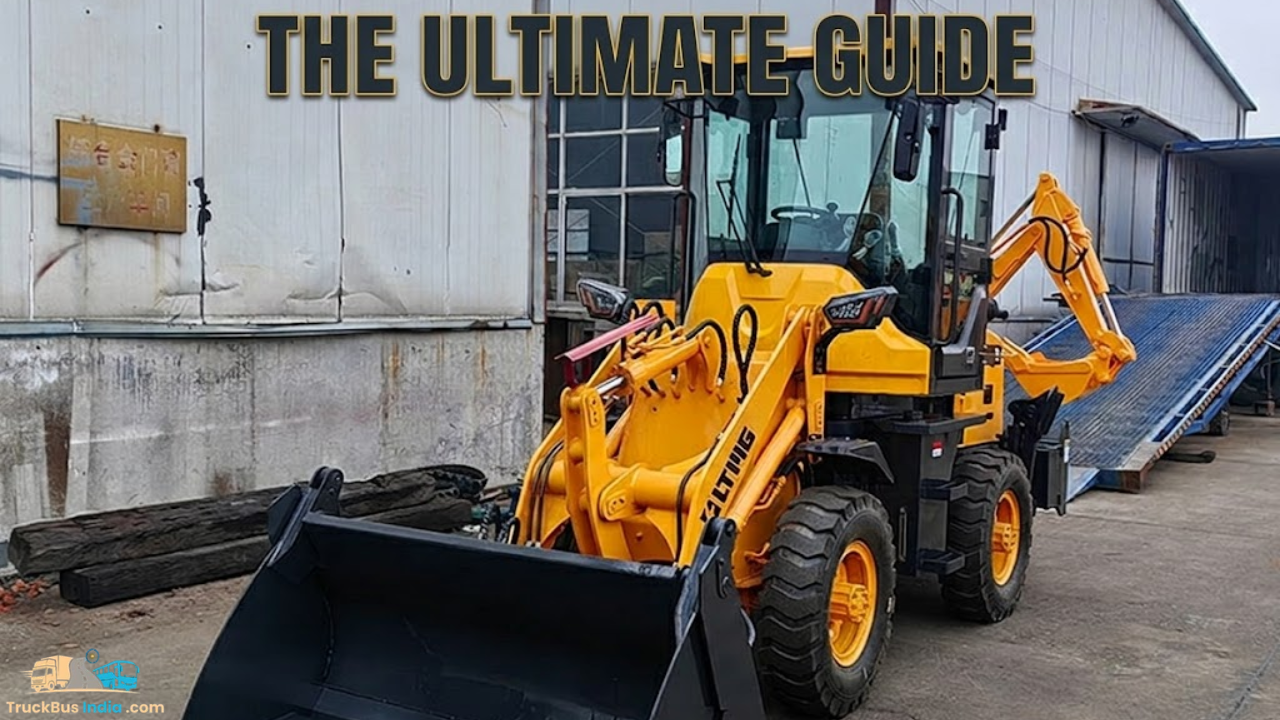
Mini backhoe loaders have become essential equipment in construction, landscaping, and agriculture due to their compact design and multi-function capability. This mini backhoe loaders guide explains how these machines work, their applications, and key factors to consider before purchase.
For procurement managers and business owners, mini backhoe loaders guide decisions are often driven by efficiency, versatility, and cost optimization in competitive industries.
How Mini Backhoe Loaders Work
A mini backhoe loader integrates two key functions into one machine: a front loader bucket and a rear backhoe arm. This dual system allows it to handle both loading and digging tasks efficiently.
The mini backhoe loaders guide highlights that hydraulic systems control all movements through joysticks or levers, enabling precision operation even in tight jobsite conditions.
Applications and Industrial Uses
According to this mini backhoe loaders guide, these machines are widely used across landscaping, construction, and agriculture.
In landscaping, they help with digging ponds, planting trees, and trenching irrigation lines. In construction, they are used for foundations, utility trenches, grading, and material handling. On farms, they support drainage work, barn cleaning, and post-hole digging.
Their compact design allows mini backhoe loaders to guide users to operate in spaces where larger machines cannot fit.
Attachments and Versatility Expansion
A key insight in the mini backhoe loaders guide is that attachments significantly enhance machine utility. With quick-attach systems, one machine can perform multiple roles.
Common attachments include breakers for demolition, augers for drilling, pallet forks for lifting materials, ditching buckets for trenching, and compactors for soil preparation. This flexibility makes mini backhoe loaders guide recommendations highly valuable for multi-tasking operations.
Procurement Checklist for Buyers
This mini backhoe loaders guide emphasizes evaluating key specifications before purchase.
Important factors include digging depth, loader lift capacity, engine horsepower, hydraulic flow, and machine weight. These determine performance, transportability, and job suitability.
Modern procurement decisions in the mini backhoe loaders guide also focus on operator safety features, comfort, and easy maintenance access to reduce downtime.
Choosing Between Equipment Types
The mini backhoe loaders guide often compares them with skid steers for residential and small construction work.
While skid steers are better for fast material movement in tight areas, mini backhoe loaders offer superior digging depth and trenching ability. This makes them more suitable for projects requiring both excavation and loading in a single machine.
Conclusion
This mini backhoe loaders guide shows that these machines offer a strong balance of power, versatility, and cost efficiency. For contractors, landscapers, and farmers, selecting the right model based on operational needs can significantly improve productivity and reduce equipment costs.
FAQ
What is the main advantage of mini backhoe loaders?
The mini backhoe loaders guide explains that their main advantage is combining digging and loading functions in one compact machine.
Which attachments are most useful?
According to the mini backhoe loaders guide, pallet forks and augers provide the best return on investment for most users.
How do mini backhoe loaders differ from skid steers?
The mini backhoe loaders guide states that they are better for digging and trenching, while skid steers excel in fast material handling and tight-space maneuvering.