
News List
Telangana Bus Strike Today: Everything You Need to Know

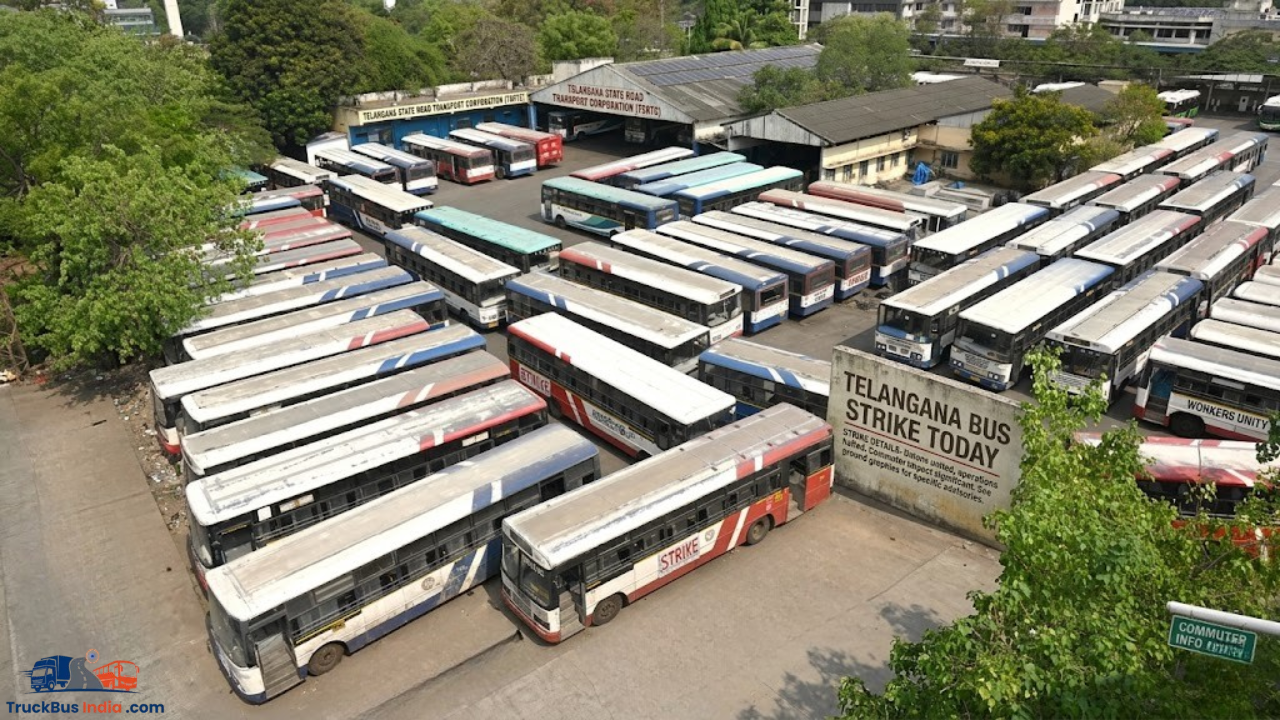
Public transport across Telangana has come to a halt as employees of the Telangana State Road Transport Corporation (TGSRTC) launched an indefinite strike from April 22, 2026. The disruption has severely impacted daily commuting across Hyderabad and other regions, leaving millions searching for alternative travel options.
Statewide shutdown disrupts daily commuting
The Telangana bus strike has forced more than 6,000 buses off the roads, bringing services at key hubs like MGBS, JBS, and Mehdipatnam to a complete standstill. The shutdown is expected to affect over 60 lakh daily passengers, including nearly 14 lakh women who depend on the Mahalakshmi free bus scheme.
RTC unions lead large-scale protest
The strike is being led by the RTC Joint Action Committee, representing over 38,000 employees across 97 depots. This includes drivers, conductors, and technical staff, making it one of the largest coordinated transport strikes in the state.
Major unions such as the National Mazdoor Union and Telangana Mazdoor Union have also joined the protest, increasing pressure on the state government.
Key demands behind Telangana bus strike
The ongoing agitation is driven by a 32-point charter of demands that workers claim have remained unresolved for years. The primary demand is the full merger of RTC with the state government to ensure job security.
Other demands include immediate implementation of the 2021 Pay Revision Commission arrears, clarity on the 2025 salary hike with 30 percent fitment, and clearance of nearly ₹1,000 crore in pending provident fund and cooperative dues. Workers are also opposing the induction of private electric buses, citing concerns over privatisation.
Government response and negotiation status
The Telangana government has taken a cautious stance, stating that while it understands employee concerns, a full merger is financially complex. Transport Minister Ponnam Prabhakar has indicated that a high-level committee may be formed to assess the feasibility of the demands.
Officials have also warned that the Essential Services Maintenance Act could be invoked if the strike continues to disrupt essential services.
Public faces rising travel costs and disruption
With state-run buses off the roads, private transport operators have stepped in to fill the gap. This has led to a sharp increase in fares, with commuters reporting that prices have doubled or even tripled for routine routes.
The Hyderabad Metro and MMTS services are running at increased frequency but are facing heavy crowding due to the sudden surge in demand. Daily wage workers and students are among the worst affected, with many forced to either pay high fares or skip travel.
Alternative travel options for commuters
Commuters are being advised to plan their journeys carefully as the Telangana bus strike shows no immediate signs of resolution. Metro rail and MMTS remain the most reliable alternatives, while private cabs and autos are available but expensive and limited.
Several educational institutions have also adjusted schedules or shifted to online classes to manage the disruption.
Conclusion
The Telangana bus strike has triggered a major transport crisis across the state, affecting millions of daily commuters. With over 6,000 buses off the roads and no immediate breakthrough in negotiations, the situation continues to strain public mobility and increase travel costs across Hyderabad and beyond.