
News List
India’s Commercial Vehicle Industry Registers Strong FY26 Growth

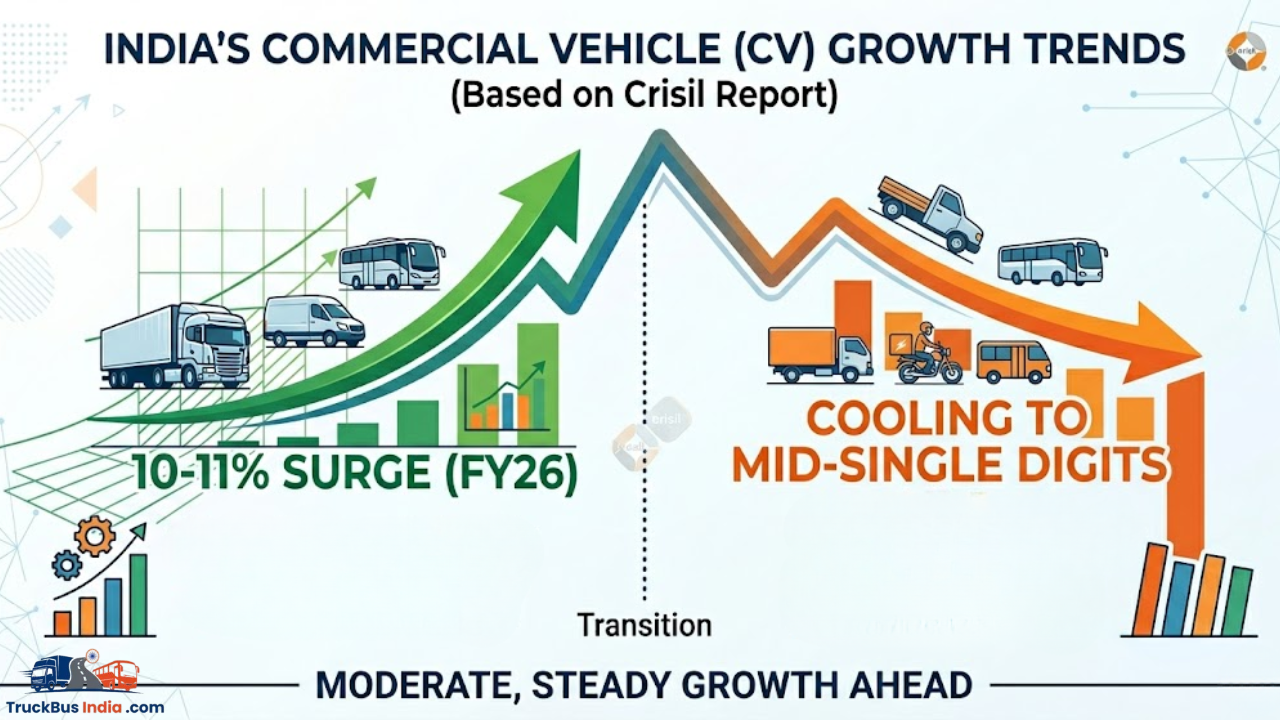
India’s commercial vehicle (CV) industry closed FY26 with an estimated growth of 10% to 11%, according to Poonam Upadhyay, Director at Crisil Ratings. The growth was driven primarily by light commercial vehicles (LCVs), such as small delivery vans, which outpaced the broader market with 11% to 13% growth, while medium and heavy commercial vehicles (MHCVs) expanded steadily at 8-10%.
Factors Driving FY26 Surge
The surge in sales was largely triggered by a reduction in the Goods and Services Tax (GST) rate from 28% to 18%, which lowered vehicle prices and encouraged buyers to unlock years of delayed purchases. Government infrastructure projects and increased mining activity further boosted fleet demand, creating a robust market environment for commercial vehicles.
FY27 Growth Outlook: Moderate Expansion Expected
While FY26 growth was strong, FY27 is expected to see moderation to mid-single digits. The ongoing conflict in West Asia is considered a near-term headwind, with volatile fuel prices and rising logistics costs expected to squeeze transport company profit margins.
Short-Term Challenges
These financial pressures may lead fleet owners to adopt a more cautious spending approach, particularly in the first quarter of FY27. This could result in a relatively soft start to the year as businesses delay expansion plans, balancing immediate operational costs against long-term investment strategies.
Structural Strengths Ensure Long-Term Resilience
Despite near-term headwinds, the structural foundations of India’s CV market remain robust, anchored by consistent demand for freight movement, active infrastructure projects, and regular replacement cycles for aging vehicles.
Recovery Potential
Analysts predict that as pressures from global shipping delays and fuel spikes ease, CV demand will regain momentum in the later quarters of FY27. This underscores the resilience of the Indian automotive sector, where rapid FY26 growth may be cooling, but the long-term path to recovery remains firmly intact.