
News List
PM Modi Inaugurates Kaynes Semiconductor Plant in Sanand

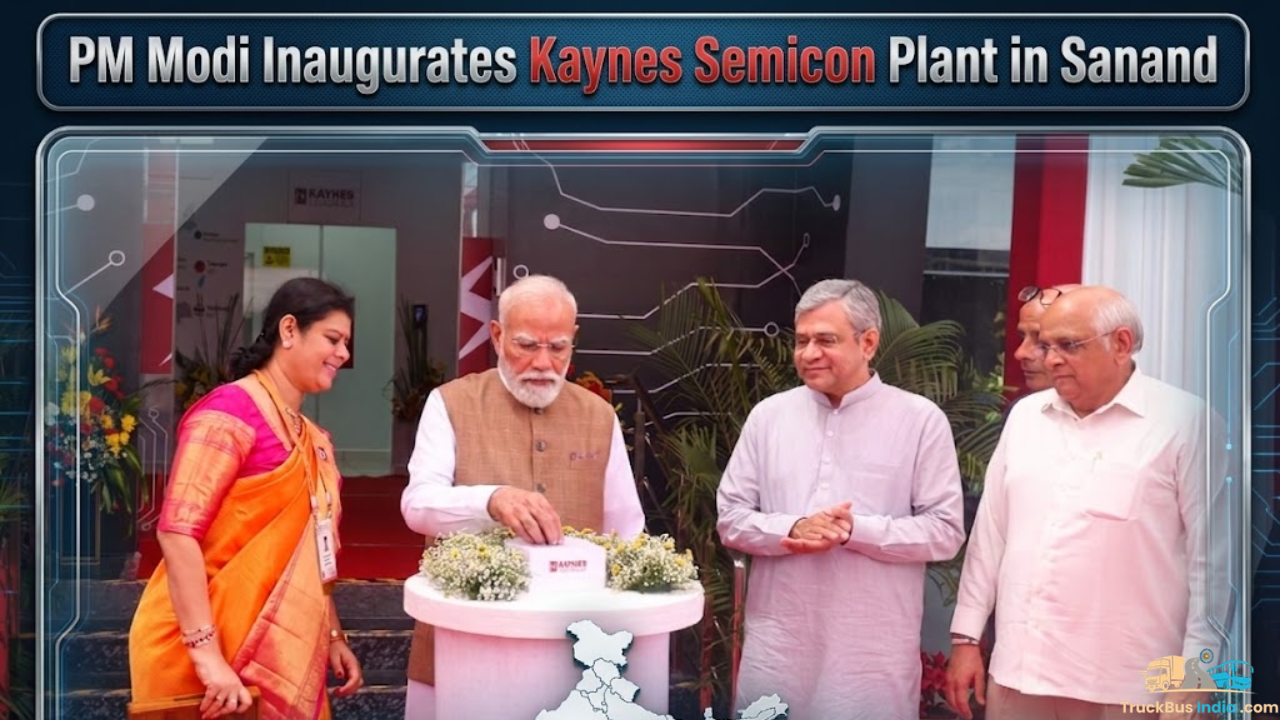
Prime Minister Narendra Modi on Tuesday inaugurated the semiconductor facility of Kaynes Technology in Sanand, marking the start of production and signalling India’s rapid progress in building a robust semiconductor ecosystem.
The inauguration follows last month’s launch of Micron Technology’s facility in the same region, highlighting the pace at which India is advancing its chip manufacturing ambitions.
Kaynes Facility Strengthens India’s Semiconductor Capabilities
Speaking at the event, Modi described the entry of an Indian company into semiconductor manufacturing as a “wonderful beginning.” He said the facility represents India’s growing integration into the global semiconductor supply chain and aligns with the “Make in India, Make for the World” vision, with a substantial share of output already earmarked for export.
The Sanand plant will produce Intelligent Power Modules (IPMs), key components for electric vehicles and industrial applications. Modi highlighted that the products will support both domestic needs and international markets, including the United States.
Semiconductor Supply Chains and Strategic Growth
Modi emphasised the importance of resilient semiconductor supply chains, especially following disruptions caused by the COVID-19 pandemic and geopolitical tensions. He stated that India’s efforts aim to contribute to global stability while advancing national self-reliance.
The Prime Minister also referenced the India Semiconductor Mission, launched in 2021, as a strategic initiative to build long-term capabilities across the semiconductor value chain. According to the government, ten semiconductor-related projects worth over ₹1.6 lakh crore are currently underway across six states.
Indigenous technologies such as the Dhruv 64 microprocessor, designed for 5G infrastructure, automotive electronics, and industrial automation, were also highlighted as part of India’s push for self-reliance.
Next Steps: India Semiconductor Mission 2.0
Looking ahead, the next phase, India Semiconductor Mission 2.0, will focus on domestic production of semiconductor equipment and materials to create a more comprehensive ecosystem.
Efforts to strengthen the talent pipeline were also emphasised. India is close to training over 85,000 semiconductor design professionals, with initiatives like the Chips to Startup programme enabling universities and startups to access advanced design tools and develop multiple chip designs.
Industry estimates place India’s semiconductor market at around $50 billion today, projected to exceed $100 billion by the end of the decade. Modi stressed the government’s goal of maximising domestic manufacturing to meet this growing demand.
In parallel, initiatives such as the National Critical Minerals Mission and regional corridors for rare earth elements aim to secure raw material supply chains, reducing dependence on imports and supporting long-term growth in electronics and semiconductor manufacturing.
India Poised for Global Technological Leadership
Modi described the current decade as a defining period for technological leadership, stating that India is positioning itself not just as a participant but as a key driver of global technological change.