
News List
Weekly Wrap: Supply Risks, March Sales Outlook

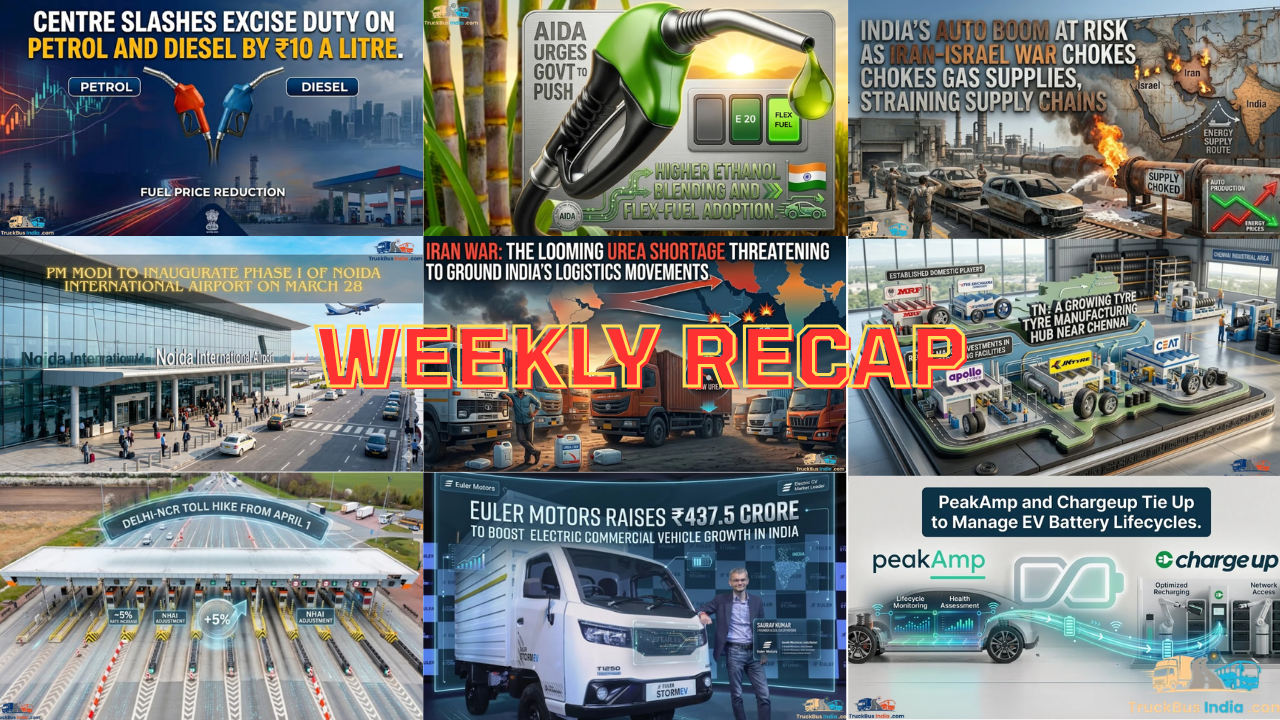
Rising geopolitical tensions in West Asia are beginning to test the resilience of India’s auto industry, with supply chain risks, fuel concerns and rising costs taking centre stage. While production and demand remain stable for now, the situation is creating uncertainty across manufacturing, logistics and policy planning. Here is a detailed look at the major developments shaping the sector this week.
Supply Chain Risks Rise Amid West Asia Tensions
The ongoing conflict in West Asia is putting pressure on India’s automotive supply chain, particularly through fuel-related disruptions and rising logistics costs. Smaller suppliers are facing the biggest challenge due to limited financial flexibility and thin margins.
Key trade routes such as the Strait of Hormuz are witnessing disruptions, leading to higher freight costs, longer transit times and increased inventory burdens. Electronics and semiconductor supplies remain vulnerable due to heavy import dependence.
Despite these challenges, vehicle production has not been significantly impacted yet. However, industry players remain cautious as prolonged disruptions could affect manufacturing schedules and demand momentum in the coming months.
Government Steps In To Stabilise Auto Industry
To manage emerging risks, the government has taken several measures to ensure supply continuity. Authorities have advised automakers to optimize production schedules, conserve fuel and explore alternative energy sources such as electricity.
At the same time, the government has assured that India currently holds sufficient fuel reserves for nearly two months of consumption. To further support industries, commercial LPG allocation to states has been increased by 20 percent, with priority given to sectors like automobiles.
In addition, excise duty on petrol and diesel has been reduced significantly to ease pressure on oil companies dealing with rising global crude prices.
Policy Push Continues With EV Incentives
The government has extended financial support under the PM E-DRIVE scheme to sustain electric vehicle adoption. Incentives for electric two-wheelers will continue until July 31, 2026, while electric three-wheelers will receive support until March 31, 2028.
This move aims to maintain momentum in the EV segment even as traditional supply chains face uncertainty due to geopolitical developments.
Production Plans And Industry Movements Gain Momentum
Despite global uncertainties, several automakers and suppliers are moving ahead with expansion and production plans. Maruti Suzuki has approved an investment of ₹10,189 crore for a new manufacturing facility in Gujarat, expected to add significant production capacity.
Honda Motorcycle and Scooter India is targeting production of 6.79 million units by FY27, focusing on premium products and exports. Meanwhile, Jaguar Land Rover has temporarily paused production at its Solihull plant due to supplier constraints, although the impact is expected to be short-term.
Other developments include Tenneco exploring a new plant in India to meet rising demand for suspension technology, and Euler Motors planning capacity expansion alongside new manufacturing initiatives.
Demand Remains Strong Despite Global Uncertainty
India’s passenger vehicle segment continues to show resilience, with March dispatches expected to grow between 10 to 14 percent year-on-year. Strong bookings and festive demand have supported growth, even as global risks persist.
Auto retail performance has also remained steady, with healthy vehicle registrations across segments. However, early signs of caution are emerging, and demand could see some moderation in the coming months if uncertainties continue.
Stability Now, Caution Ahead
India’s auto industry is currently holding steady despite rising tensions in West Asia. Strong demand, government intervention and ongoing investments are helping maintain momentum.
However, supply chain vulnerabilities, fuel risks and global uncertainties remain key concerns. The coming months will be critical in determining whether the industry can sustain its growth trajectory or faces a slowdown due to prolonged disruptions.