
News List
Bajaj Wego vs Mahindra UDO Electric: Status, Features and Full Comparison

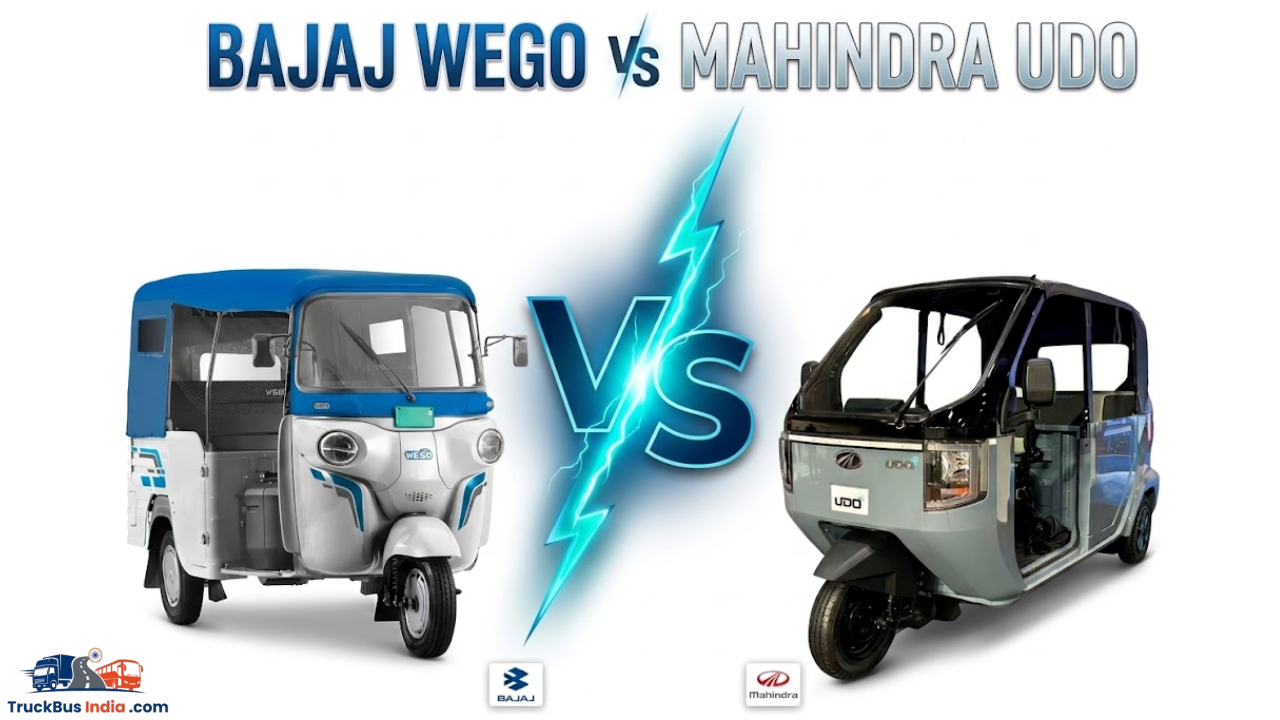
The Indian mobility market is rapidly shifting toward electric vehicles, especially in the last-mile transport and commuter segments. While traditional petrol scooters like the Bajaj Wego once dominated urban commuting, new-age electric vehicles such as the Mahindra UDO are redefining commercial and passenger transport efficiency.
However, comparing these two vehicles requires clarity, as they belong to completely different categories. The Bajaj Wego is a two-wheeler scooter designed for personal commuting, whereas the Mahindra UDO is a last-mile electric three-wheeler designed for passenger transport and commercial usage.
This article breaks down their status, features, performance, and usability in real-world conditions.
Vehicle Status Overview
Bajaj Wego
The Bajaj Wego is a petrol-powered scooter from Bajaj Auto. It features a 110cc engine and was designed for city commuting with a focus on comfort and mileage. Over time, it has been phased out in many markets as Bajaj shifted focus toward newer models and electric mobility solutions like the Chetak EV.
Key point:
- Petrol ICE scooter
- Discontinued in many regions
- Not an electric vehicle
Mahindra UDO Electric
The Mahindra UDO is a newly launched electric three-wheeler designed for last-mile passenger transport. It is part of Mahindra Last Mile Mobility’s EV portfolio and represents a shift toward commercial electric mobility.
Key point:
- Fully electric L5M category vehicle
- Launched in 2026
- Designed for commercial passenger transport
Design and Build Comparison
Bajaj Wego
- Traditional scooter design
- Lightweight body
- Built for 2-wheeler urban traffic
- Focus on ease of riding and practicality
Mahindra UDO
- Futuristic airplane-inspired design
- Monocoque chassis structure for higher strength
- Larger cabin space for driver and passengers
- Designed for comfort in commercial usage
The design philosophy is completely different: Wego prioritizes individual mobility, while UDO focuses on passenger capacity and comfort.
Performance Comparison
Bajaj Wego
- Engine: 110cc petrol engine
- Mileage: Approx. 45–50 km/l (real-world varies)
- Top speed: Around 80 km/h (approx.)
- Ideal for daily commuting in cities
Mahindra UDO
- Battery: 11.7 kWh lithium-ion pack
- Motor output: Around 10 kW
- Range: ~200 km real-world, up to 265 km certified
- Top speed: ~55 km/h
- Driving modes: Range, Ride, Race
The UDO clearly prioritizes torque and load-carrying efficiency over speed, while Wego is optimized for personal commuting agility.
Comfort and Features
Bajaj Wego
- Comfortable seat for rider
- Under-seat storage
- Basic analog-digital console
- Simple suspension setup
- Suitable for short city rides
Mahindra UDO
- Pilot-style ergonomic seat (enhanced cushioning)
- Wide passenger seating space
- Digital instrument cluster
- Regenerative braking system
- Reverse throttle and creep function for traffic ease
- Hill-hold assist for slopes
UDO is significantly more feature-rich due to its commercial EV positioning.
Usage and Purpose
Bajaj Wego
- Personal transportation
- Office commuting
- Short-distance city travel
- Low-cost mobility option (used market availability only)
Mahindra UDO
- Auto-rickshaw replacement
- Fleet and ride-hailing use
- Commercial passenger transport
- Designed for income generation for drivers
This is the biggest difference: Wego is a consumer product, while UDO is a revenue-generating vehicle.
Cost and Economics
Bajaj Wego
- Lower upfront cost (used market)
- Petrol-dependent running cost
- Higher long-term fuel expense
- Maintenance required for engine parts
Mahindra UDO
- Higher initial cost (~₹3.5–3.8 lakh ex-showroom)
- Very low running cost due to electricity
- Reduced maintenance (fewer mechanical parts)
- Higher earning potential for drivers
Key Differences Summary
| Feature | Bajaj Wego | Mahindra UDO |
| Vehicle Type | Petrol Scooter | Electric 3-Wheeler |
| Purpose | Personal commute | Commercial transport |
| Range/Efficiency | ~45–50 km/l | ~200 km electric range |
| Seating | 2-person | 3+ passengers |
| Technology | Basic | Advanced EV systems |
| Market Status | Discontinued | Newly launched (2026) |
Final Verdict
The Bajaj Wego and Mahindra UDO cannot be directly compared as competitors because they serve entirely different mobility needs.
- Choose Bajaj Wego (if available in the used market) for basic personal commuting at low upfront cost.
- Choose Mahindra UDO Electric if you are looking for a modern, efficient, commercial EV designed for passenger earnings and long daily usage.
In the larger picture, the comparison highlights how India’s mobility ecosystem is transitioning from petrol-based personal scooters to electric commercial transport solutions.