
News List
Iran conflict triggers urea crisis threatening India logistics

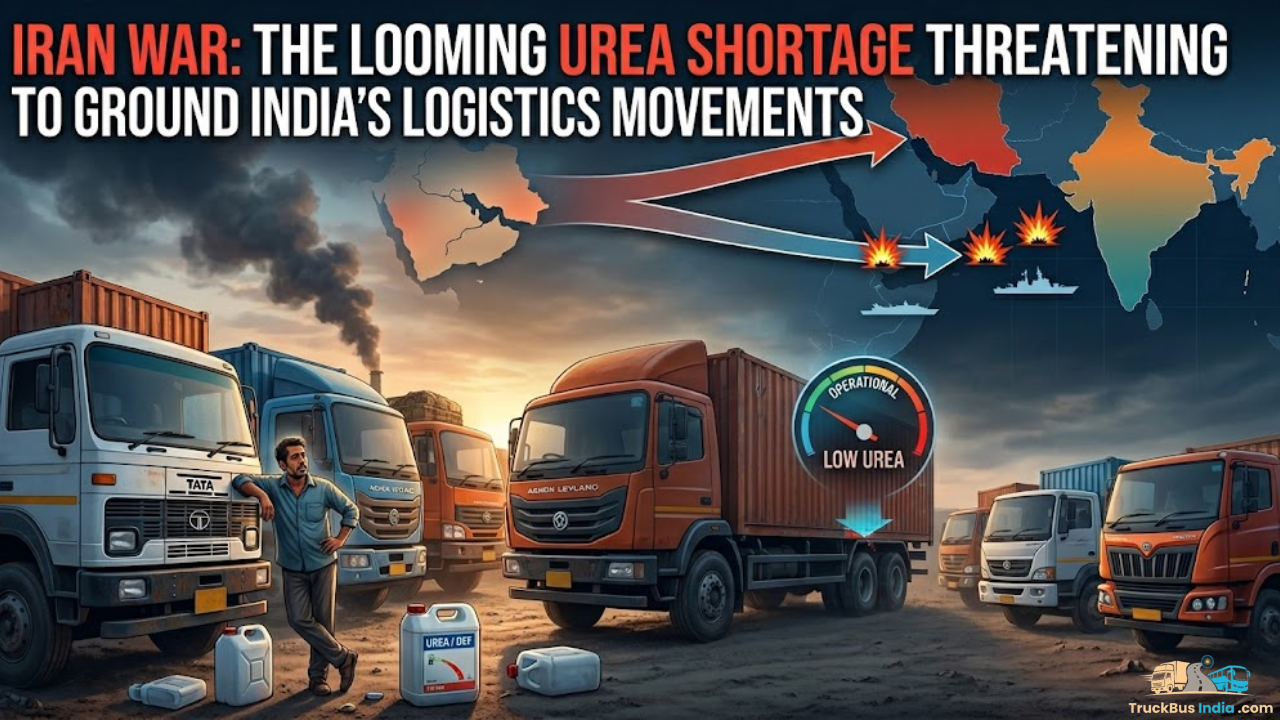
The ongoing Iran conflict is now creating a serious risk for India’s logistics sector, with a looming shortage of industrial-grade urea threatening to halt transport operations. While global attention remains on rising oil prices, a deeper crisis is emerging that could directly impact whether vehicles can operate at all.
Recent findings from DAM Capital highlight that India depends on imports for nearly 50 to 60 percent of its industrial urea requirements. With supply routes through the Strait of Hormuz disrupted, key imports from Egypt and Dubai are being affected, raising concerns of a nationwide logistics slowdown.
Iran conflict disrupts urea supply for India logistics
The Iran conflict has effectively choked critical Gulf trade routes, cutting off the steady flow of industrial-grade urea required for modern diesel vehicles. This chemical is not used as fuel but plays a vital role in emission control systems.
India’s reliance on external sources has exposed a major vulnerability, as alternative supply chains are not yet fully established at the required scale. With imports under pressure, the automotive and logistics sectors are facing the possibility of a sudden supply shock.
Urea shortage threatens BSVI diesel fleet operations
The Iran conflict impact is being felt most strongly in India’s BSVI diesel fleet, which depends on Diesel Exhaust Fluid for functioning. This fluid, made using urea, is essential for reducing harmful emissions in modern engines.
BSVI-compliant heavy-duty vehicles are equipped with an engine interlock system. If the Diesel Exhaust Fluid tank runs empty, the vehicle will not start. This makes the shortage of urea a critical operational issue rather than just a supply concern.
The risk extends beyond trucks to include buses and large passenger diesel vehicles with engines above 2.0 litres. Without the ability to refill Diesel Exhaust Fluid tanks, a large segment of vehicles could become non-operational.
India logistics sector faces risk of supply chain disruption
The Iran conflict driven urea shortage could lead to large-scale disruption in India’s logistics network. A significant portion of the commercial diesel fleet may be forced off the roads if supplies do not stabilise.
Such a situation would impact the movement of essential goods, including food, medicines, and industrial materials. Supply chains could stall, leading to delays, shortages, and rising prices across sectors.
The issue bypasses traditional fuel reserves, as even with adequate diesel, vehicles cannot operate without the required emission control fluid.
Time running out for India urea supplies
Industry body Society of Indian Automobile Manufacturers has already alerted the government about the situation. Current visibility of urea supplies extends only until early April 2026.
While some domestic inventory remains, replenishment through conventional Gulf routes is currently not feasible. Alternative sourcing options are still uncertain and may not meet the required demand in time.
The crisis also raises concerns for fertilizer production due to potential gas shortages, but the immediate threat lies in the disruption of logistics and cargo movement.
Conclusion
The Iran conflict has exposed a critical dependency in India’s modern transport system. The shortage of industrial urea poses a direct threat to the functioning of BSVI diesel vehicles, putting logistics, supply chains, and economic stability at risk.
If supply disruptions continue, the country could face a major transport slowdown, highlighting the urgent need for diversified sourcing and contingency planning.