
News List
India EV sector faces rising lithium import dependency risk

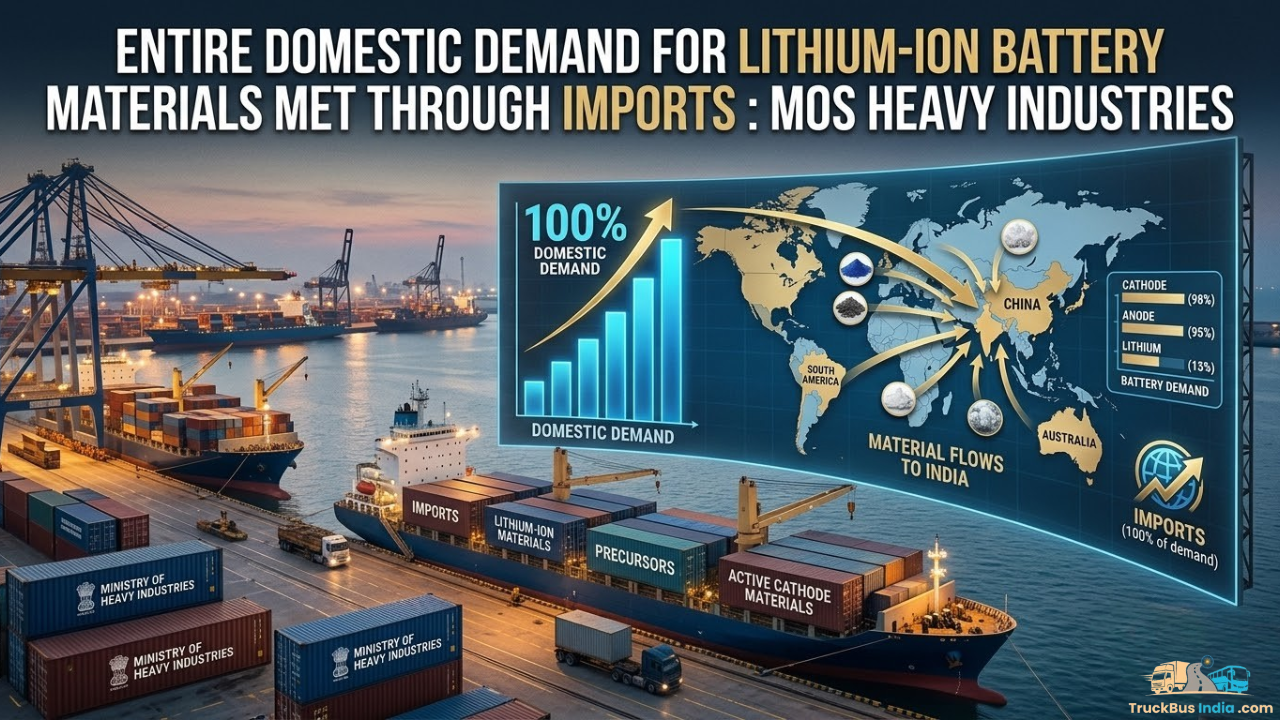
India’s electric vehicle ecosystem is increasingly exposed to global supply chain risks due to complete dependence on imported lithium and other critical minerals used in battery manufacturing. The government has confirmed in Parliament that domestic demand for lithium-ion battery materials is entirely met through imports, highlighting a structural vulnerability for the sector. Officials warned that this reliance makes India highly sensitive to external shocks, especially amid shifting global trade policies and tightening export controls from key supplying countries.
India lithium import dependence and global supply risks
- India meets full demand for lithium-ion battery materials through imports
- Critical minerals include lithium, cobalt, and nickel used in EV batteries
- No large-scale domestic processing ecosystem exists currently
- China export controls on battery materials may tighten global supply
- EV manufacturers face rising cost volatility due to global price fluctuations
- Dependence on Chinese midstream processing increases supply chain risk
- Government is pushing localisation and domestic mineral exploration
EV battery costs face global volatility pressure
Lithium, cobalt, and nickel prices remain highly volatile due to global demand and supply fluctuations, making EV production costs unpredictable. Any disruption in mining output or export restrictions can quickly impact battery pricing in India, increasing financial pressure on manufacturers and complicating long-term investment planning in the EV sector.
India pushes localisation to reduce import dependency
India is gradually working to reduce its reliance on imports by promoting domestic exploration of critical minerals and expanding battery manufacturing capacity. However, the ecosystem is still developing, and strong dependence on external supply chains continues. Policy efforts are focused on building long-term resilience and improving supply security for the EV industry.