
News List
NCR Toll Hike 5 Percent From April 2026

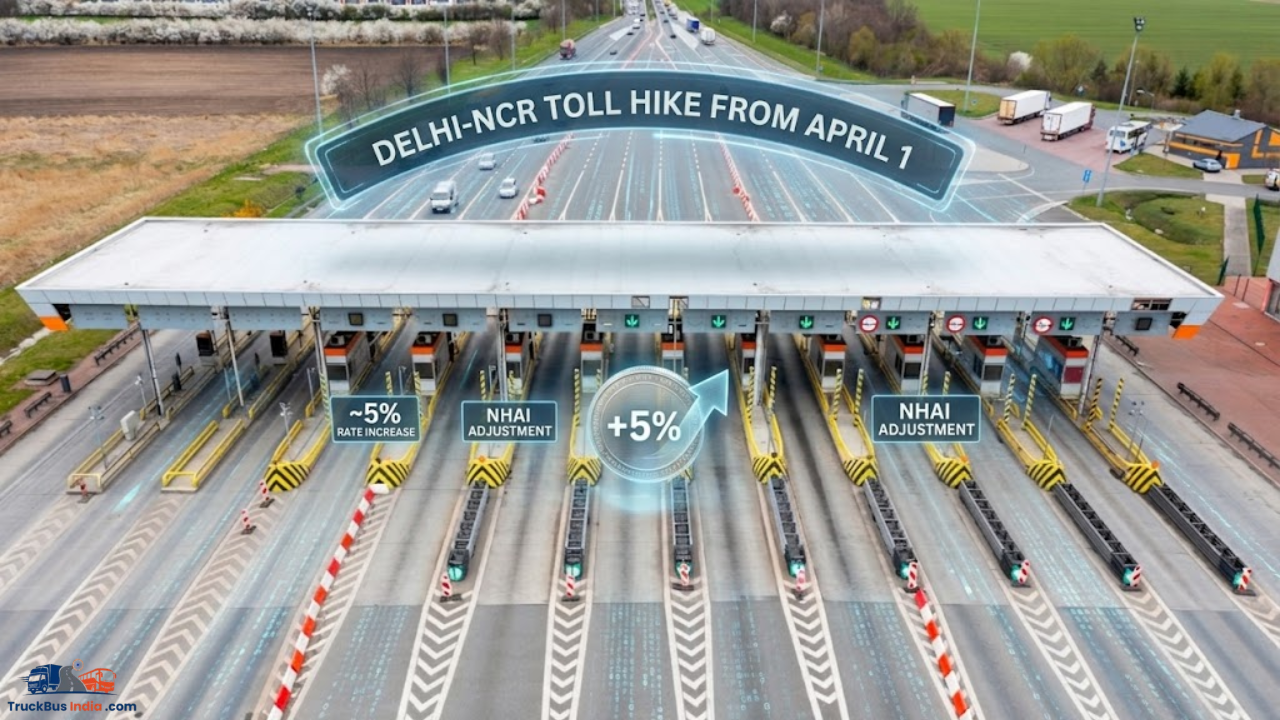
Commuting across Delhi NCR is set to become costlier as toll charges on major highways are expected to increase from April 1, 2026. The National Highways Authority of India plans to implement a hike of around 5 percent, impacting daily travellers and transport businesses operating across key routes.
The revision comes at a time when these corridors witness heavy traffic movement, especially between Delhi, Noida, Ghaziabad, Meerut, and Hapur. With the new financial year beginning, the toll hike is expected to add to daily travel expenses.
NCR Toll Hike Impact on Daily Commuters
The NCR toll hike will affect millions of daily commuters who rely on these highways for work and routine travel. Even a small increase per trip can significantly raise monthly expenses for frequent users.
Currently, car users pay around Rs 170 on the Delhi Meerut Expressway and Rs 175 on NH 9. After the hike, they may need to pay an additional Rs 8 to Rs 10 per trip, increasing overall commuting costs.
Major Highways Under Toll Revision
The toll revision will apply to some of the busiest highways in the NCR region. These include the Delhi Meerut Expressway, Eastern Peripheral Expressway, and National Highway 9.
These routes are crucial for connecting Delhi with western Uttar Pradesh and handle a high volume of passenger and commercial traffic every day. Any increase in toll charges on these corridors has a direct impact on both travel time and cost.
FASTag Price Revision and User Benefits
Along with the NCR toll hike, the FASTag annual pass price has been revised from Rs 3000 to Rs 3075. This update has been introduced by the National Highways Authority of India.
Despite the increase, the FASTag pass continues to offer value for frequent users. It allows up to 200 toll crossings or one year of usage without the need for repeated recharges, making it convenient for daily travellers.
Future Plans for Toll Collection System
The government is also working towards improving toll collection efficiency. A new distance based tolling system has been proposed to replace the current fixed fee model.
Under this system, users will pay based on the distance travelled instead of a flat toll rate. This approach is expected to make toll charges more fair and reduce congestion at toll plazas.
Conclusion
The NCR toll hike from April 2026 will increase travel costs for both commuters and businesses. While the rise is around 5 percent, its impact will be felt more by those who use these routes daily.
At the same time, improvements like FASTag and proposed distance based tolling indicate a shift towards a more efficient and user friendly system in the future.