
News List
Tata Winger vs Force Traveller: Which One Should You Buy

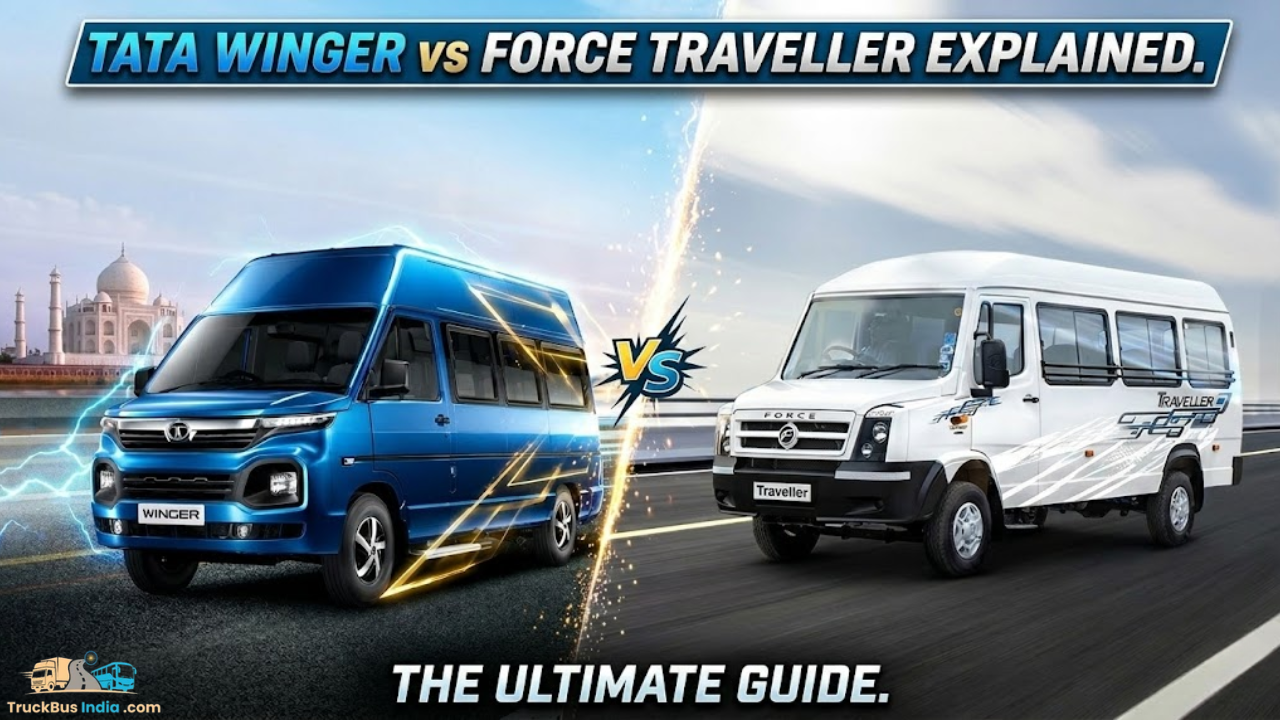
Small commercial passenger vans play a crucial role in India’s transport sector, serving both urban and intercity routes. Among the top contenders are the Tata Winger and Force Traveller, each offering unique strengths in terms of performance, seating, and overall value. Choosing the right vehicle depends on operational requirements, cost efficiency, and passenger comfort.
This comparison takes a detailed look at specifications, pricing, fuel efficiency, seating capacity, and business benefits to help buyers make an informed decision.
Pricing and Variants
Tata Winger Price Overview
The Tata Winger is priced between ₹10.75 lakh and ₹13.5 lakh (ex-showroom India) depending on the variant and seating configuration. The Winger comes in diesel variants and offers multiple body types, including 9-seater, 12-seater, and 15-seater options.
Force Traveller Price Overview
The Force Traveller starts at ₹10.95 lakh and goes up to ₹16 lakh (ex-showroom India), depending on the variant and passenger capacity. Force Traveller offers diesel-powered engines and features seating options ranging from 9 to 21 passengers, making it ideal for larger group transportation.
Comparison Insight
While both vehicles are competitively priced, the Winger is slightly more affordable in base variants, while the Traveller provides higher passenger capacity options for large-scale operations.
Performance, Engine, and Mileage
Tata Winger Performance
The Tata Winger comes with a 2.2-litre diesel engine, delivering 70–90 hp depending on the model, with a claimed mileage of 14–16 km/l. It features a manual gearbox and is designed for city and intercity transport. The compact engine ensures low running costs and reliability for small fleet operators.
Force Traveller Performance
Force Traveller offers a 2.6-litre diesel engine with power output ranging from 75–100 hp and a claimed fuel efficiency of 12–14 km/l. The vehicle features a robust manual transmission and is built to handle heavy passenger loads over long distances.
Comparison Insight
Tata Winger edges slightly ahead in fuel efficiency, while Force Traveller provides higher power and durability for larger passenger or long-haul operations.
Seating, Comfort, and Features
Tata Winger Seating and Comfort
The Winger offers 9, 12, and 15-seater configurations, with a semi-forward cabin design and ergonomic seating. Features include:
- Adjustable driver seat for long journeys
- AM/FM audio system
- Basic air conditioning and ventilation options
- Compact turning radius for city maneuvering
Force Traveller Seating and Comfort
Force Traveller supports 9–21 passengers, with wider cabin space and higher roof options. Features include:
- Air-conditioned and non-air-conditioned variants
- Seat belts and safety features for all passengers
- Optional luxury seating for intercity travel
- Larger luggage storage capacity
Comparison Insight
For small businesses and urban travel, Tata Winger is more agile and cost-effective. Force Traveller is better suited for high-capacity routes and long-distance services where comfort and space are priorities.
Business Considerations and Final Verdict
When deciding between the two vans, buyers should consider operational costs, passenger requirements, and long-term maintenance.
- Tata Winger
- Lower purchase price
- Better mileage and low running costs
- Ideal for 9–15 passengers in city and intercity routes
- Force Traveller
- Higher seating capacity (up to 21)
- More powerful engine for heavy loads
- Suitable for large groups, tour operators, and intercity transport
Both vehicles are backed by extensive service networks and spare part availability in India. The choice ultimately depends on fleet size, passenger volume, and cost-efficiency priorities.
In conclusion, Tata Winger is the preferred option for smaller fleets focusing on mileage and urban mobility, while Force Traveller is better for high-capacity, long-haul, or commercial transport operations requiring robust performance and space.