
News List
Maharashtra Targets Full Electric Bus Fleet by 2037, Stops Diesel Procurement

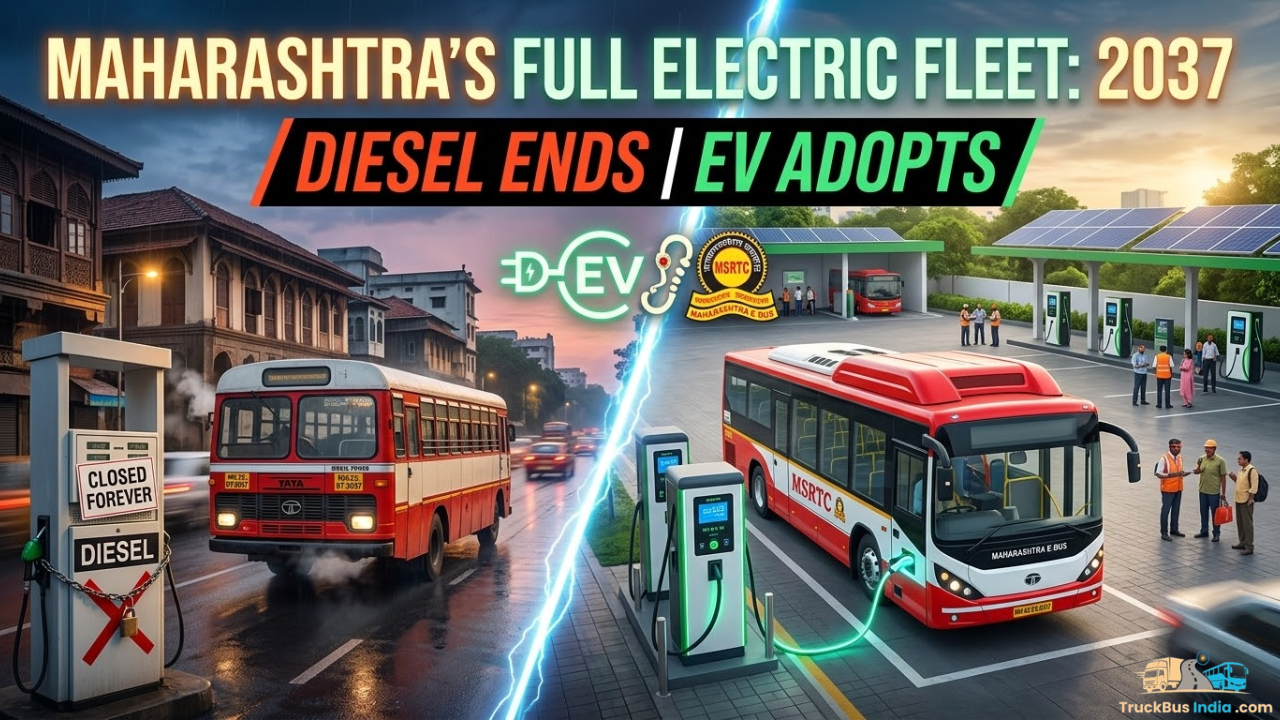
Maharashtra has announced a major shift in its public transport strategy, committing to convert its entire bus fleet to electric vehicles. The state has decided to phase out diesel buses and move towards a cleaner, electric-powered system, positioning itself as a leader in sustainable mobility in India.
Maharashtra Electric Bus Plan Targets 22,000 MSRTC Fleet
The Maharashtra government has confirmed that all 22,000 buses operated by MSRTC will be converted to electric by 2037. At present, only around 800 buses in the fleet run on electric power, while the majority still depend on diesel.
This transition will take place in phases, with the 2037 timeline acting as a key milestone aligned with India’s broader goal of achieving large-scale electric mobility by 2047.
Maharashtra Ends Diesel Bus Purchases, Shifts to Electric
A major policy change includes stopping the purchase of new diesel buses. Earlier, the state planned to add 5,000 diesel buses annually over five years, but this strategy has now been scrapped.
Going forward, all new bus procurements will be electric. While around 8,000 diesel buses already in the pipeline will still be inducted into the fleet, no fresh diesel orders will be placed. The government is also exploring ways to convert existing diesel buses into electric vehicles.
Maharashtra Electric Bus Expansion and Fleet Growth Plan
Alongside electrification, Maharashtra aims to expand its public transport capacity. The MSRTC fleet is expected to grow to 25,000 buses by 2029.
Older vehicles will gradually be retired and replaced with electric buses. This approach ensures both expansion and modernization of the fleet, while maintaining focus on sustainability.
Maharashtra EV Policy 2025 Supports Electric Bus Adoption
To accelerate adoption, the Maharashtra Electric Vehicle Policy 2025 offers several incentives. Electric vehicles will benefit from 100 percent toll waivers on key routes such as the Atal Setu, Mumbai-Pune Expressway, and Samruddhi Mahamarg.
In addition, tax exemptions and toll concessions are being provided to encourage both public and private EV usage. These measures aim to make electric transport more attractive and financially viable.
Maharashtra Plans Charging Infrastructure with Solar Support
Infrastructure development is a critical part of the transition. The state plans to power EV charging stations using solar energy, reducing dependence on conventional electricity sources.
MSRTC has also made it mandatory for new fuel outlets on its land to include EV charging facilities. These outlets, developed through public-private partnerships, will support the growing electric bus network.
Maharashtra Electric Bus Rollout Faces Delivery Delays
Despite clear goals, progress on implementation has been slower than expected. MSRTC had set a target to procure 5,150 electric buses by 2025, but only around 600 have been delivered so far.
This gap has raised concerns about execution speed and has impacted public expectations. The government has acknowledged the delays and highlighted the need for faster infrastructure development and investment.
Maharashtra Electric Bus Transition Requires Long-Term Investment
Officials have noted that the shift from diesel to electric will take time due to the scale of operations. With most of the current fleet still running on diesel, the transition will depend on continuous funding, charging infrastructure expansion, and timely vehicle procurement.
The move, however, signals a long-term commitment to cleaner transport and reduced emissions.
Conclusion
Maharashtra’s plan to build a fully electric bus fleet by 2037 marks a significant step towards sustainable public transport. By ending diesel bus purchases and focusing on electric mobility, the state is setting a benchmark for others.
While challenges remain in execution and delivery timelines, the policy direction and incentives indicate strong intent to transform the public transport system.