
News List
Exicom Expands EV Charging With New Hyderabad Facility

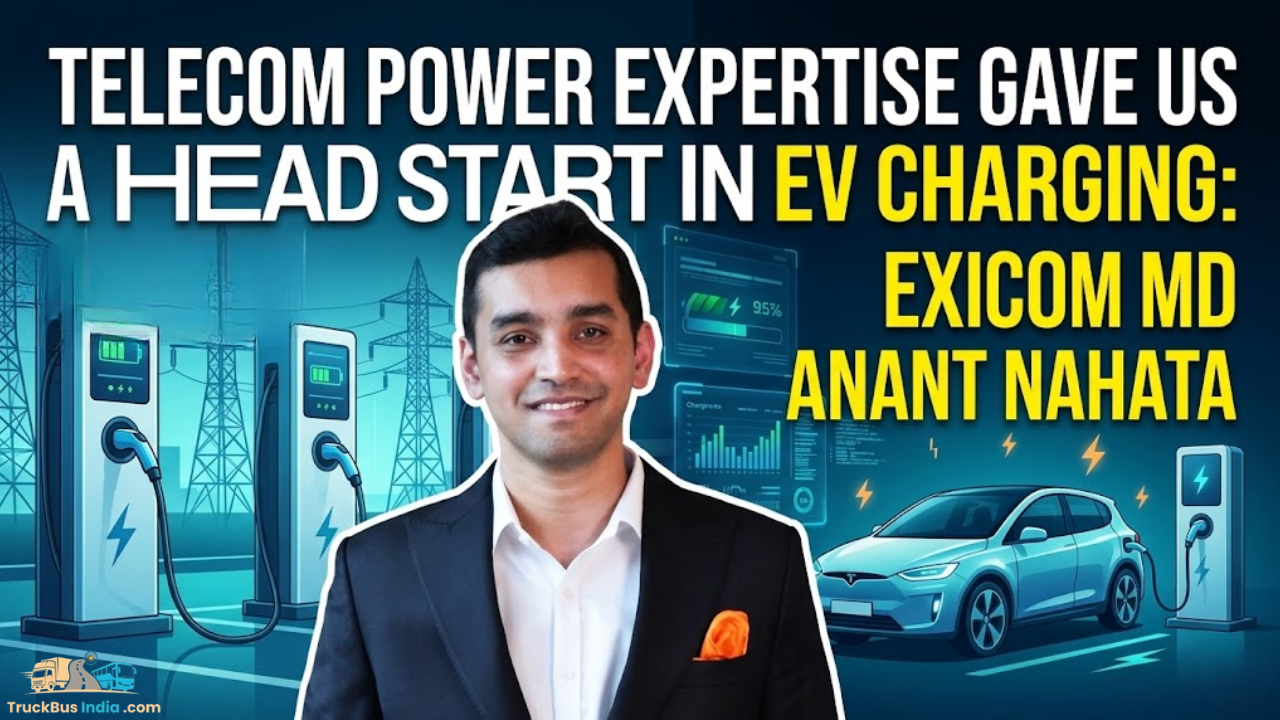
Exicom Tele-Systems Limited, a leader in telecom power electronics, is leveraging its expertise to gain a technological edge in India’s growing EV charging sector. Speaking at the inauguration of Exicom’s new ₹216-crore Hyderabad facility, CEO and MD Anant Nahata shared insights on how the company’s telecom power legacy is shaping its EV charging strategy and localisation efforts.
Telecom Power Expertise Drives EV Charger Innovation
Technological Overlap with Telecom Systems
Nahata explained that EV chargers and telecom power systems share a fundamental principle: AC to DC power conversion. “In telecom power, we convert AC to DC at lower voltages, while in EV charging, the same process occurs at much higher voltage ranges,” he said. This similarity has allowed Exicom to utilise existing engineering, manufacturing processes, and supply chains efficiently.
Leveraging Existing Vendor Networks
Nearly 85–95 percent of Exicom’s vendor base is common to both telecom power systems and EV chargers. The company has been able to repurpose development processes, validation systems, and manufacturing flows, giving it a head start in EV infrastructure. This strategic alignment reduces costs and accelerates time-to-market for new products.
Hyderabad Facility: Scale and Localisation
Integrated Manufacturing for Efficiency
The 18.4-acre Hyderabad facility spans 280,000 square feet and is designed as a common production base for telecom power and EV chargers. “By running these two businesses together, we can distribute fixed operational costs over a larger revenue base and invest more aggressively in manufacturing infrastructure,” Nahata noted. The first phase of operations will expand production capacity by 2.5 times and generate over 750 jobs.
Localisation Focus
Exicom has achieved high localisation levels for AC chargers, with only semiconductors imported due to the lack of domestic supply. DC fast chargers are currently around 60 percent localised, and the company is collaborating with domestic partners to improve this. Nahata emphasised, “Every PCBA board inside the charger, including the controller and main intelligence, is our own IP and manufactured in-house. Without controlling the intelligence, you are merely an assembler, not a product owner.”
Market Outlook and Strategic Vision
Growing EV Adoption in India
Electric passenger vehicles currently account for about 5 percent of the market, with adoption projected to reach 15 percent in the coming years. EV penetration in India is growing around 40 percent year-on-year, driven by new models from trusted manufacturers and expanded charging infrastructure.
Competition and Differentiation
While global and Chinese players are entering the market, Exicom plans to maintain its competitive edge through superior technology, high localisation, and manufacturing scale. Nahata said, “Competition is always there. Our focus is on building better technology and delivering value to customers.”
Supporting India’s EV Ecosystem
The Hyderabad facility is designed for future expansion and will play a key role in supporting the rollout of EV charging infrastructure across India. By integrating telecom power expertise with EV charging, Exicom aims to strengthen the country’s broader power electronics manufacturing ecosystem.