
News List
Iran attacks Gulf oil and gas sites trigger global energy fears

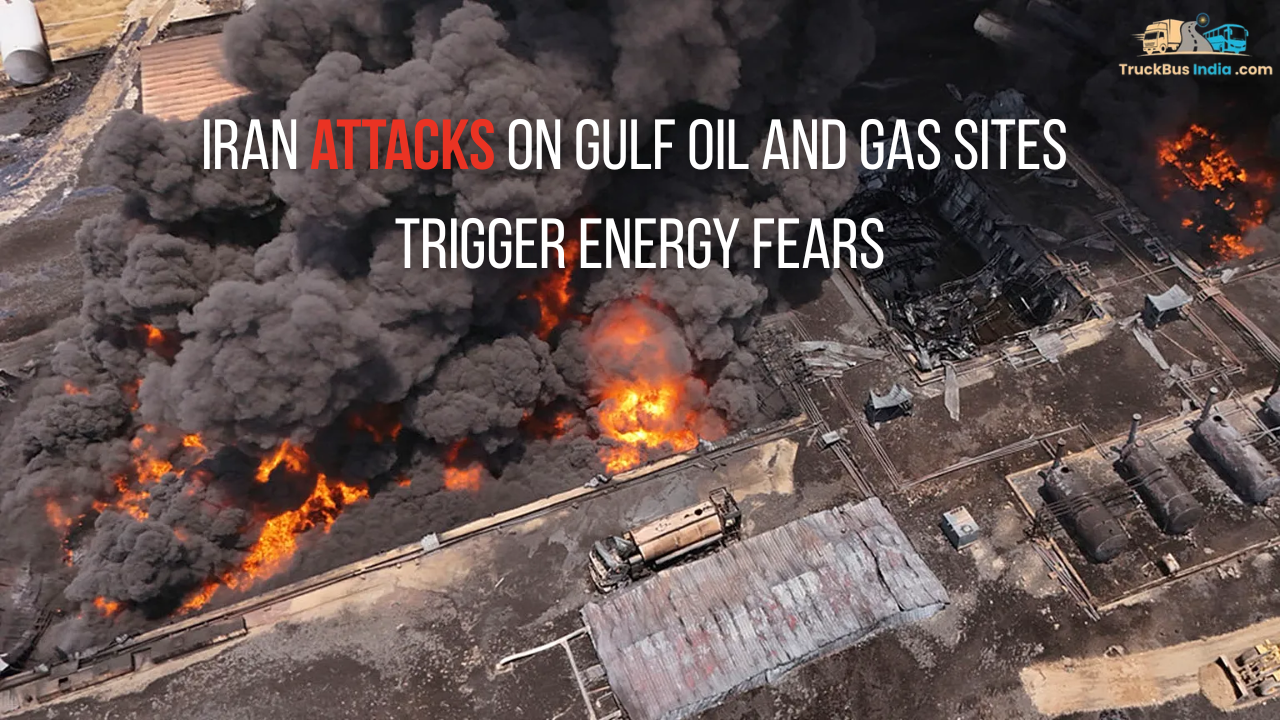
Iranian attacks on oil refineries, gas facilities, and tankers in the Gulf have intensified global supply concerns. The strikes followed US and Israeli attacks on Iran, prompting Tehran to retaliate by targeting key energy infrastructure across the region. Fires broke out in Saudi Arabia, Qatar, and the UAE, raising fears of prolonged supply disruptions. The situation has left global investors uneasy, with oil and gas prices surging amid uncertainty over the conflict’s duration.
Strait of Hormuz blockage escalates supply risks
The Strait of Hormuz, a crucial maritime route responsible for around 20% of global oil shipments, has effectively been closed, according to Iran’s Revolutionary Guards. Oil shippers have suspended tanker traffic, citing safety and prohibitive insurance costs. Over 150 vessels, including crude oil and LNG tankers, remain anchored near the strait, constraining energy flows. Marine insurers such as Gard, Skuld, NorthStandard, and London P&I Club have canceled war risk coverage, further raising shipping costs and complicating global supply chains.
Rising energy prices hit Asia and Europe
The attacks have sent Brent crude past $80 per barrel, while gas prices in Asia and Europe have spiked sharply. Asian economies are particularly vulnerable, as 84% of crude oil and 83% of LNG through the Strait of Hormuz in 2024 were destined for China, India, Japan, and South Korea. Higher energy prices are likely to increase consumer costs and inflation in these countries. Europe is also exposed, as disruptions to LNG exports from Qatar could force European buyers to compete with Asian markets, driving up prices further and hampering post-winter gas storage.
Global market reactions
Despite sharp short-term price increases, analysts suggest the market may absorb the shock. Deutsche Bank and Oxford Economics report that spare capacity in Saudi Arabia and the UAE can offset some lost Iranian production, although alternative trade routes can only handle about one-third of normal flows. US President Donald Trump announced plans to escort oil tankers through the strait, but implementation may take time, leaving vessels temporarily at risk. Meanwhile, China has urged Iran to keep the strait open, given its reliance on the route for half of its oil imports.
Outlook for global energy stability
While the immediate crisis has driven energy prices higher, experts believe a full-scale oil crisis is unlikely. Bridget Payne from Oxford Economics expects Brent crude to average around $79 per barrel in the second quarter, easing as supply resumes by the end of the period. However, trade disruptions rather than production losses remain the key concern. Prolonged instability could still have serious consequences for energy-dependent economies, particularly in Asia and Europe, where higher prices could slow economic growth and exacerbate inflationary pressures.