
News List
India has 50 days fuel stock amid West Asia crisis

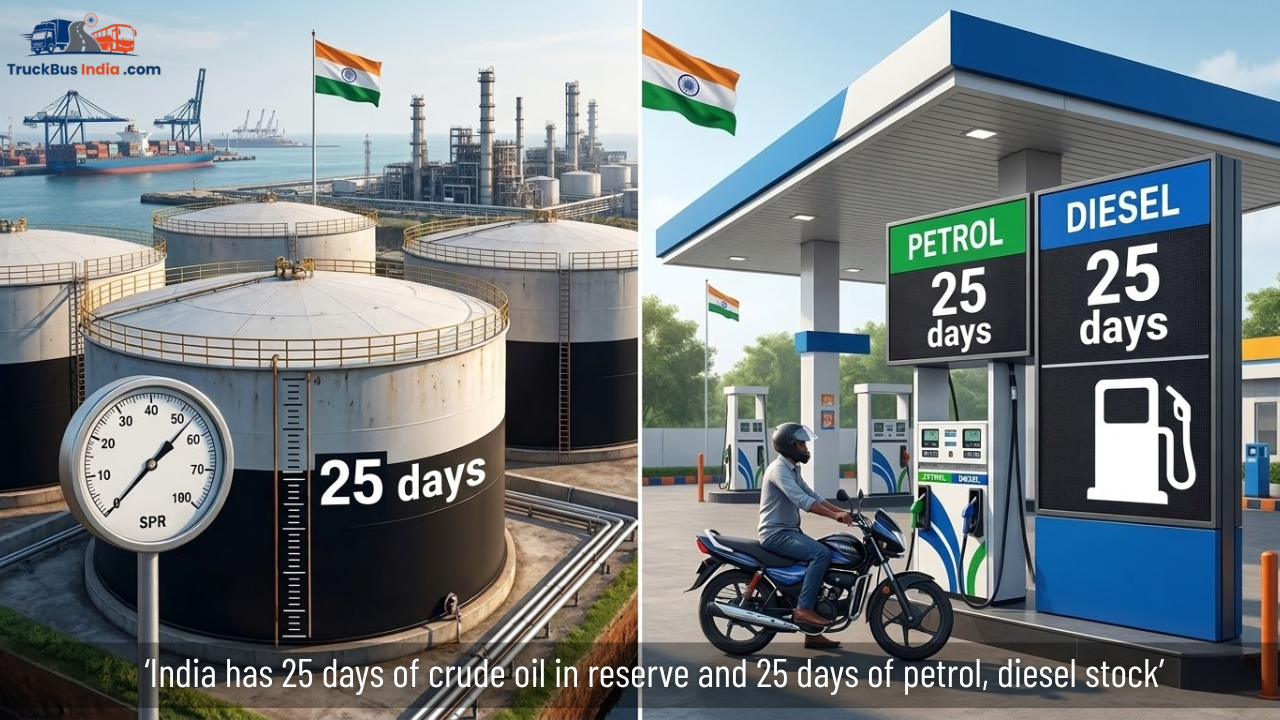
India has crude oil and fuel stocks sufficient for about 50 days, according to government sources, offering reassurance amid growing tensions in West Asia and disruptions to global energy routes. Officials said the country currently holds 25 days of crude oil reserves and an additional 25 days of petrol and diesel stocks. The assessment comes as geopolitical tensions and the closure of the Strait of Hormuz trigger fears of rising global crude prices and supply disruptions.
India crude oil reserves provide short term energy security
Government sources said India remains in a relatively comfortable position regarding its crude oil reserves. The country currently has crude oil stocks that can meet demand for about 25 days. Alongside this, petrol and diesel inventories can support consumption for another 25 days, bringing the combined fuel stock availability to nearly 50 days.
Officials clarified that the crude oil reserves mentioned do not include the country’s emergency Special Petroleum Reserves. When those strategic reserves are considered, India’s crude oil availability would extend beyond the current estimate.
Energy officials emphasised that authorities are closely tracking global developments to ensure supply stability during the ongoing West Asia crisis.
Strait of Hormuz disruption raises global oil supply concerns
Concerns over India’s fuel stock position surfaced after tensions escalated in West Asia. The situation intensified following military strikes by Israel and the United States on Iran and retaliatory actions by Tehran against regional allies of Washington.
The conflict resulted in the closure of the Strait of Hormuz, one of the most critical maritime routes for global energy shipments. Nearly two fifths of India’s crude oil imports pass through this route, making the situation particularly significant for the country’s energy security.
The disruption also affected energy infrastructure in Saudi Arabia and Qatar after Iranian strikes reportedly damaged key facilities. As a result, global oil markets reacted sharply, with Brent crude futures climbing above $80 per barrel.
India LNG and LPG supplies remain stable
Officials said India is also in a comfortable position with regard to liquefied natural gas and liquefied petroleum gas supplies. Current LNG availability is expected to meet demand for the next two to three weeks.
Concerns around LNG supply had grown after QatarEnergy, the world’s largest LNG producer, halted production due to military attacks on its facilities. Government officials said they are monitoring the situation and remain in communication with the company to assess the likely duration of the disruption.
Regarding LPG supplies, authorities noted that India had already moved to diversify procurement sources earlier. This step followed structural damage to Saudi Aramco’s Juaymah terminal in late February, which raised concerns over export disruptions.
Officials added that although some alternative suppliers may be located far from India, adequate LPG sources remain available globally.
Government exploring alternative energy suppliers
The government also dismissed media reports suggesting restrictions on petroleum product exports. Officials clarified that no decision has been taken to alter existing export policies.
Instead, New Delhi is focusing on identifying alternative suppliers for hydrocarbons as part of a broader strategy to diversify energy imports and reduce dependence on specific regions.
Separately, the Ministry of Petroleum and Natural Gas said a 24 hour control room has been set up to monitor petroleum product supply and stock levels across the country. The ministry stated that safeguarding the interests of Indian consumers remains the top priority and that authorities remain cautiously optimistic about managing the evolving situation.
India’s crude oil and fuel stock position currently provides a cushion of around 50 days, helping the country manage immediate risks arising from the West Asia conflict and the closure of the Strait of Hormuz. With ongoing monitoring, diversification of suppliers, and emergency reserves in place, authorities believe the situation remains under control for now.