
News List
Rising Oil Prices May Speed Up India’s Ethanol Push

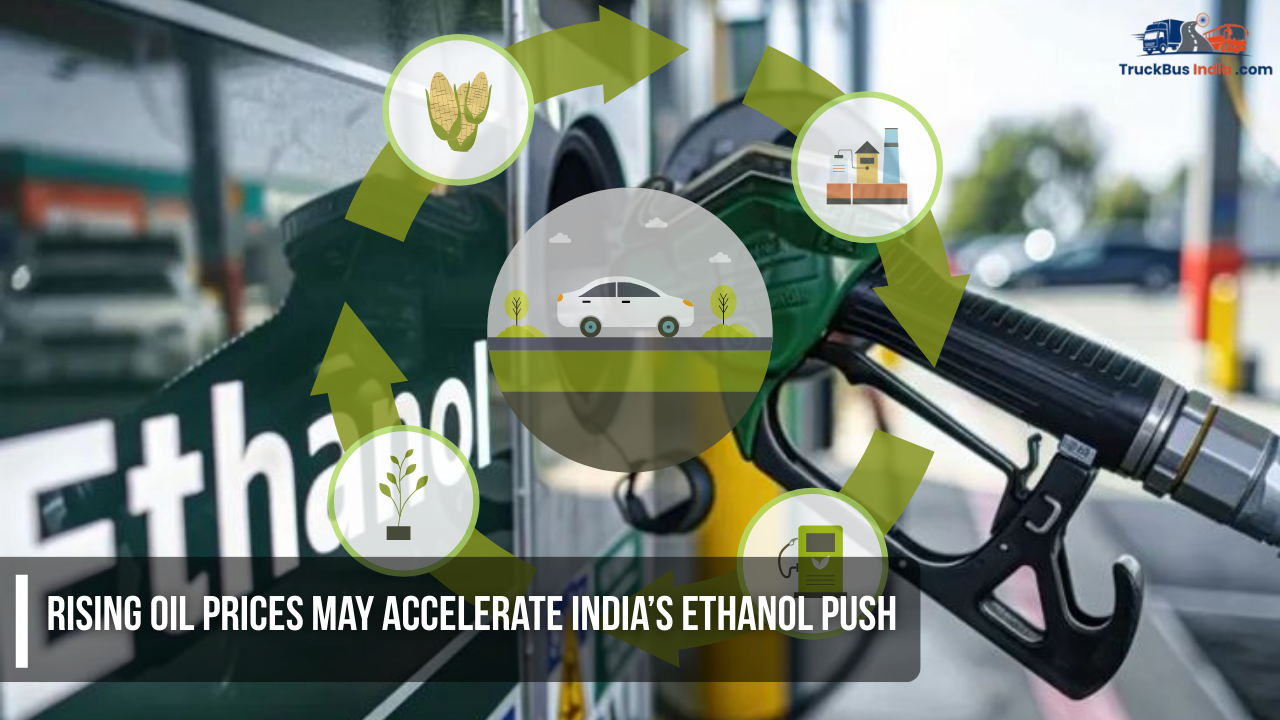
Global Oil Price Surge Raises Concerns for India
The recent surge in global crude oil prices following tensions linked to the Israel–Iran conflict is prompting fresh discussions around India’s fuel strategy. Crude prices have risen nearly 9–10 percent as geopolitical uncertainty in West Asia intensifies.
Benchmark Brent Crude is currently hovering close to $80 per barrel. Meanwhile, West Texas Intermediate futures climbed to about $72.79, compared to around $67 just a week earlier. If the tensions continue, analysts expect oil prices to remain elevated in the near term.
For India, the impact could be significant because the country imports more than 88 percent of its crude oil requirements. A large portion of these imports also passes through the strategically important Strait of Hormuz, making supply routes vulnerable during regional instability.
Ethanol Blending Becomes Economically Attractive
With crude oil prices rising, ethanol blending is becoming increasingly attractive for India’s energy strategy. Higher crude prices improve the economics of ethanol blending for oil marketing companies by making alternatives to petrol more viable.
India has already made major progress toward its ethanol blending goals. In several states, the country has nearly achieved the 20 percent ethanol blending target ahead of schedule.
According to the Indian Sugar Mills Association, India currently has the capacity to produce around 1,900 crore litres of ethanol annually. This includes roughly 900 crore litres from sugar based feedstock and around 1,000 crore litres produced from grains such as rice and maize.
Industry Sees Opportunity Amid High Oil Prices
Despite strong production capacity, only about 289 crore litres of ethanol have been allocated to the sugar sector for the 2025–26 ethanol supply year. This has left a considerable portion of the country’s distillery capacity underutilised.
Industry experts believe that if oil prices remain high for a prolonged period, the government could allow greater diversion of sugarcane and surplus grains toward ethanol production.
Financial markets have already reacted to this possibility. Shares of several sugar companies rose by as much as 10 percent even as broader market indices remained under pressure.
If global crude prices stay elevated, ethanol blending may shift from being primarily an environmental initiative to an economic necessity for India. Increased ethanol use could help reduce fuel import dependence while providing additional revenue opportunities for domestic sugar and grain producers.