
News List
Chennai MTC Plans Procurement of 1,270 Low-Floor Buses

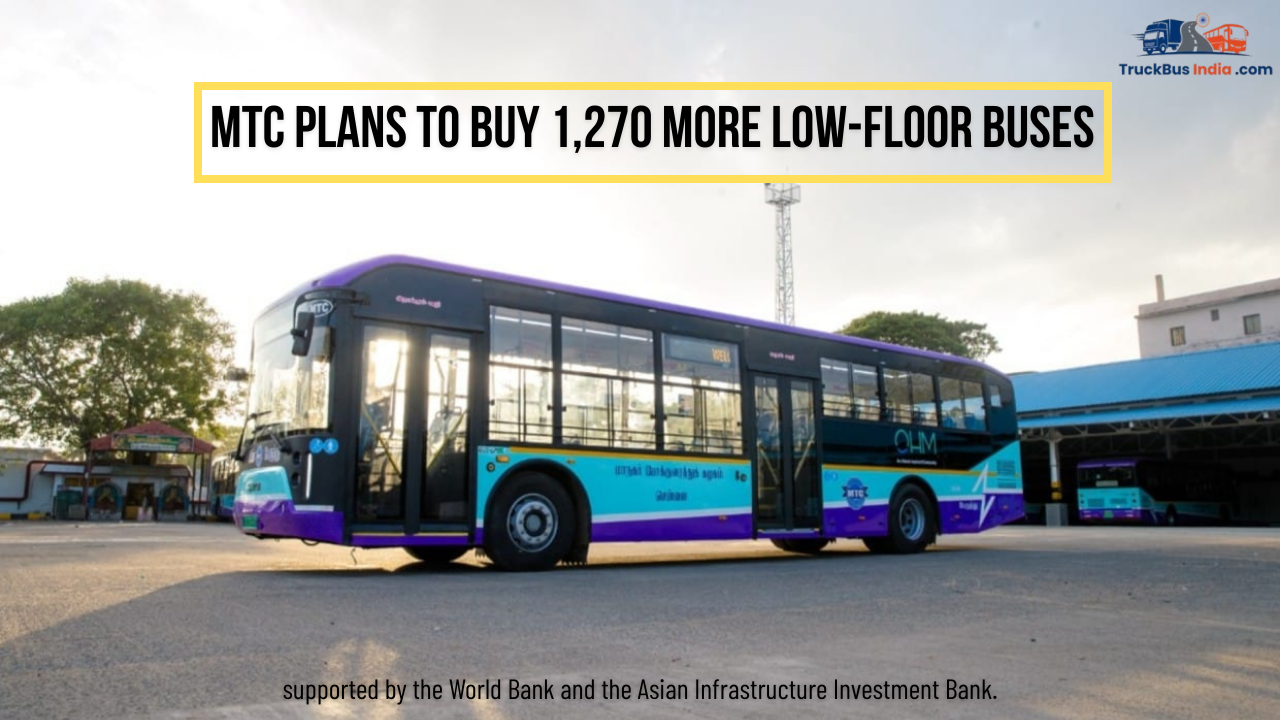
Chennai’s public transport system is set for a major upgrade as the Metropolitan Transport Corporation (MTC) announces plans to acquire 1,270 low-floor buses. The expansion aims to enhance commuter accessibility, expand the electric bus fleet, and improve last-mile connectivity across the city. The initiative is part of the Chennai Sustainable Urban Services Programme (CSUSP) and is supported by the World Bank and the Asian Infrastructure Investment Bank.
Expansion of MTC Low-Floor Bus Fleet
The MTC low-floor buses expansion includes 500 AC electric buses, 250 non-AC electric buses, and 300 AC small buses of seven-metre length.
Additionally, 70 low-floor AC buses and 150 micro buses measuring five metres will be introduced to strengthen first and last-mile connectivity for Chennai Metro passengers.
Deputy Chief Minister Udhayanidhi Stalin recently flagged off 100 low-floor electric buses from the Tondiarpet depot I. With this launch, 625 electric buses have been inducted into the fleet since June this year.
Benefits of Expanded Fleet
The new buses will improve accessibility across the city, especially on narrow interior roads, while reducing reliance on private vehicles. Small and micro buses are designed to complement existing Metro routes, ensuring better connectivity for commuters.
Phase II: More Electric Buses and Depot Upgrades
Phase II of the CSUSP programme plans to procure 750 additional electric buses, including 500 AC and 250 non-AC buses under the Gross Cost Contract model. The total investment for this phase is estimated at Rs 1,337.5 crore.
Seven existing depots will be upgraded, and six new depots developed, at an estimated cost of Rs 289.69 crore. Tenders for 300 AC small buses and 70 low-floor AC buses, along with 150 micro buses, have already been floated to replace older vehicles and improve citywide coverage.
Funding and Support
The World Bank and the Asian Infrastructure Investment Bank are financing the initiative to promote sustainable urban transport in Chennai. Their support underscores the city’s commitment to reducing emissions and expanding public transport access.
Routes and Connectivity
The newly inducted buses from Tondiarpet I e-depot will operate on 12 key routes across Chennai. Notable routes include Thiruvottiyur-Poonamallee (101), Tondiarpet-Poonamallee (101E), Tollgate-Thiruvanmiyur (6D), Island Grounds-Minjur (56P), and Ennore-Thiruvanmiyur (1C).
Last-Mile Connectivity Improvements
Small and micro buses will focus on interior city roads, connecting residential areas with major transit hubs and Chennai Metro stations. This will significantly improve first and last-mile commuting options, helping to reduce traffic congestion.
Impact on Commuters
With more low-floor and electric buses, Chennai residents can expect more reliable, eco-friendly, and convenient public transportation options. The project reinforces the city’s efforts toward sustainable and commuter-friendly transit solutions.
Conclusion
The MTC low-floor buses procurement represents a major step in modernising Chennai’s public transport. With additional electric buses, upgraded depots, and improved last-mile connectivity, the city is moving toward a greener, more efficient, and accessible transit network.