
News List
Maharashtra Transport Strike Could Disrupt Mumbai and Pune

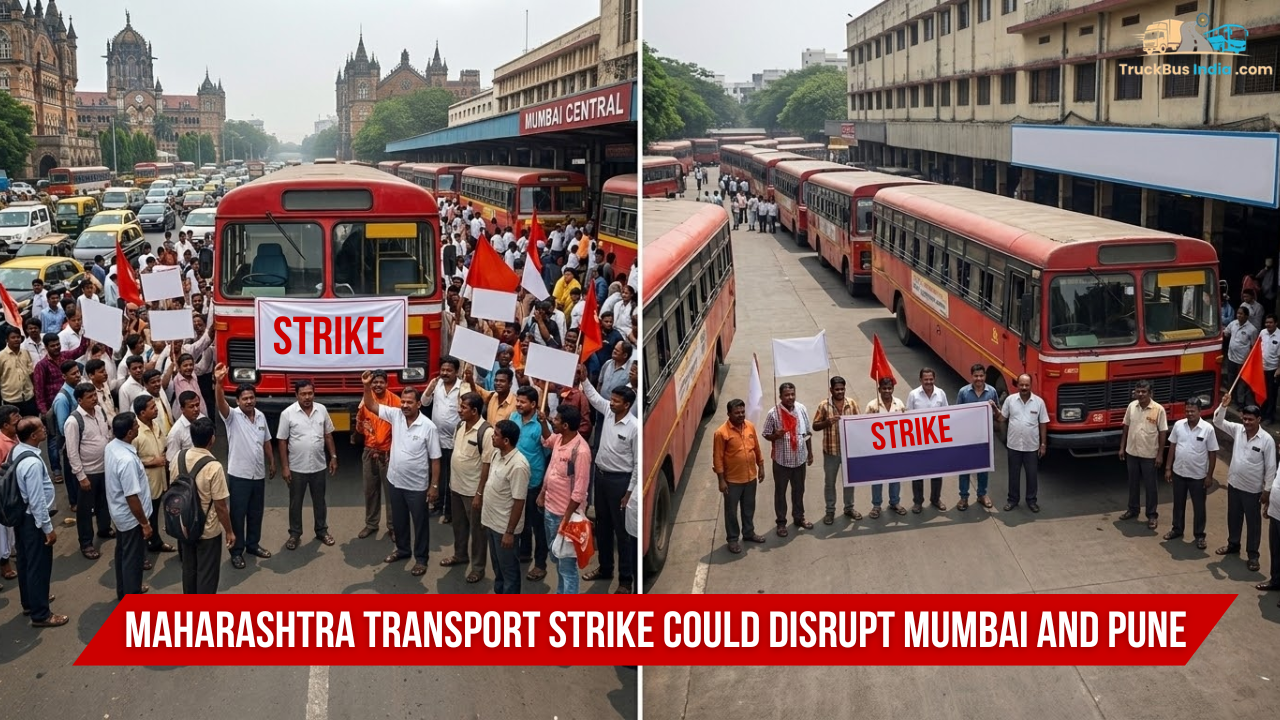
Commercial vehicle drivers across Maharashtra have announced an indefinite strike starting midnight on March 5, 2026, protesting high pending e-challan fines. The strike, led by the Maharashtra Transport Action Committee (M-TAC), is expected to hit Mumbai and Pune the hardest, disrupting public transport and goods movement.
Transport unions held talks with Transport Commissioner Rajesh Narvekar on Wednesday, but no agreement was reached. The state government had requested a delay to resolve issues, but unions decided to go ahead with the strike.
Who Will Participate in the Strike
The strike will involve around 1.5 million transport operators across the state, as well as lakhs of private vehicle owners. Participants include:
- School buses and private buses
- Trucks, tankers, and tempos
- Taxis, tourist cabs, and app-based cabs
- Employee transport buses
According to M-TAC, the total penalties pending under the e-challan system amount to nearly Rs 4,500 crore.
When Will the Strike Begin and End
The statewide strike begins at midnight on March 5, 2026, and is indefinite. Prior to the strike, protests were staged at Azad Maidan in Mumbai and outside Regional Transport Offices (RTOs) across Maharashtra.
Baba Shinde, a transporters’ leader from Pune, said, “Since the state government is not treating the matter seriously, a state-level agitation will be held across Maharashtra from Thursday.”
Impact on Schools and Daily Commuters
If the strike continues, it may affect school transport, buses, rickshaws, and taxis, impacting daily commuters. While school buses may operate on the first day, services could be suspended on subsequent days, potentially disrupting students during board exams.
Demands of the Transport Unions
The unions have outlined key demands:
- Changes in the e-challan system and waiver of pending fines
- Reduction of taxes and toll charges on commercial vehicles
- Withdrawal of the 45-day deadline to clear e-challans
- Closure of highway check posts and establishment of rest centers for drivers
- Review of high-cost devices like panic buttons, GPS tracking, CCTV, and fire suppression systems
- Suspension of ‘no entry’ rules for certain vehicles in cities
How the E-Challan System Works
The e-challan system is a digital traffic fine issued for violations detected through CCTV, speed guns, or police handheld devices. It covers offenses such as:
- Over speeding, red light jumping, and illegal parking
- Driving without helmet or valid documentation
- Drink-driving or triple riding
Vehicle and driver information is pulled from the Vahaan and Sarathi databases. Automated e-challans are sent via SMS and email, including violation details, location, date, and time. The system allows for faster, transparent, and contactless penalty payments.
The Maharashtra transport strike highlights the widespread discontent among drivers over high e-challan fines and operational costs. Mumbai and Pune, as major transport hubs, are likely to face significant disruptions in public and goods transport. Authorities and transport unions are under pressure to resolve the issues swiftly to minimize impact on daily commuters and essential services.