
News List
Witzenmann Chennai Facility Expansion Marks 25 Years in India

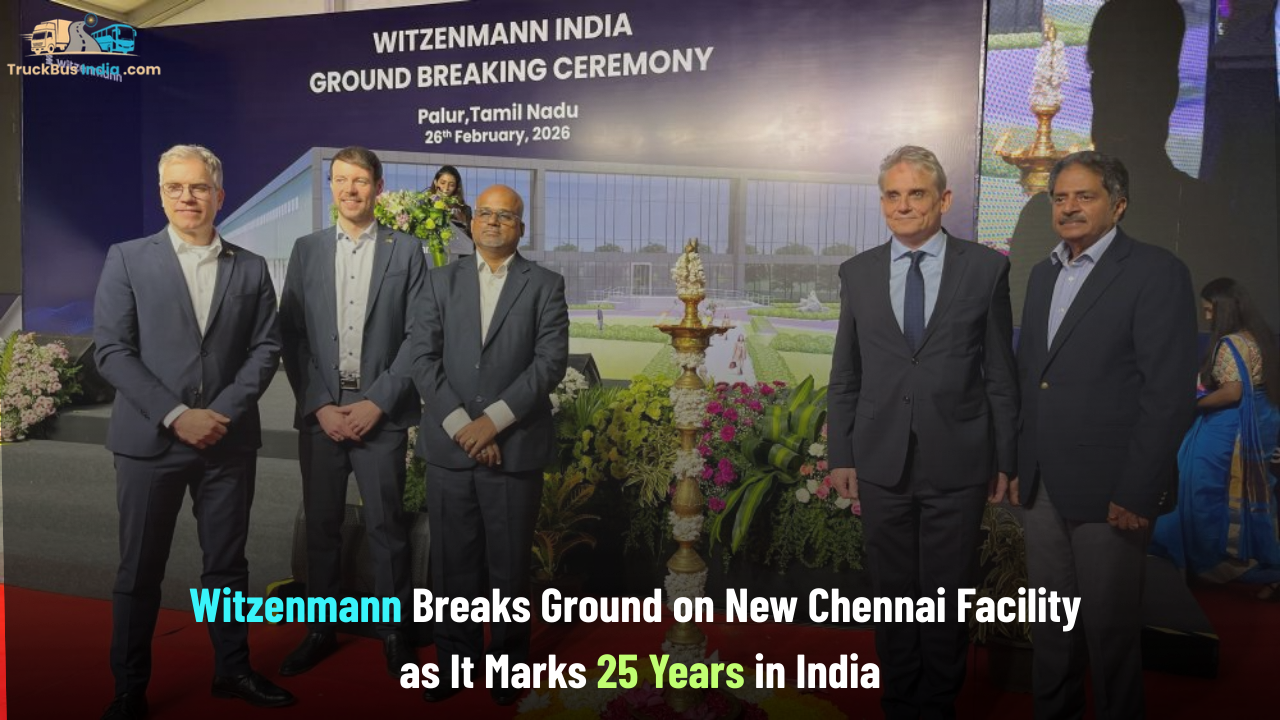
Witzenmann India has broken ground on its new Witzenmann Chennai facility, marking a significant milestone as the company completes 25 years in India. The expansion is not just about additional capacity but about building a long term foundation that positions India as one of the company’s future flagship hubs globally. The project reflects strong confidence in the Indian economy and Tamil Nadu’s robust industrial ecosystem.
The German engineering group, known for flexible metallic elements, has outgrown its existing plant and is now making its largest overseas investment. Construction has begun in Palur, Tamil Nadu, with the facility set to support automotive, commercial vehicle and industrial customers across India and beyond.
Witzenmann Chennai Facility: Scale, Investment And Timeline
The new Witzenmann Chennai facility is being developed on a 90,000 sq m plot, which is larger than the company’s headquarters in Germany. The site will include two modern production buildings with a combined manufacturing space of nearly 20,000 sq m.
Key highlights of the project include:
- Relocation of around 700 machines
- Workspace for over 500 employees
- Completion timeline of approximately 30 months
- Joint design collaboration between Indian and German experts
Mr. Phiip Paschen, Chief Operations Officer and Deputy Chairman of the Management Board, described the investment as a strong vote of confidence in Witzenmann India’s leadership and workforce. He emphasised that the project will serve as a centre of excellence in Asia and contribute significantly to future profitability.
Strengthening Indo German Industrial Ties
The Witzenmann Chennai facility also reflects deepening industrial cooperation between Germany and India. Mr. Michael Hasper, Consul General of Germany in Chennai, stated that family owned companies invest with a generational vision, reinforcing long term commitment rather than short term returns.
Mr. Matthias Wode, VP Facility Management at Witzenmann Group, noted that the facility will house almost the entire product portfolio, enabling integrated manufacturing for domestic and export markets. Industry leaders, including representatives from the Indo German Chamber of Commerce, encouraged the company to leverage the expansion to become a stronger export player from India.
Conclusion
The Witzenmann Chennai facility marks a defining chapter in the company’s 25 year India journey. With a large scale campus, advanced production infrastructure and a clear long term vision, Witzenmann India is positioning Chennai as a key node in its global manufacturing network. The expansion underlines sustained confidence in India’s growth story and signals a new phase of industrial scale up.