
News List
Switch Mobility To Deliver 1,500 Electric Buses This Fiscal

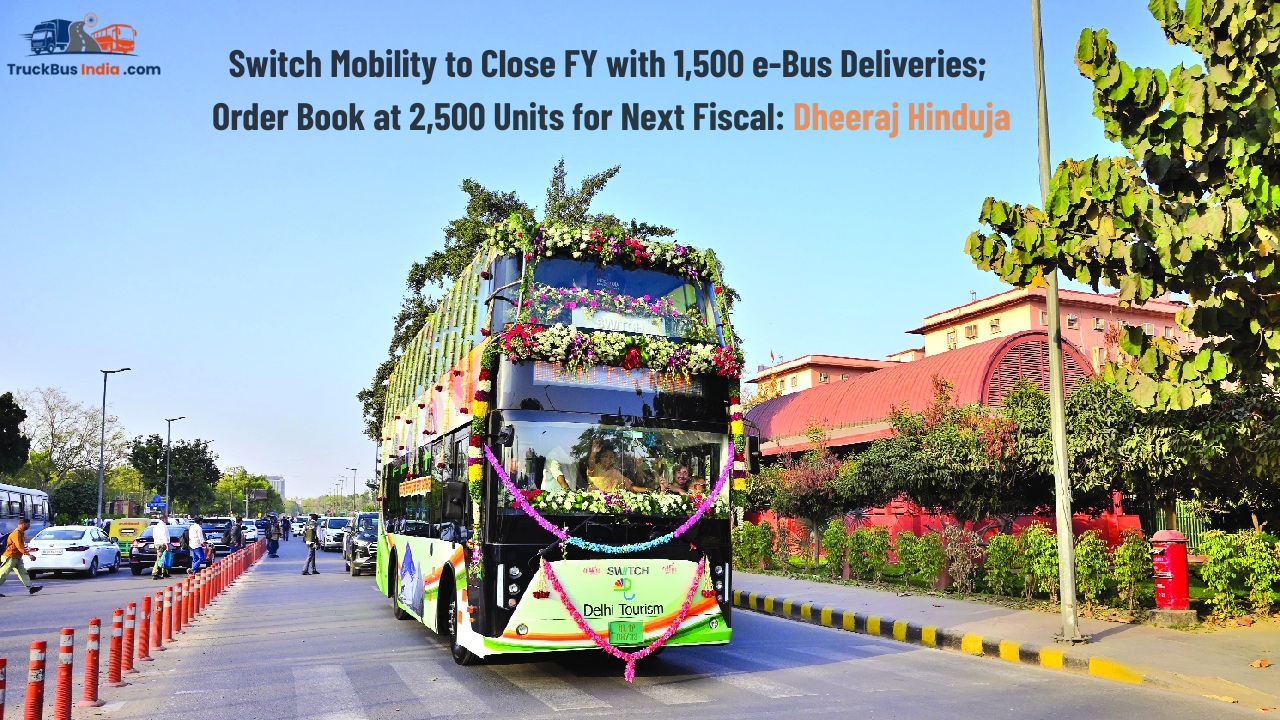
Switch Mobility, the electric vehicle arm of Ashok Leyland, is set to close the current financial year with approximately 1,500 electric bus deliveries, including vehicles scheduled for dispatch in March, according to Dheeraj Hinduja, Executive Chairman of Ashok Leyland and Chairman of Switch Mobility. The company is entering the next fiscal year with a robust order book of around 2,500 electric buses, providing clear visibility for continued scale-up.
The Hinduja Group also gifted a Switch double-decker electric bus to the Delhi government as part of its CSR initiative, highlighting both public engagement and innovation in India’s EV sector.
Finance Remains The Key Bottleneck
When addressing challenges in electric mobility adoption, Hinduja emphasised that financing remains the single biggest constraint. While charging infrastructure is often cited as a hurdle, upfront capital costs, particularly for commercial fleets, are the primary limitation.
“Battery costs are expensive, but fortunately they are coming down. In the next few years, you will see parity, where diesel and electric will become equally viable,” he said. Hinduja noted that total cost of ownership already favours electric buses over a medium-term cycle. A four-year ownership perspective shows clear economic advantages, and with buses typically operating 10–12 years, lifecycle savings are substantial.
Electric Double-Decker Revival
Switch Mobility has delivered 110 electric double-decker buses in India, with 40 more under delivery. The company is currently in discussions for further deployment in Delhi, including tourism-related applications. Hinduja stated, “We are the only ones who produce the electric double-decker at the moment.”
With policy support from central and state governments accelerating adoption, Switch Mobility enters the new fiscal year with momentum. Despite ongoing challenges around finance and battery costs, the company’s focus on scale, double-decker innovation, and total cost of ownership economics positions it as a leader in India’s electric mobility transition.