
News List
Road Freight Decarbonisation Takes Focus At Delhi Roundtable

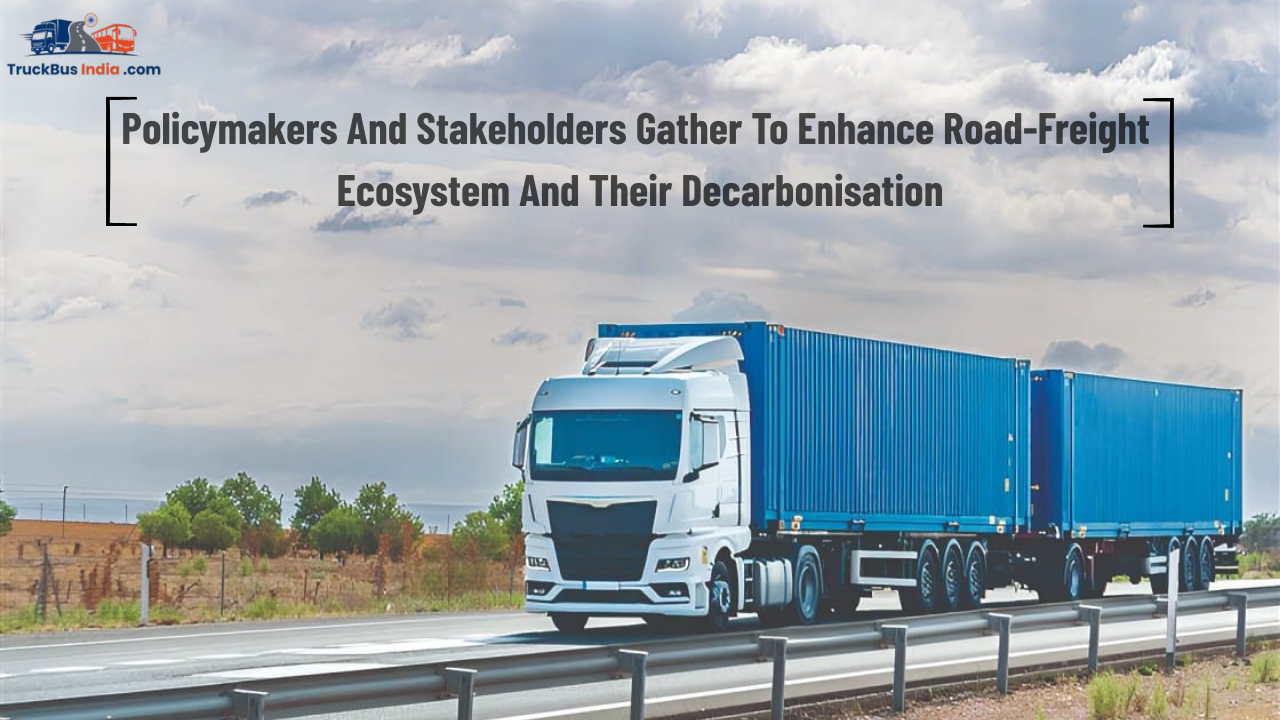
Road freight decarbonisation emerged as a central theme at a high level roundtable held during the Delhi Climate Innovation Week in New Delhi. Hosted at the Indian International Centre, the closed conference brought together senior policymakers, industry stakeholders, researchers and financiers to chart a strategic route map for India’s long haul freight ecosystem.
Organised by Riding Sunbeams and Purpose, the session aimed to accelerate coordinated action across regulation, innovation and funding. As freight volumes continue to expand with India’s economic growth, experts warned that emissions from the sector could more than double by mid century without decisive intervention.
Aligning Policy Frameworks For Road Freight Decarbonisation
The first pillar of discussion focused on regulatory ecosystems and fuel efficiency norms to advance road freight decarbonisation. Participants stressed that policy alignment between central and state governments is essential to scale successful pilot projects nationwide.
Integrated Governance And Structured Action
Rahul Kapoor, Director Finance at the Dedicated Freight Corridor Corporation of India, stated that policy cannot function in isolation. He emphasised the need for a structured approach that integrates technology, economics, resources and livelihoods. According to him, coordinated governance can foster affordable innovation while strengthening India’s freight backbone.
Beyond Incentives Towards Long Term Targets
Amit Bhatt, Managing Director at ICCT India, highlighted that while incentives help kickstart change, sustainable transformation requires clearly defined policy pathways. He noted that road freight decarbonisation must establish clear targets and define the strengths of various technologies across modes to ensure large scale impact.
Technology Readiness And Electrification Push
The second theme examined innovation and technology readiness within the freight ecosystem. Discussions revolved around electrification of heavy duty vehicles, alternative fuels and logistics optimisation strategies.
Preparing The Grid For Electric Trucks
Kaustubh Gosavi, Program Lead for Electric Mobility at WRI India, pointed out that nearly 10,000 electric trucks are expected over the next five years. He raised concerns about grid capacity, renewable energy integration and maintaining financial viability as electrification scales. Road freight decarbonisation, he suggested, must go hand in hand with energy ecosystem planning.
Financing And Collaborative Pathways
The final theme explored investment mechanisms to support systemic change. Participants examined financial models that can reduce early adoption risks and create demand for cleaner freight technologies. Collaboration between public and private stakeholders was identified as critical to unlocking capital and accelerating deployment.
The roundtable concluded with consensus that a post conference briefing note will outline immediate and long term measures. By aligning regulation, technology and finance, India aims to build a resilient and sustainable freight system. The dialogue reinforced that road freight decarbonisation is no longer optional but essential to achieving national climate and air quality goals.