
News List
India Mandates 20% Ethanol-Blended Petrol

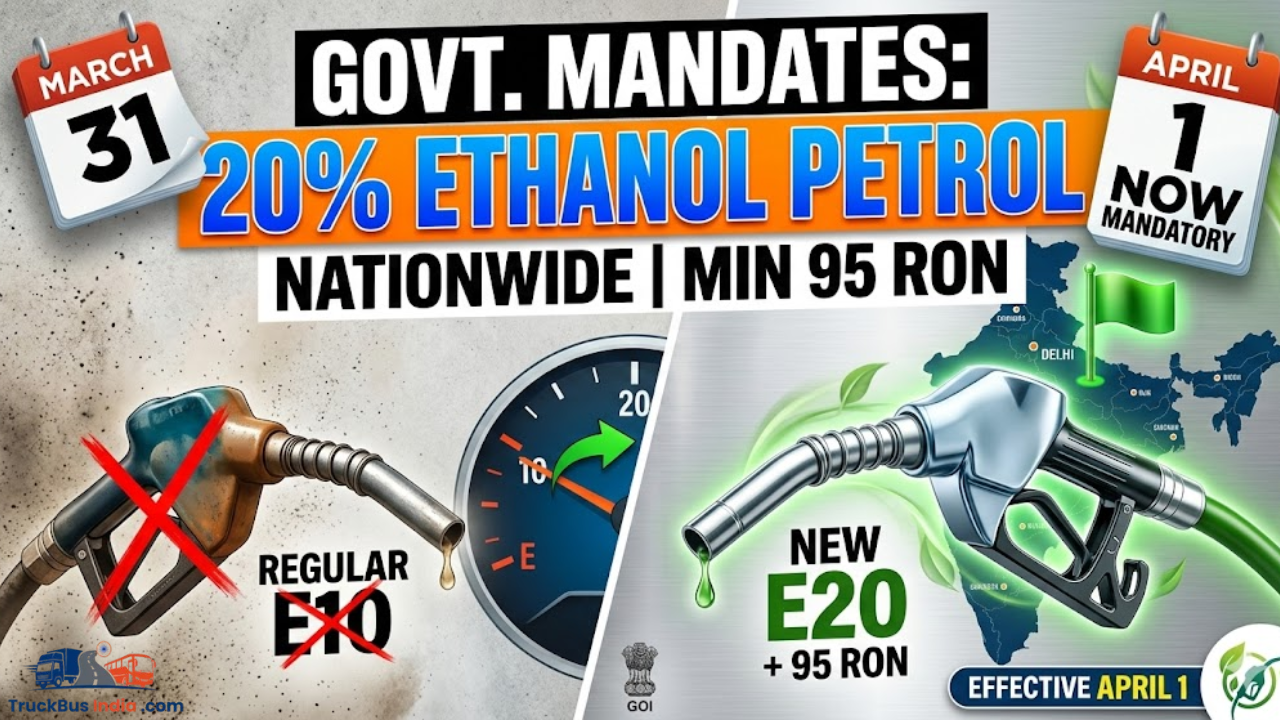
The central government has directed that from April 1, 2026, all States and Union Territories must sell petrol blended with up to 20 percent ethanol and a minimum Research Octane Number (RON) of 95. The Ministry of Petroleum issued the notification on February 17, instructing oil companies to comply with Bureau of Indian Standards specifications. Exceptions may be allowed in specific regions or for limited durations under special circumstances.
The move aims to reduce India’s dependence on crude oil imports, lower emissions, and provide support to farmers by boosting demand for sugarcane, maize, and other agricultural produce.
Vehicle Compatibility
Most vehicles manufactured from 2023 onward are designed for E20 petrol. Older vehicles may experience minor reductions in mileage, estimated at 3 to 7 percent, and some rubber or plastic components could wear faster. Maintaining RON 95 ensures engine protection and prevents premature ignition or knocking.
Octane and Engine Performance
RON measures a fuel’s resistance to knocking, which occurs when petrol burns unevenly inside the engine, causing power loss and potential damage. Ethanol has a high natural octane value of around 108 RON. Blending 20 percent ethanol into petrol improves stability under high compression and enhances engine performance.
National Impact of E20 Petrol
India achieved 10 percent ethanol blending in petrol in June 2022, ahead of schedule. Advancing to 20 percent blending supports energy security, renewable fuel adoption, and cleaner air. Since 2014-15, India has saved over ₹1.40 lakh crore in foreign exchange through ethanol substitution, reflecting both economic and environmental benefits.