
News List
Rajasthan Bus Strike 2026 Brings Private Transport To Halt

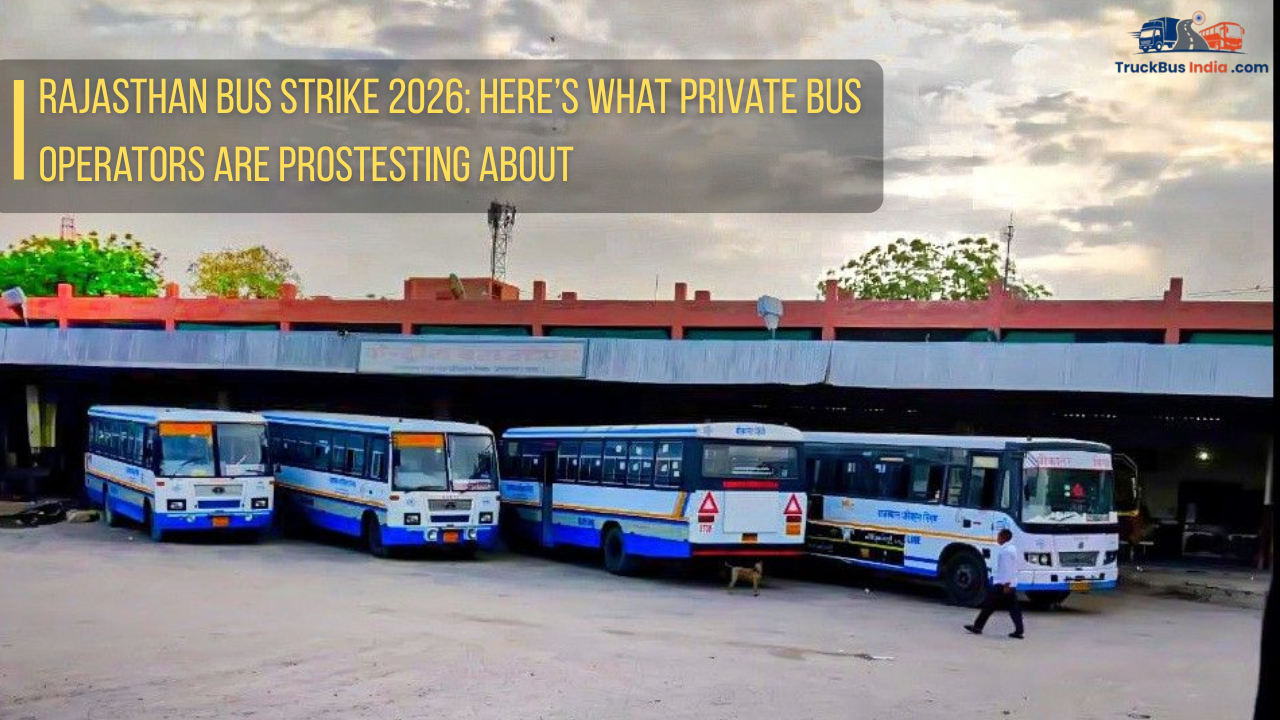
The Rajasthan bus strike has disrupted daily transport across the state, with nearly 35,000 private buses off the roads since midnight on February 23, 2026. The indefinite strike, led by private bus operators, comes in response to intensified enforcement drives and the implementation of new bus body rules by the Transport Department. Cities like Jaipur, Sikar, Jhunjhunu, and Udaipur saw passengers stranded at bus stands and railway stations, while Jodhpur remained largely unaffected.
Reasons Behind The Strike
The strike has been organized by the All Rajasthan Contract Carriage Bus Operators Association, whose president Rajendra Sharma highlighted unresolved demands after discussions with the government. The operators allege harassment during routine checks, including suspension of Registration Certificates (RCs), imposition of fines up to ₹1 lakh, and enforcement of AIS 153 mandates on older buses. Additionally, passengers are often asked to deboard mid-route during inspections, causing inconvenience.
Concerns Over Rooftop Luggage Carriers
A major flashpoint is the restriction on rooftop luggage carriers under the new bus body rules. Operators argue that these carriers are essential for long-distance and rural travel, where passengers frequently carry bulky goods. The inability to use rooftop racks has intensified the protest, as it directly affects the operational efficiency and service capacity of private buses.
Passenger Impact Across Rajasthan
The strike has affected over 1.5 million daily commuters, creating chaos at bus stands and railway stations. Online bookings for private buses have also been suspended until February 28, increasing travel uncertainty. Passengers traveling for religious events, including the Khatu Shyam fair, were reportedly stranded in multiple cities. Taxi operators in Jaipur have joined the strike, further limiting transport options and leading to overcrowding on Rajasthan Roadways buses.
Uneven Impact In Cities
While Jaipur and Udaipur faced severe disruption, Jodhpur remained largely unaffected, with private buses continuing normal operations. This uneven impact highlights how the strike affects different regions differently, depending on local enforcement and operator participation.
Political And Interstate Implications
Rajendra Sharma stated that buses will not be made available for the Prime Minister’s rally in Ajmer later this month, signaling potential political consequences. Operators from neighboring states like Gujarat, Madhya Pradesh, Maharashtra, Delhi, and Haryana have expressed solidarity, raising the possibility of broader travel disruption if the strike escalates. Deputy Chief Minister and Transport Minister Prem Chand Bairwa has called for dialogue to resolve the issues without prolonged commuter disruption.
Core Demands Of Operators
The operators have presented clear demands: no suspension of RCs during routine enforcement, withdrawal of allegedly incorrect challans, relaxation in applying AIS 153 to older vehicles, prohibition of mid-route passenger offloading, and permission to reinstall rooftop luggage carriers. They argue that these regulations were introduced without adequate consultation and retroactive enforcement on older buses is unfair.
Conclusion
The Rajasthan bus strike 2026 has created significant disruption for passengers and highlighted tensions between private operators and government authorities. With over 15 lakh daily commuters affected, resolution through dialogue remains crucial. Authorities and operators must balance safety regulations with practical operational needs to restore normalcy in the state’s transport system.