
News List
Detroit Gen 6 Engine Targets EPA27 Ultra Low NOx Standards

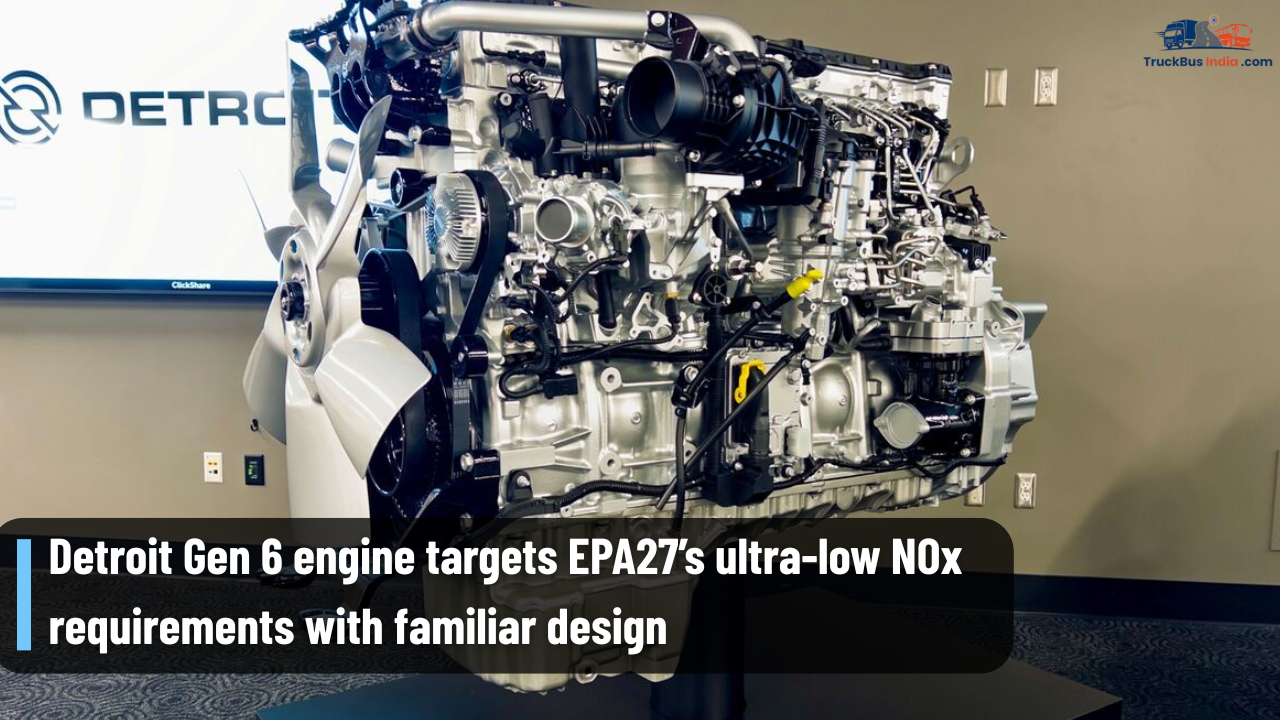
The Detroit Gen 6 engine is set to power the next phase of heavy duty trucking as Daimler Truck North America moves toward the EPA27 ultra low NOx standards. Built to achieve 0.035 grams per hp per hour, the Detroit Gen 6 engine represents nearly seven years of engineering focused on efficiency, reliability and long term customer value.
Despite regulatory reviews in the United States, Daimler continued development without pause. The company positioned the Detroit Gen 6 engine not just as a compliance solution, but as a refined powertrain designed to improve fleet performance while meeting EPA27 requirements.

Detroit Gen 6 Engine Designed Around EPA27 Targets
The EPA27 ultra low NOx mandate reduces emissions from the current 2 grams per hp per hour to just 0.035 grams by 2027. While certain policy elements remain under review, manufacturers have received guidance that the NOx cap will remain unchanged.
Development Began Before Final Rules
Engineering work on the Detroit Gen 6 engine started well before final regulatory language was confirmed. The goal was to improve fuel efficiency and durability first, then integrate EPA27 compliance into the platform.
Company executives state the Detroit Gen 6 engine is fully prepared for the regulation as written today and adaptable to any minor adjustments that may follow. Extended warranty rules tied to aftertreatment systems could evolve, but the emissions target itself is expected to stay.
The new engine will launch in the Freightliner Cascadia heavy duty truck, which transitions fully to the updated powertrain in January 2027.
Familiar Aftertreatment With Advanced Pre SCR System
A standout feature of the Detroit Gen 6 engine is its upgraded one box aftertreatment system. Engineers retained the familiar outer housing fleets already use, enlarging it slightly to integrate a pre selective catalytic reduction system.
Earlier NOx Conversion Improves Compliance
The pre SCR unit allows earlier NOx conversion during cold starts and idle conditions, both key focus areas under EPA27. By addressing emissions earlier in the drive cycle, the Detroit Gen 6 engine maintains ultra low NOx output without introducing major complexity.
Detroit leveraged more than 15 years of SCR refinement, keeping the layout simple and avoiding additional space claims. Vocational trucks continue to benefit from a clean back of cab configuration.
Mechanical Upgrades Improve Efficiency and Durability
Meeting EPA27 standards required enhancements beyond aftertreatment. The Detroit Gen 6 engine introduces a new oil lubricated fuel pump, eliminating amplified injectors and simplifying the high pressure common rail system.
Stronger Fuel System for Real World Conditions
The redesigned fuel system increases robustness, particularly in regions where fuel quality varies. It also reduces oil consumption and pump workload, contributing to lower maintenance concerns.
Engineers fine tuned air management and adjusted camshaft timing to reduce friction during compression strokes. Lower friction enables more power transfer to the wheels, supporting fuel savings and improved drivability.
Although tighter emissions standards often increase diesel exhaust fluid consumption, efficiency gains within the Detroit Gen 6 engine help offset some of that added DEF usage.
Maintenance intervals and diesel particulate filter design remain consistent with the previous generation, easing fleet transition.
New Power Ratings Enable Downspeeding
The Detroit Gen 6 engine lineup introduces additional performance options. The DD13 will offer 505 horsepower with 1,750 lb ft of torque. The DD15 adds new 425 horsepower and 455 horsepower variants, both rated at 1,900 lb ft.
Improved Performance Without Fuel Penalty
These new ratings support further downspeeding strategies, delivering additional fuel savings without sacrificing performance. The asymmetric turbocharger remains, now featuring a ball bearing design as standard across the lineup for improved efficiency.
The DD16 will also be updated for EPA27 compliance, though it will not enter production until 2028. In the interim, Daimler will continue offering the current generation using emissions credits.
Pricing Outlook and Production Timeline
While pricing details for the Detroit Gen 6 engine have not been finalized, company leaders indicate increases are expected to be lower than earlier market projections. Industry estimates have ranged widely, from moderate to significant price jumps.
Pre production units are scheduled as early as March, allowing customers to gain familiarity before the full 2027 transition. So far, there are no signs of a widespread pre-buy ahead of EPA27 implementation, as fleets remain cautious amid broader business conditions.
Conclusion
The Detroit Gen 6 engine positions Daimler Truck North America for the EPA27 ultra low NOx era with a balanced approach. By combining a familiar aftertreatment layout, mechanical refinements and new power ratings, the Detroit Gen 6 engine aims to deliver compliance without compromising efficiency or reliability. As 2027 approaches, the platform signals a steady evolution rather than a disruptive overhaul for heavy duty fleets.