
News List
Predictive Maintenance Transforms Margins for Indian Fleets

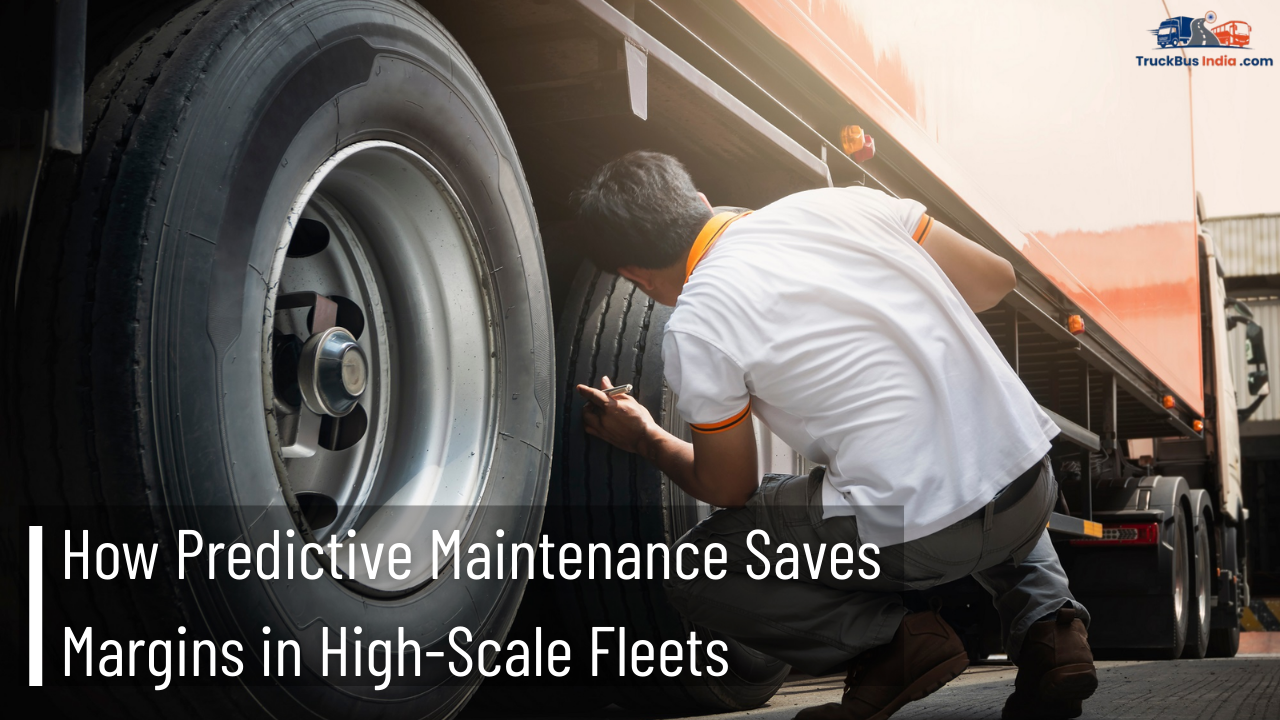
Indian fleet operators are operating in an environment where fuel volatility, tighter delivery schedules, and rising competition are directly impacting profitability. As fleets expand in size and complexity, predictive maintenance is increasingly being viewed as a critical strategy to protect margins and ensure operational stability.
In a recent industry discussion, Ms Pali Tripathi, CEO of Taabi Mobility, highlighted how predictive maintenance and predictive fleet health are helping commercial vehicle operators shift from reactive repairs to intelligent, data-driven fleet management.

Predictive Maintenance Reshapes Fleet Operations
Traditional maintenance practices in India have largely revolved around fixed service intervals or responding after a breakdown occurs. While manageable for smaller fleets, this approach becomes financially unsustainable as scale increases. Trucks operating across highways, mining belts, construction zones, and congested urban corridors face unpredictable wear and sudden mechanical stress.
Predictive maintenance addresses this unpredictability by analysing real-time vehicle data to identify early warning signs. Instead of waiting for a failure, fleet managers receive alerts about potential risks and can schedule servicing proactively. This reduces roadside breakdowns, prevents delivery disruptions, and improves overall uptime.
The broader idea of predictive fleet health focuses on continuous monitoring of engine behaviour, operating conditions, and vehicle performance. With better visibility into mechanical health, fleet operators can reduce uncertainty and strengthen cost control across their operations.
OBD Diagnostics Strengthen Predictive Maintenance Accuracy
On Board Diagnostics, or OBD, plays a central role in enabling predictive maintenance. The system connects directly to a truck’s electronic control units and continuously captures operational data during everyday use.
OBD-based diagnostics typically monitor engine performance, fuel consumption patterns, temperature readings, fault codes, and load stress indicators. Unlike simple GPS tracking that only reveals location, OBD data explains the mechanical condition of the vehicle. This deeper insight forms the foundation of predictive fleet health strategies.
By leveraging OBD data, operators can move from guesswork to evidence-based maintenance planning. Predictive maintenance ensures components are serviced or replaced when genuinely required rather than strictly by calendar schedules. Over time, this reduces unnecessary part replacements and lowers total cost of ownership.
Overcoming Adoption Barriers in Indian Fleets
Despite its benefits, predictive maintenance adoption faces practical challenges. Many fleet operators remain highly cost-conscious and cautious about digital investments. Concerns include integration across multi-brand fleets, perceived technology complexity, and resistance from drivers who may misunderstand monitoring systems.
Solutions that combine IoT devices, OBD diagnostics, and AI-driven analytics are helping ease this transition. The focus is increasingly on delivering measurable business outcomes such as reduced downtime, improved fuel efficiency, and better vehicle utilisation.
Industry experts recommend starting small. Piloting predictive maintenance with a limited number of vehicles allows operators to measure improvements in uptime and cost savings before expanding across the fleet.
Predictive Maintenance Supports Efficiency and Sustainability
Vehicle health directly impacts fuel efficiency and emissions. Poorly maintained engines, clogged injectors, or excessive load stress increase fuel consumption and environmental impact.
Predictive maintenance helps maintain optimal operating conditions. By detecting issues early, fleet managers can reduce fuel wastage, prevent mechanical degradation, and extend asset life. Predictive fleet health therefore supports both profitability and India’s broader road transport efficiency goals.
Conclusion
As fleet operations scale, unpredictable breakdowns and reactive servicing models can erode profitability. Predictive maintenance offers a structured, data-backed approach to reducing downtime, strengthening margins, and improving long-term vehicle performance. With growing emphasis on efficiency and sustainability, predictive fleet health is set to play a defining role in the future of Indian trucking.