
News List
Karnataka private bus operators urge tax relief ahead of Budget 2026

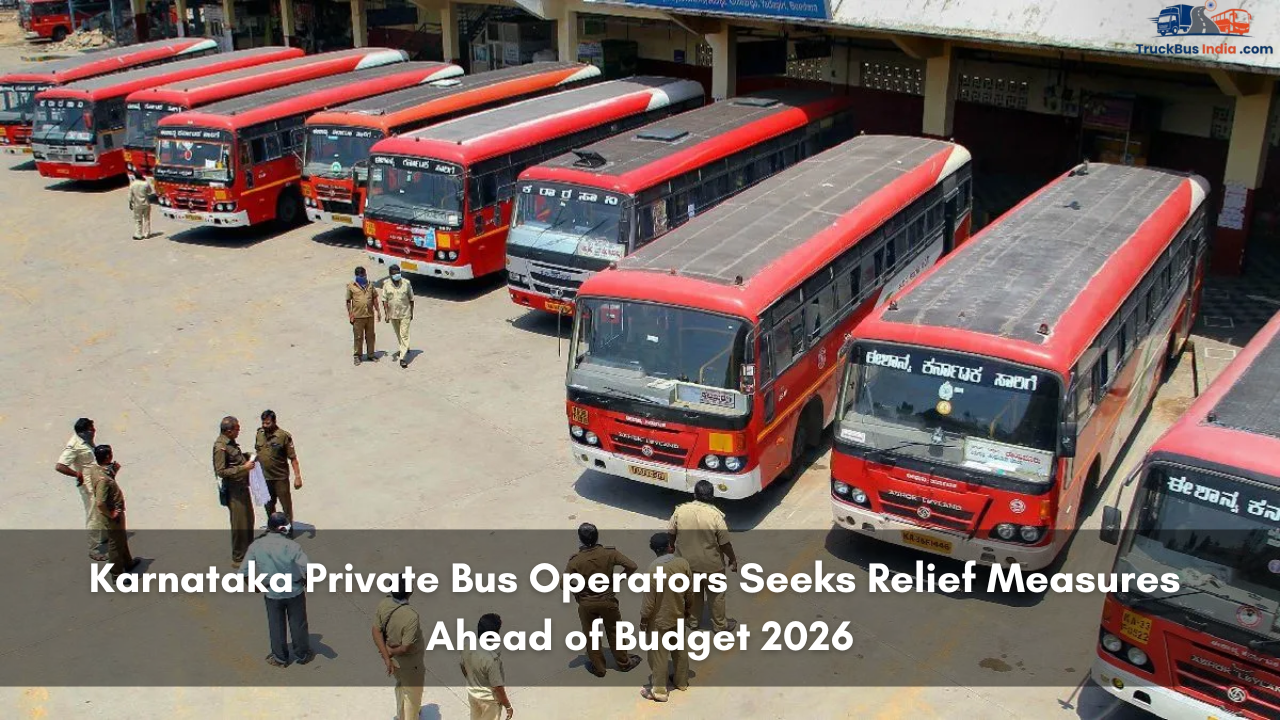
The Federation of Karnataka State Private Transport Associations has submitted a pre-Budget memorandum to Chief Minister Siddaramaiah, flagging serious concerns about the financial health of the private transport sector in the state.
The association described the sector as “distressed,” citing policy imbalances, mounting taxes, unregulated aggregator operations, and the absence of structured financial support. According to the federation, these issues have collectively strained operators and put thousands of livelihoods at risk.
Adv. Nataraja Sharma, President of the federation, stated that while private bus operators have consistently supported public mobility and ensured uninterrupted services, the current regulatory and taxation framework has made operations increasingly unsustainable. He urged the state government to strike a balance between welfare initiatives and the viability of private transport businesses.
Key Demands Placed Before the Government
Cap on Shakti Travel Scheme
One of the primary demands is the introduction of a district-level cap on the Shakti scheme, which provides free bus travel for women in state-run buses.
While acknowledging the welfare intent behind the scheme, the federation argued that it has significantly reduced passenger footfall and revenue for private operators. They believe that implementing a district-wise cap would allow the government to continue supporting women commuters while preventing severe revenue losses in the private segment.
Rationalisation of Road Tax
The association has also sought a reduction and rationalisation of motor vehicle tax, particularly for non-AC stage carriage buses.
According to the federation, high taxation has led to 9,348 vehicles being registered in neighbouring states, resulting in an estimated revenue loss of ₹300 to ₹400 crore for Karnataka.
Currently, sleeper buses pay approximately ₹4,440 per seat per quarter, while seater buses pay ₹3,850 per seat per quarter. This translates to an annual tax burden of ₹5 to ₹6 lakh per vehicle. The association noted that over 3,000 non-AC 16- and 22-seater buses have reportedly shifted registration outside the state due to the heavy tax structure.
The federation maintains that a more competitive tax regime would prevent revenue leakage and encourage operators to retain registrations within Karnataka.
Infrastructure Proposal
Pay-and-Use Bus Terminal on Race Course Road
Private operators have proposed the development of a dedicated pay-and-use bus terminal near Race Course Road in central Bengaluru.
They argued that a structured and centrally managed terminal would help ease traffic congestion, improve operational efficiency, and offer safer boarding and alighting facilities for passengers. At present, many private buses operate from scattered pick-up points, leading to congestion and safety concerns.
A dedicated terminal, they said, would bring order to the system and enhance the commuter experience.
Additional Policy Recommendations
Beyond the major demands, the federation has suggested several policy measures aimed at improving operational sustainability and worker welfare.
They have requested an extension of the permissible lifespan of CNG vehicles from 15 to 20 years, along with subsidies to support compliance.
The association also recommended amending Rule 153 to link tax payments with vehicle fitness certification, particularly for older vehicles.
Other proposals include subsidised housing for drivers in Bengaluru and the inclusion of lung diseases and specific heart-related ailments under welfare benefit schemes.
Additionally, the federation has proposed the creation of a dedicated welfare fund sourced from commercial vehicle cess collections and the establishment of government-run driver training centres in every district to help reduce road accidents.
Through its memorandum, the federation has called for a balanced approach in Budget 2026, emphasising that policy support is essential not only for the survival of private bus operators but also for sustaining employment and mobility services across Karnataka.