
News List
India’s Electric Pickup Begins 4,000 km Journey from Kashmir to Kanyakumari

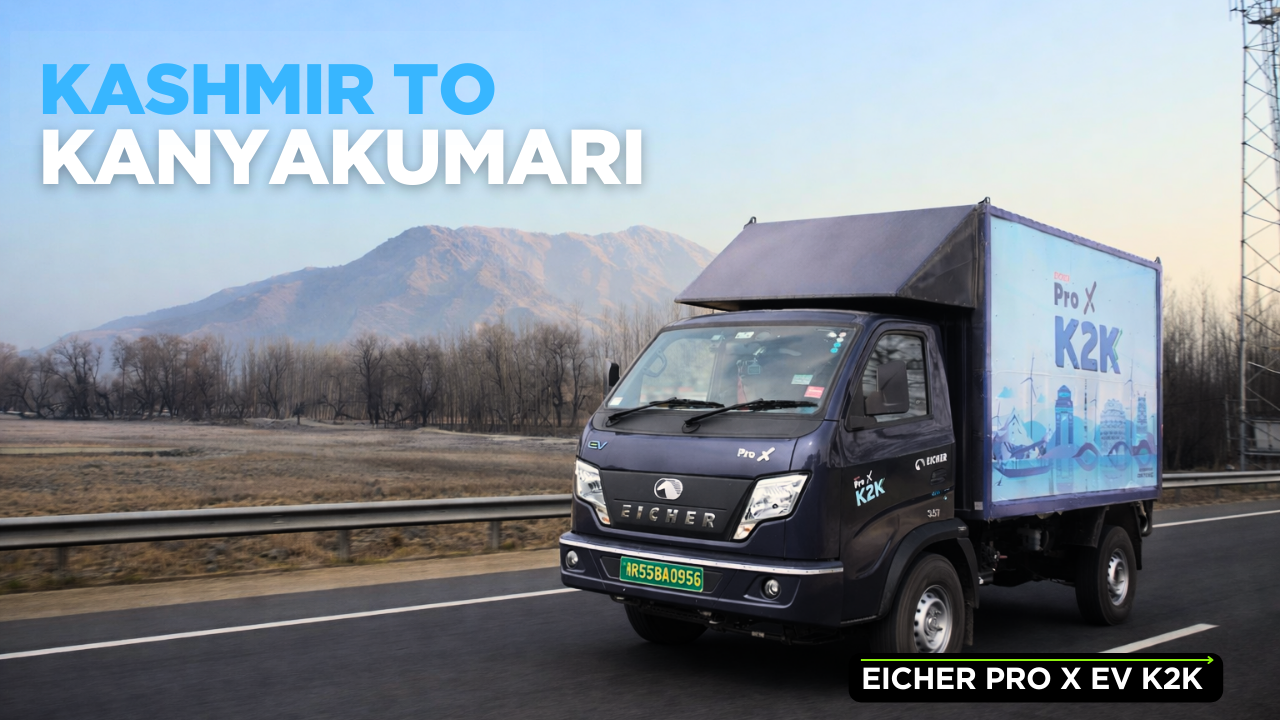
A fully loaded Eicher Pro X electric pickup has set off on an ambitious 4,000 km journey from Lal Chowk in Srinagar to Kanyakumari. The expedition is designed to demonstrate the real-world capability of electric commercial vehicles in India.
The truck will travel on real roads, pay tolls, cross state borders, and rely solely on public charging stations. Organisers are documenting the journey for a possible entry in the India Book of Records, making this a historic attempt for commercial electric mobility in India.
Historic Flag-Off from Srinagar
The journey began in Srinagar with the flag-off from Lal Chowk. Company officials described the drive as challenging and historic.
“The idea of taking an electric commercial vehicle across the country is ambitious,” one representative said. “Our testing and validation give us confidence that it can handle the cold of the Himalayas and the heat of southern India.”
The Pro X EV has undergone extensive preparation and testing before entering the market. The journey is designed to show its performance under real working conditions and across different terrains.
Carrying a Real Commercial Load
What makes this journey unique is that the truck is carrying a real commercial load. Bottled water sourced from Kashmir is securely loaded, and cameras monitor the cargo throughout the journey.
A logbook is maintained at each charging stop to record distance travelled, battery status, and range. “This is a genuine commercial task. It proves that electric pickups can manage real workloads while covering long distances,” an organiser said.
Officials from the India Book of Records praised the attempt. “We support initiatives that challenge boundaries and show what is possible with determination,” said a representative.
Relying on Public Charging Infrastructure
Long-distance electric vehicle travel often raises concerns about charging availability. The team is relying entirely on public charging stations along highways and in cities.
During the first leg in Kashmir, the vehicle stopped for a top-up at Nipora, 66 km from Lal Chowk. Charging was smooth and efficient. When one charger failed due to technical issues, an alternative was quickly located.
Company officials noted that government initiatives in recent years have helped create a reliable network of public chargers, making long-distance electric travel increasingly practical in India.
Navigating Real-World Challenges
The journey includes traffic jams, high-altitude roads, and the nine-kilometer Chenani Nashri Tunnel. While conventional vehicles rely on extensive tunnel ventilation systems for carbon emissions, the electric pickup passed through effortlessly without any emissions.
Regenerative braking proved useful on downhill stretches, recovering 8 to 10 percent of battery charge. Cabin comfort, adjustable seating, and a clear digital dashboard helped the drivers stay alert and comfortable during long hours behind the wheel.
Night Driving and Fog in Punjab
As the convoy entered Punjab, dense fog reduced visibility to as little as 10 meters in some areas. The Pro X EV’s headlights and fog lamps performed effectively, providing confidence for safe driving.
Drivers reported minimal fatigue after long hours and praised the stability, steering calibration, and ergonomics of the cabin.
Expanding EV Infrastructure
Along the route, multiple public charging stations at single locations provided options for the drivers. The team continues to update their logbook with battery data and distance travelled.
By the end of Day One, the vehicle had covered approximately 350 km from Srinagar. The cargo remained intact, regenerative braking performed well, and the drivers completed the first day of driving without fatigue.
Looking Ahead
The journey will continue south through diverse climates, terrains, and traffic conditions. From the snow-covered valleys of Kashmir to the tropical coast of Kanyakumari, this expedition is redefining what electric commercial vehicles can achieve.
The Kashmir to Kanyakumari drive is not just a test of technology. It is a demonstration of endurance, innovation, and the growing confidence in electric mobility for commercial transport in India.