
News List
Net-Zero Low-Energy Construction Trends

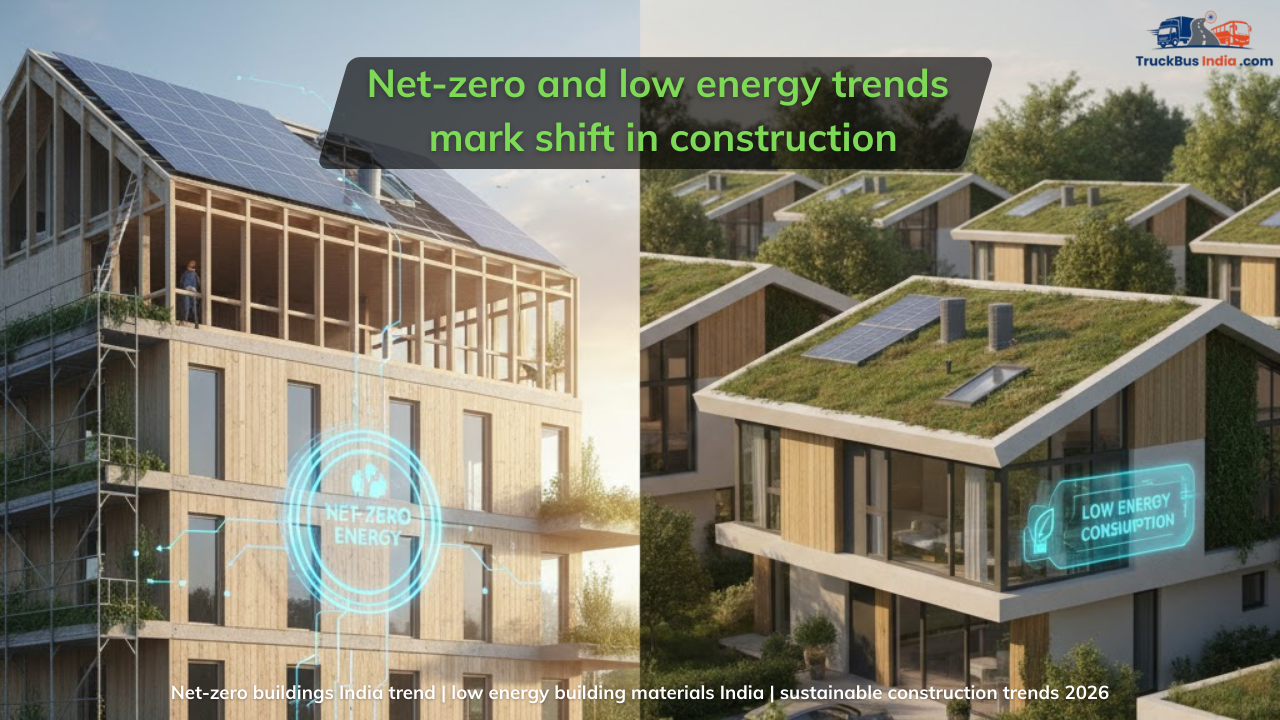
Energy-efficient materials, automation systems, and net-zero concepts are transforming architecture across corporate offices, commercial complexes, and residential spaces in India. Projects from green office spaces in Gomtinagar Extension to solar-powered homes along Shaheed Path highlight the growing net-zero buildings India trend. These buildings generate as much energy as they consume through net-zero solar ventilation and renewable energy integration, reflecting the shift toward low-energy, sustainable design.
Architects emphasise the use of low energy building materials India, including fly ash bricks, bamboo composites, and low-carbon cement, which reduce environmental impact without compromising durability or finish. Clients increasingly focus on operating costs as well as aesthetics. Double glazed facade insulation helps stabilise indoor temperatures and reduce electricity bills. While sustainable construction increases initial costs, typically ₹300–800 per square foot depending on automation, façade systems, and renewable energy integration, most green buildings cost payback within four to seven years due to lower energy consumption and reduced maintenance.
Automation and Prefabrication Driving Efficiency
Automation is becoming central to building performance. AI-driven AI lighting security dashboards allow occupants to monitor and control energy consumption in real time, improving comfort and reducing wastage. Modular prefabricated construction shortens project timelines and reduces material waste, while factory-made components ensure precision and minimal debris. Tools like BIM building info modelling help teams predict performance and avoid construction errors before construction begins.
The sustainable construction trends 2026 show that energy-efficient, net-zero buildings are becoming mainstream in India. By combining advanced materials, smart automation, and prefabrication, architects can deliver buildings that are environmentally responsible, economically viable, and achieve green buildings payback 4-7 years.