
News List
Renewable Power to Cut India’s Electric Truck Costs

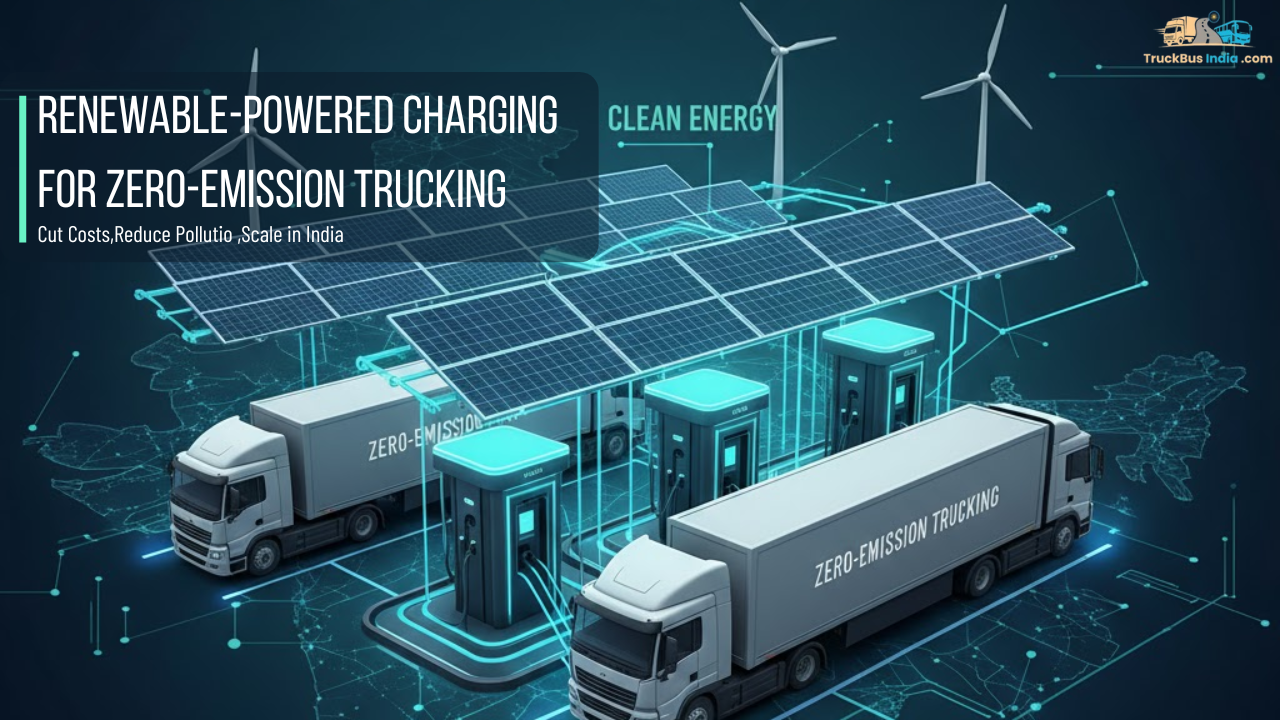
India’s zero-emission trucking market is poised for rapid growth, with around 1,000 electric trucks sold by the end of 2025. Despite this progress, charging infrastructure remains a critical bottleneck. Only about 5 percent of charging stations currently meet the power requirements of heavy-duty electric trucks. High electricity costs continue to pose a major barrier, accounting for 30–50 percent of an electric truck’s total cost of ownership (TCO) over seven years.
Without subsidies, electric trucks remain 14–22 percent more expensive than diesel trucks, highlighting the need for affordable, reliable charging solutions.
Understanding Charging Costs
Currently, electric trucks rely primarily on grid-supplied electricity, which is often sourced from polluting generation methods. Charging point operators (CPOs) determine electricity prices to cover three main components:
- Capital costs: Hardware, installation, electrical infrastructure, and interconnection fees.
- Operating costs: EV tariffs, including demand charges (monthly fees based on peak demand) and energy charges (cost per kWh consumed). Some states like Kerala have waived demand charges to encourage adoption. Guidelines from the Ministry of Power suggest solar-hour energy rates should be 30 percent lower than average cost of supply, while non-solar hours may be priced 30 percent higher.
- Profit margin and taxes: CPOs generally target an internal rate of return around 15 percent, with an 18 percent goods and services tax applied. Service charges are capped at INR 11/kWh during solar hours and INR 13/kWh during non-solar hours to keep charging affordable.
Recurring expenses such as maintenance, labor, and land leases further influence final charging prices.
Renewable Energy as a Solution
Renewable-powered charging has emerged as a promising pathway to reduce costs and deliver real environmental benefits. While only a small portion of stations currently use renewables, several CPOs have announced plans to scale solar- and wind-powered charging networks. By tapping into affordable, clean electricity, operators can lower the TCO for fleets, reduce emissions, and make electric trucks a more competitive alternative to diesel vehicles.
Industry Outlook
As India’s logistics and industrial sectors push for decarbonisation, renewable-powered charging could become the key enabler for widespread adoption of electric trucks. Reducing charging costs not only improves fleet economics but also ensures that the environmental promise of zero-emission trucks is fully realised, supporting India’s long-term sustainability goals.