
News List
Shriram Report: Truck Rentals Stay Flat January 2026

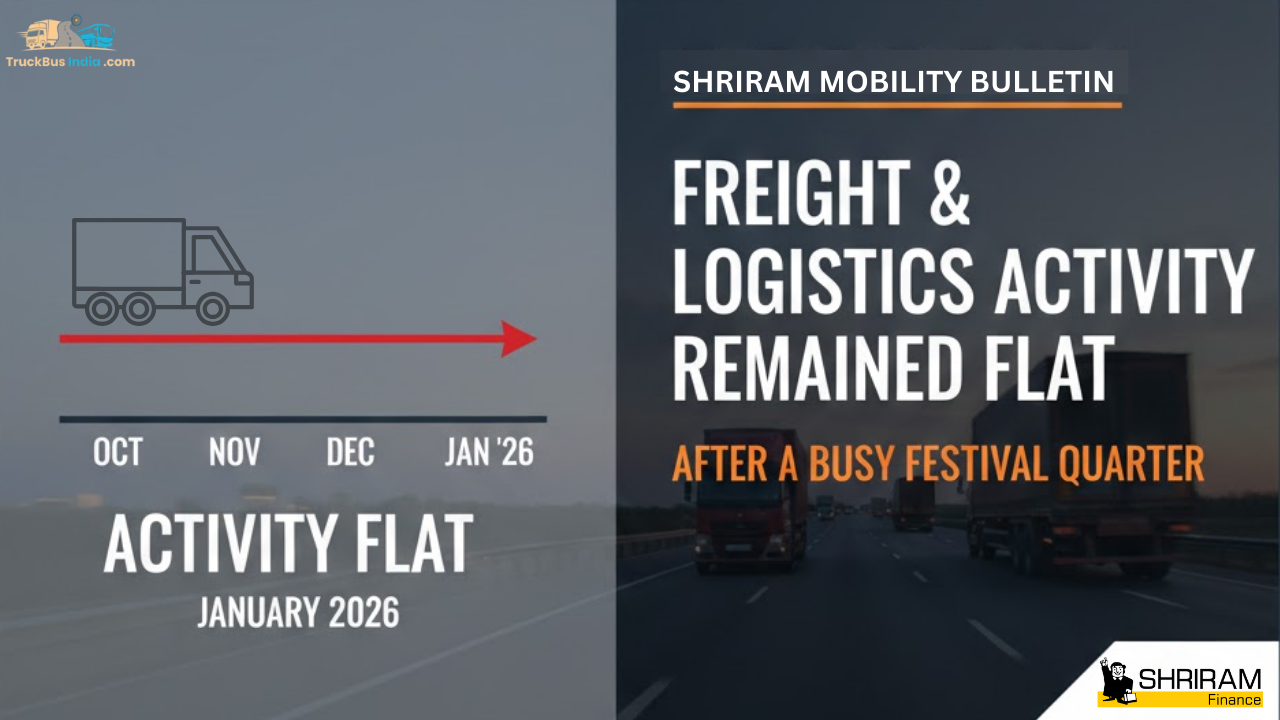
Freight Activity Levels Out After Festival Surge
According to the latest Shriram Mobility Bulletin for January 2026, freight and logistics activity across India remained largely flat compared to the previous month, following a busy festival quarter. While trucking rentals did not see a significant month-on-month rise, they recorded a healthy year-on-year increase ranging between 5% and 12% on major trunk routes. The beginning of the Rabi harvest played a crucial role in sustaining trucking activity, as agricultural produce movement picked up across key states and transport corridors.
The report suggests that India’s mobility and logistics sector started 2026 on a stable note, with demand supported by seasonal factors, infrastructure spending, and evolving vehicle adoption trends.
Delhi–Mumbai Leads Route Growth
Among major freight corridors, the Delhi–Mumbai–Delhi route registered the highest year-on-year growth at 12%, indicating strong commercial movement between the two economic hubs. Other important routes, including Delhi–Kolkata, Mumbai–Chennai, Bengaluru–Mumbai, and Kolkata–Guwahati, also saw approximately 10% YoY growth, reflecting steady intercity freight demand.
The bulletin also highlights that electric vehicle adoption continued to influence overall mobility trends. Electric car sales rose by 29% month-on-month, supported by improved model availability and growing consumer confidence in EV technology. Similarly, electric two-wheeler sales increased by 26%, driven by consistent urban commuting needs and better product reliability. The passenger vehicle segment, particularly SUVs, performed well in January, backed by strong consumer sentiment.
LCV And Goods Carrier Demand Remains Strong
Retail demand in the light commercial vehicle (LCV) segment stayed robust in January, largely due to sustained last-mile delivery requirements and utility transportation needs. However, bus retail sales experienced a slowdown as fleet operators delayed renewals, leading to lower new purchases in this category.
The goods carrier segment showed impressive momentum, with sales rising by 37% year-on-year. Three-wheeler goods vehicles also saw a 33% increase, indicating a broader recovery in both personal and commercial transport categories. These gains reflect continued expansion in e-commerce logistics, urban deliveries, and intra-city freight movement.
Infrastructure investments further supported commercial vehicle sales. Ongoing government spending on highways, logistics parks, industrial corridors, and urban infrastructure contributed to a 22% rise in commercial construction equipment sales and a 44% jump in earth-moving equipment sales during the period.
Industry Perspective On Future Trends
Sudarshan Holla, Joint Managing Director and COO of Commercial Vehicles at Shriram Finance, noted that truck rentals remained flat in January after a strong performance in the previous quarter. He expressed optimism about future freight movement, particularly in export-oriented regions, following recent developments in the Indo-US trade relationship.
Holla also pointed out that rising temperatures are expected to normalise logistics operations in the Himalayan region, which had faced disruptions due to weather conditions. However, he cautioned that ongoing geopolitical tensions along the Indo-Bangladesh border continue to impact goods movement. Despite these challenges, he anticipates a return to normalcy in the transport sector as the industry enters the peak operational quarter.
Role Of The Shriram Mobility Bulletin
The Shriram Mobility Bulletin, published monthly by Shriram Finance Limited, serves as a key industry barometer for India’s logistics and automotive sectors. By analysing data collected from fleet owners, vehicle dealers, and transport operators across the country, the report provides insights into market trends, demand patterns, and emerging mobility shifts.
Overall, the January 2026 bulletin paints a picture of a stable but evolving freight landscape—one shaped by seasonal agriculture, infrastructure growth, and the gradual transition toward electric mobility.