
News List
Budget 2026 backs 4,000 e-buses for Purvodaya

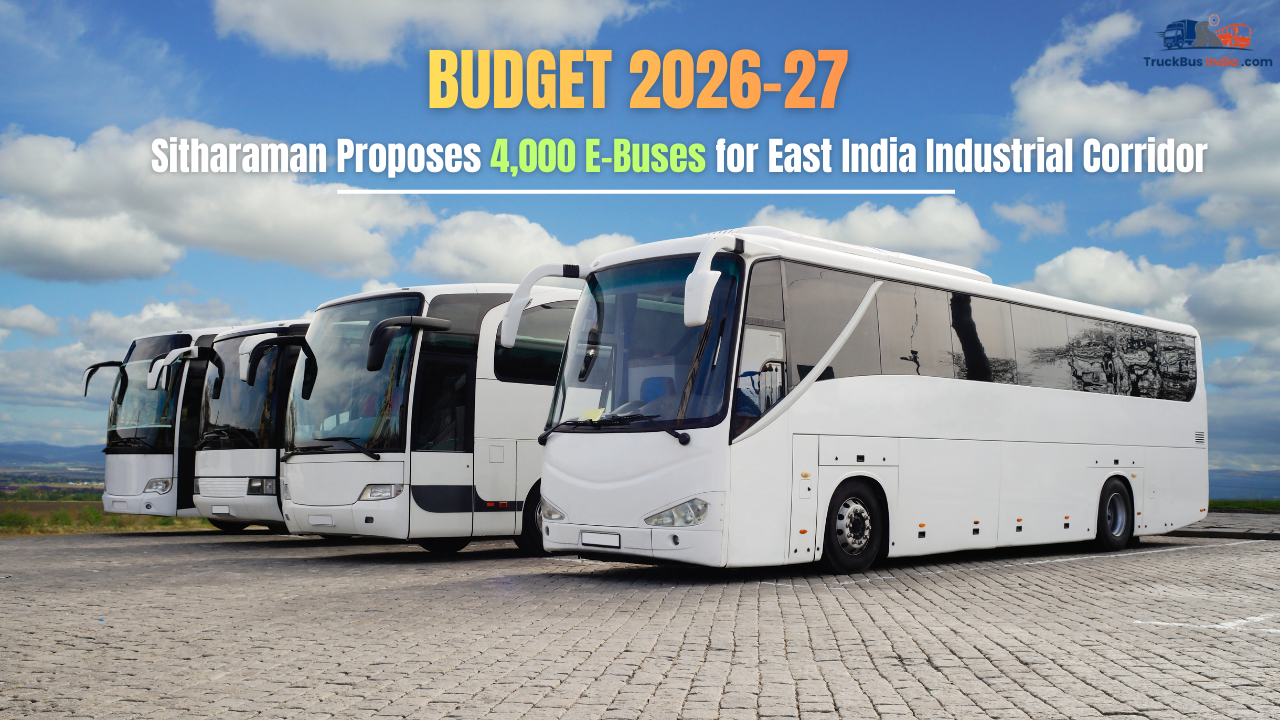
Union Finance Minister Nirmala Sitharaman, while presenting the Union Budget 2026-27 on February 1, 2026, announced a major push for electric public transport in eastern India with a proposal to deploy 4,000 electric buses across five Purvodaya states. The move is part of a broader strategy to strengthen clean mobility, industrial connectivity, and sustainable urban transport in the region. The initiative aligns with the government’s vision of building an Integrated East Coast Industrial Corridor, with Durgapur identified as a key industrial node. Alongside this, five new tourism destinations are planned to be developed, which will be supported by the proposed electric bus network to improve last-mile and intercity connectivity.
Strengthening existing e-bus programmes
The proposed deployment builds on the government’s ongoing electric mobility framework, primarily driven by the PM e-Bus Seva and PM E-DRIVE schemes. The PM e-Bus Seva programme, launched in August 2023 with a total outlay of ₹57,613 crore, aims to introduce 10,000 electric buses across 169 cities through a public-private partnership model. This approach encourages private sector participation while ensuring state transport undertakings benefit from structured funding and operational support.
To complement this, the ₹10,900-crore PM E-DRIVE scheme, launched in October 2024, has allocated ₹4,391 crore specifically for procuring 14,028 e-buses for state transport bodies by March 2026. Additionally, the government has set up a ₹3,435.33-crore Payment Security Mechanism (PSM) to protect private operators from payment defaults by state agencies, thereby improving investor confidence in the e-bus segment.
Rising adoption of electric buses in India
India’s electric bus market has shown steady growth over the past year. The sector’s market share increased from 4 percent in FY 2024 to around 5 percent in FY 2025. As of July 2025, the government has sanctioned 7,293 electric buses across 14 states and four Union Territories under the PM e-Bus Seva framework. In 2024 alone, electric buses accounted for 12.5 percent of the heavy passenger vehicle segment, with 3,616 units registered during the year.
Expanding charging infrastructure nationwide
To support the growing fleet of electric buses, the government has ramped up charging infrastructure deployment. By July 2025, 8,885 public charging stations had been installed under the FAME-II scheme. The PM E-DRIVE programme has further earmarked ₹2,000 crore to establish approximately 72,000 additional charging stations across the country, ensuring wider accessibility and operational reliability for electric fleets.
Strong manufacturing ecosystem backing growth
India’s electric bus industry is supported by a robust domestic manufacturing base. The top five manufacturers—Tata Motors, Olectra, JBM, PMI, and Switch Mobility—currently control nearly 88 percent of the market and collectively have an annual production capacity of 40,500 e-buses. Their growing order books and production capabilities indicate strong industry confidence in the future of electric public transport.
Future outlook and challenges
Industry analysts project that electric buses could capture 10 to 12 percent of the market by FY 2027 and potentially reach 15 percent by 2027. However, scaling up adoption will require addressing infrastructure gaps, improving financing access, and extending policy incentives to private operators, who currently own nearly 90 percent of India’s bus fleet.
With the Budget 2026-27 proposal for 4,000 e-buses in East India, the government has signalled its continued commitment to clean mobility, regional development, and sustainable transport—marking another significant step in India’s transition toward an electrified public transport ecosystem.