
News List
Ashok Leyland Electric Buses Transform Urban Transport India

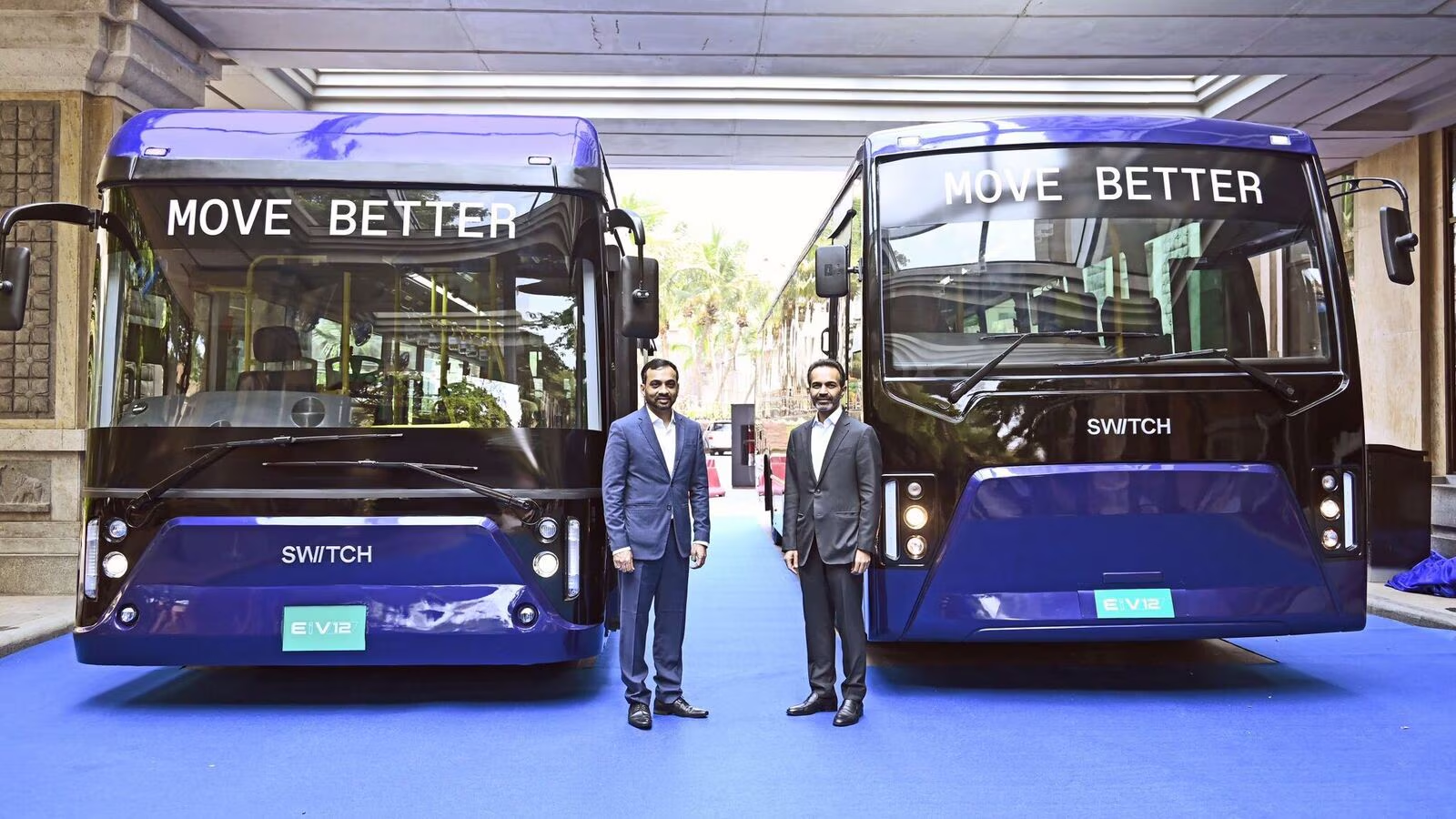
India’s commercial mobility sector is gradually shifting toward electric propulsion, driven by rising fuel costs, stricter urban emission norms, and government procurement initiatives. Among the key players facilitating this transition is Ashok Leyland, which has introduced a range of electric buses designed to support urban and semi-urban public transport.
Ashok Leyland’s electric buses are developed under its subsidiary brand, Switch Mobility, and are primarily targeted for city transportation services, employee transit, and select inter-city routes. These vehicles are typically procured by state transport corporations or private operators through tenders, ensuring alignment with operational requirements and regulatory norms.
Key Models in the Electric Bus Range
The company offers multiple electric bus models to suit varied urban applications:
- Switch EiV 12 – A full-sized urban bus built for German-standard applications, ideal for city routes with high passenger volumes.
- Switch EiV 22 – A low-floor city bus designed for frequent stops, offering electric propulsion for smoother urban mobility.
- Circuit Series – Compact electric buses tailored for circuit routes and last-mile connectivity, particularly suitable for narrower city roads.
The modular design of these buses allows operators to select battery placements, seating configurations, and charging options based on route requirements and infrastructure availability.
Battery and Range
Range remains a critical consideration for electric buses. Ashok Leyland reports operational ranges between 120 km and 300 km, depending on battery capacity and route profile. Urban driving cycles benefit from regenerative braking, enhancing energy efficiency. Charging is predominantly conducted at depots, with both standard and fast-charging systems available. Electric propulsion offers quieter operation and higher torque, improving passenger comfort and city driving conditions.
Pricing in India
Pricing varies significantly depending on bus features and procurement methods. Individual buses are priced between ₹20 lakh and ₹80 lakh, while government tenders for full city bus fleets may reach around ₹1 crore per vehicle. Central and state-level incentives can reduce upfront costs, and operators are advised to consider total cost of ownership, including operational and maintenance costs, rather than just purchase price.
Contribution to India’s Commercial EV Ecosystem
As a leading commercial vehicle manufacturer, Ashok Leyland provides a comprehensive service network across India, covering charging infrastructure support and battery management. Its electric buses are already operational in multiple cities, adhering to fixed routes and schedules in line with charging capabilities.
Conclusion
Ashok Leyland’s electric buses are playing a pivotal role in India’s urban transport electrification. With multiple models addressing varied operational needs, the company is helping cities transition to cleaner, quieter, and more efficient public transport. As battery and charging technologies advance, the adoption and specifications of these buses are expected to evolve, further strengthening India’s electric mobility ecosystem.