
News List
Bajaj Riki Electric Rickshaw: Price, Features, Range & Benefits in India

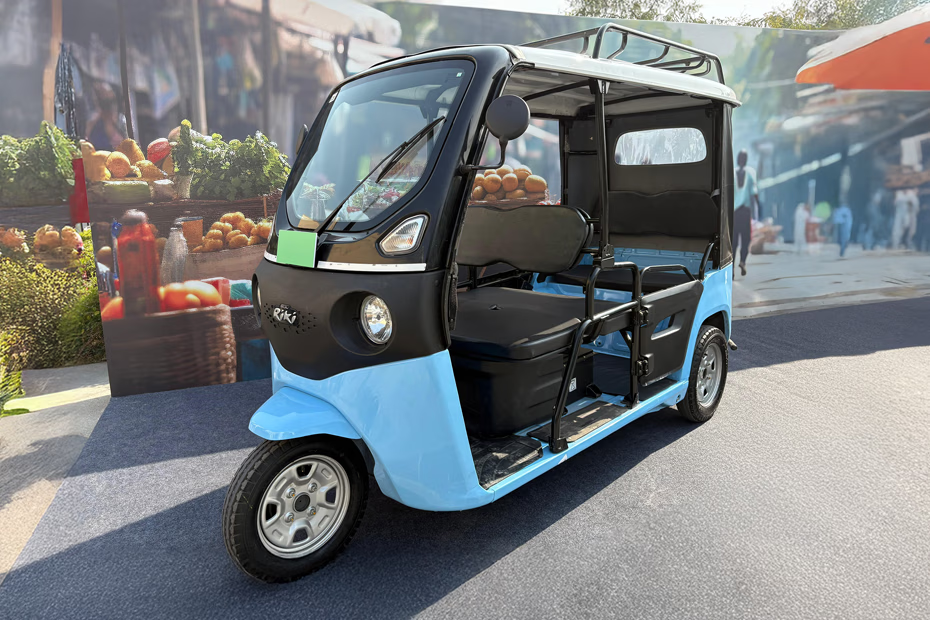
Bajaj Auto has officially entered India’s electric rickshaw segment with the launch of the Bajaj Riki, aimed at addressing long‑standing challenges in last‑mile transportation. With a surge in demand for electric three‑wheelers due to urbanization and the shift toward cleaner transport solutions, the Riki is positioned as a more reliable and capable alternative to conventional e‑rickshaws.
Pricing and Model Variants
The Bajaj Riki is offered in two main variants, both aimed at different commercial needs:
- Riki P4005 (Passenger): Priced from ₹1,90,890 (ex‑showroom), designed for passenger transport with a certified range of up to 149 km on a single charge — one of the highest in the passenger e‑rickshaw category.
- Riki C4005 (Cargo): Targeted toward goods movement with a larger cargo tray and a certified range of 164 km, priced at ₹2,00,876 (ex‑showroom).
Both versions support fast charging, allowing the battery to be recharged in approximately 4.5 hours, and come with a three‑year battery warranty, offering peace of mind for daily commercial use.
Battery, Range and Performance
The Riki series uses a 5.4 kWh lithium‑ion battery pack, which delivers some of the longest certified driving ranges in the segment — 149 km for the passenger version and 164 km for the cargo version. This extended range is crucial for operators who depend on continuous service without frequent recharges.
High gradeability of up to 28% on the cargo variant ensures strong performance on steep city routes and flyovers, making Riki suitable for both dense urban areas and last‑mile cargo delivery assignments.
Engineering Designed for Real‑World Use
Bajaj has engineered Riki with several features that distinguish it from traditional e‑rickshaws:
- Monocoque chassis: Enhances structural strength, durability, and overall stability — a big upgrade over the basic frames found on many unorganised competitors.
- Independent suspension: Offers a smoother ride and improved comfort for both drivers and passengers, especially on rougher urban surfaces.
- Hydraulic brakes: Provide safer and more dependable braking performance in heavy traffic conditions.
These features not only improve safety and reliability but also aim to reduce the risk of tipping — a common concern with less robust e‑rickshaw designs.
Operational Benefits for Drivers and Operators
One of the core advantages of the Bajaj Riki is its focus on operator income and uptime. Extended driving range means fewer charging stops and more productive hours on the road, directly impacting daily earnings potential. The inclusion of fast charging and a long battery warranty adds to operational confidence for small‑fleet owners and solo drivers alike.
Bajaj’s vast nationwide service network also supports the product rollout, reducing downtime due to maintenance and enhancing on‑the‑ground support. The company has already carried out extensive testing in cities like Patna, Moradabad, Guwahati, and Raipur to fine‑tune performance before wider distribution.
Initial Launch Footprint and Expansion Plans
Initially, Bajaj plans to introduce the Riki in more than 100+ towns across states such as Uttar Pradesh, Bihar, Madhya Pradesh, Chhattisgarh, and Assam. This rollout phase is part of Bajaj’s broader strategy to capture a significant share of the rapidly growing e‑rickshaw market, which has been adding over 45,000 vehicles monthly in the wake of increasing demand for clean urban transport.
Final Word: A Competitive Solution for Last‑Mile Mobility
The Bajaj Riki marks a significant step in electrifying India’s last‑mile transport ecosystem. With competitive pricing, industry‑leading range figures, and upgraded safety and comfort features, it gives traditional e‑rickshaws a formidable challenger in both passenger and cargo segments. For drivers and small business owners seeking a more dependable and profitable electric three‑wheeler, Riki sets a strong benchmark in the Indian marketplace.