
News List
EV Retrofits Could Fast-Track Commercial Vehicle Electrification

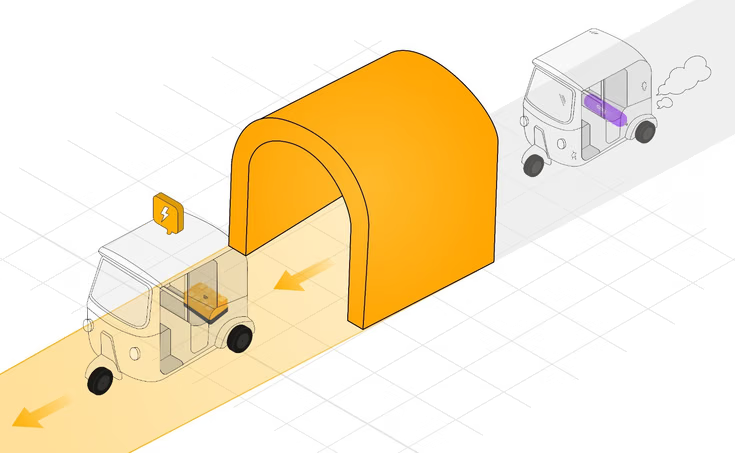
India’s commercial vehicle electrification could get a major boost through electric vehicle (EV) retrofits, experts say. Converting existing internal combustion engine (ICE) vehicles into electric powertrains can accelerate the transition by years while delivering economic and environmental benefits, according to Exponent Energy.
Retrofitting Bridges Fleet Transition Gap
With around 5–6 million three-wheelers on Indian roads, replacing the entire fleet with new EVs could take 10–20 years. Retrofitting vehicles already in use allows faster adoption, helping fleet operators switch to electric without waiting for new sales.
Commercial Vehicles Offer Maximum Impact
Commercial vehicles constitute only 10% of India’s vehicle population but consume nearly 70% of road transport energy. Electrifying these fleets provides one of the most effective ways to reduce emissions and enhance energy security, says Arun Vinayak, Co-founder of Exponent Energy, and Ayush Bhargava, Head of New Business Initiatives.
Economic Benefits for Vehicle Owners
Retrofitting offers substantial cost savings for drivers. An autorickshaw converted from CNG or LPG to electric can save around ₹3,000 per month immediately. Retrofit loans are smaller, typically ₹1.5–2 lakh, compared to ₹3.5–4 lakh for new EVs. After a three-year loan repayment, monthly savings can reach ₹10,000, lowering running costs by nearly 70% compared to CNG.
Additional Advantages of Retrofits
Drivers retain the residual value of their vehicles and continue using familiar service networks. EV retrofits also improve ride quality, reduce noise, and enhance daily comfort, making the transition smoother for operators.
India’s Past Shows Retrofit Success
India successfully used retrofitting during the early 2000s CNG transition. Cities like Delhi relied on petrol-CNG hybrid vehicles and aftermarket conversions before factory-built CNG vehicles became widespread, proving the viability of retrofit solutions.
Safety Standards Already in Place
The AIS 123 guidelines, introduced in 2015, ensure retrofit safety. Certified kits must meet brake and range testing requirements, comply with weight limits, and be installed only at authorized centers by trained technicians.
Policy Support Needs Improvement
Despite strong potential, government incentives focus mainly on new EV purchases and charging infrastructure. Retrofit kits and batteries are taxed at 18% GST, whereas new EVs are taxed at 5%. The PM e-DRIVE program currently does not provide subsidies for commercial vehicle retrofits.
Global Trends Reinforce Retrofit Approach
Worldwide, electric retrofits are gaining traction. France offers subsidies, Stellantis partners with conversion specialists for light commercial vehicles, and Volvo launched an EV conversion program for construction equipment. Each retrofitted three-wheeler in India can cut 4–5 tonnes of CO₂ annually, offering major environmental benefits while the domestic EV manufacturing ecosystem scales up.