
News List
TVS King vs Competitors: Price, Mileage & Features

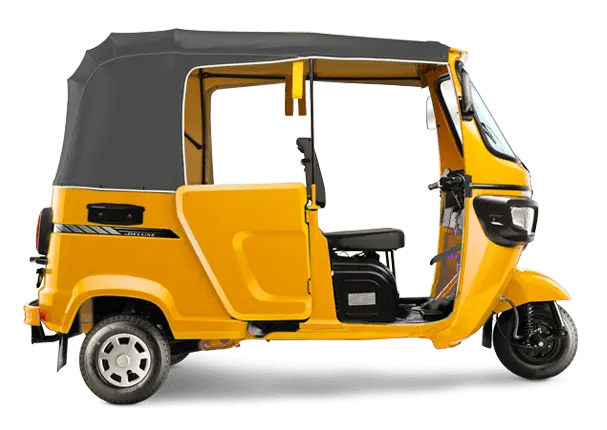
As India’s urban transport and last‑mile delivery sectors expand, three‑wheelers remain foundational for passenger and goods mobility. Among them, the TVS King continues to hold a strong position, but buyers now have several compelling alternatives from rivals such as Bajaj Auto, Mahindra and Piaggio. A comparison of key specs — including mileage, price, features, and performance — provides clarity for prospective buyers in 2026.
The TVS King lineup includes both petrol and electric variants, with the petrol‑powered King Deluxe featuring a 199.26 cc petrol engine producing around 10.46 hp and 15.5 Nm of torque. This configuration enables a practical balance of power and fuel efficiency for city driving, with real‑world mileage claims ranging from 38–42 km/l depending on usage and variant.
In terms of starting price, the petrol TVS King models are among the most affordable options in the segment. Base petrol models typically begin around ₹1.1 lakh (ex‑showroom) with petrol variants, offering lower acquisition cost and inexpensive maintenance for fleet operators and individual drivers alike.
By contrast, a long‑established rival — the Bajaj RE — usually carries a slightly higher price tag, with ex‑showroom listings often between ₹2.34 lakh and ₹2.36 lakh. The Bajaj RE is powered by a larger 236.2 cc engine, delivering marginally more power; this can translate into better load‑carrying capability though at a weightier price and fuel cost.
For buyers leaning toward electric mobility, the TVS King EV Max has emerged as a strong contender. Launched to address rising demand for zero‑emission options, it features an ~9.7 kWh battery that delivers a claimed range of around 179 km per charge and a top speed of 60 km/h — figures that place it ahead of many electrical rivals.
Competing EVs such as the Mahindra Treo and Piaggio Ape City Electric offer respectable alternatives, but specifications suggest subtle differences in performance. For instance, the Treo typically charges slightly faster and provides robust torque, while the Ape City Electric is positioned as a value‑oriented option with slightly lower range figures.
Beyond raw specs, differentiation comes down to features and user experience. The TVS King EV Max integrates connected technology features like Bluetooth connectivity and multiple drive modes — adding a modern edge to everyday operations.
In summary, TVS King variants present a compelling mix of affordability, fuel efficiency, and growing electrification options, while Bajaj RE continues to be strong with its proven petrol performance and brand recognition. Buyers focused on zero‑emission, tech‑forward usage may find the TVS King EV Max and Mahindra Treo appealing, depending on range and charging availability in their service area.
This expanding choice reflects a dynamic market where traditional petrol three‑wheelers and new electric models vie for drivers’ attention in India’s increasingly competitive last‑mile ecosystem.