
News List
India’s Mining Equipment Industry Shows Rapid Technological Growth

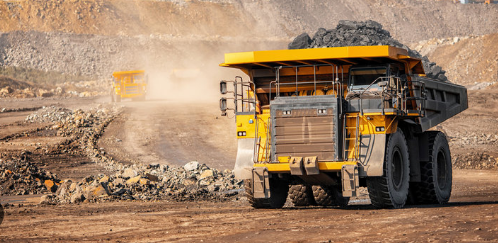
India’s mining and construction equipment industry has evolved into a diverse and technologically advanced sector, producing machinery that includes wheel loaders, backhoe loaders, bulldozers, hydraulic excavators, dump trucks, tippers, graders, vibratory compactors, cranes, forklifts, asphalt plants, drills, scrapers, motor graders, rope shovels, and more. These machines serve multiple purposes, from ground preparation and material handling to road construction, excavation, and precise material placement.
Historically, India relied heavily on imports for its mining equipment needs. Domestic manufacturing began in 1964 with Bharat Earthmovers Ltd. (BEML) at Kolar, followed by Hindustan Motors’ Earthmoving Equipment Division in 1969, later acquired by Caterpillar. The 1980s saw the entry of Telcon (licensed from Hitachi) and Escorts (licensed from JCB), with Escorts eventually becoming JCB India Ltd. Recent entrants include Volvo, with manufacturing in Bangalore, and Terex Vectra, a joint venture producing backhoe and skid steer loaders at Greater Noida.
The industry is dominated by a few major players, with BEML and Caterpillar leading in dumpers and dozers, L&T-Komatsu and Telcon in excavators, and JCB India in backhoe loaders. Public sector units comprise 71% of the market, with private and joint ventures making up the remaining 29%. Around 75% of companies offer end-to-end services, including design, engineering, manufacturing, servicing, and commissioning.
Technological adoption remains a key differentiator. Companies such as Komatsu, Volvo, Terex, Hitachi, Case, JCB, and Caterpillar lead in both mining and construction equipment, while others focus on component manufacturing due to technological barriers. India’s market limitations, fuel quality, and low demand for high-end emission-compliant equipment have delayed local production of certain advanced machinery. However, mechanization, larger haul trucks, and bigger bucket shovels are gradually increasing, aligning with international standards for open-cast mining operations.
Design and engineering capabilities are well-established, with CAD/CAE systems widely used, though most critical components are still imported. Around 65% of manufacturers maintain in-house R&D units, often collaborating with IITs and IISc Bangalore, yet R&D spending remains low at 0.5–3% of sales.
Quality management and process optimization are strong priorities. ISO certification is universal among Indian manufacturers, with many adopting Six Sigma, Lean Manufacturing, and business process re-engineering to improve competitiveness and customer satisfaction. Companies emphasize training, technological integration, and digitalization, leading to high operational efficiency and responsiveness.
As India’s economy and infrastructure continue to grow, the mining and construction equipment industry is poised for further expansion, driven by international collaborations, technology adoption, and increased mechanization, strengthening India’s position in the global heavy machinery market.